
Attracting qualified transport professionals is defined as the deliberate process of targeting, engaging, and securing skilled individuals across driving, logistics, planning, and fleet management roles. The gap between the professionals you need and those who actually apply is rarely about salary alone. It comes down to how you position your organisation, where you advertise, and what you offer beyond the basic wage. This guide covers the exact strategies that work in 2026, from skills-based hiring criteria to technology-led employer branding, giving you a practical framework to compete for the best candidates in a tight market.
How to attract qualified transport professionals: defining who you are looking for
Before you can attract the right people, you need a precise picture of what “qualified” actually means for each role. The transport sector spans highways engineers, traffic planners, transport technology specialists, HGV drivers, and logistics coordinators. Each demands a different profile.
Skills-based hiring consistently outperforms degree-led screening in transport and logistics recruitment. The top skills most frequently missing in candidates are attention to detail, problem solving, and communication. These are not credentials you find on a certificate. They surface through structured assessment and realistic scenario questions.
Hard skills still matter. For operational roles, look for route planning proficiency, knowledge of tachograph regulations, and familiarity with fleet management software such as Geotab or SAP TMS. For planning and infrastructure roles, competencies in transport modelling tools like SATURN or VISSIM carry real weight. The Transport Manager CPC remains the benchmark qualification for anyone overseeing road freight operations in the UK.
Soft skills are increasingly the differentiator. Candidates who can communicate clearly with dispatch, adapt to last-minute load changes, and manage stress on long-haul routes are worth more than those with an extra year of experience but poor interpersonal skills.

Pro Tip: Build a skills matrix for each vacancy before you write the job advert. List five non-negotiable competencies and three desirable ones. This prevents vague job descriptions that attract the wrong applicants and waste your screening time.
Emerging requirements in 2026 include digital literacy around AI-assisted dispatch tools, electric vehicle charging protocols, and data reporting platforms. Candidates who understand these systems reduce your onboarding time and signal genuine career investment.
Which recruitment channels work best for finding transport talent?
The channel you use determines the quality of the pool you draw from. Generic job boards attract volume. Specialist platforms attract relevance.
For senior and specialist roles, such as transport planners, project managers, and logistics directors, specialised executive search firms have completed over 1,500 supply chain placements in 2025 alone. That figure reflects the depth of passive talent these firms access, candidates who are not browsing job boards but who are open to the right conversation.
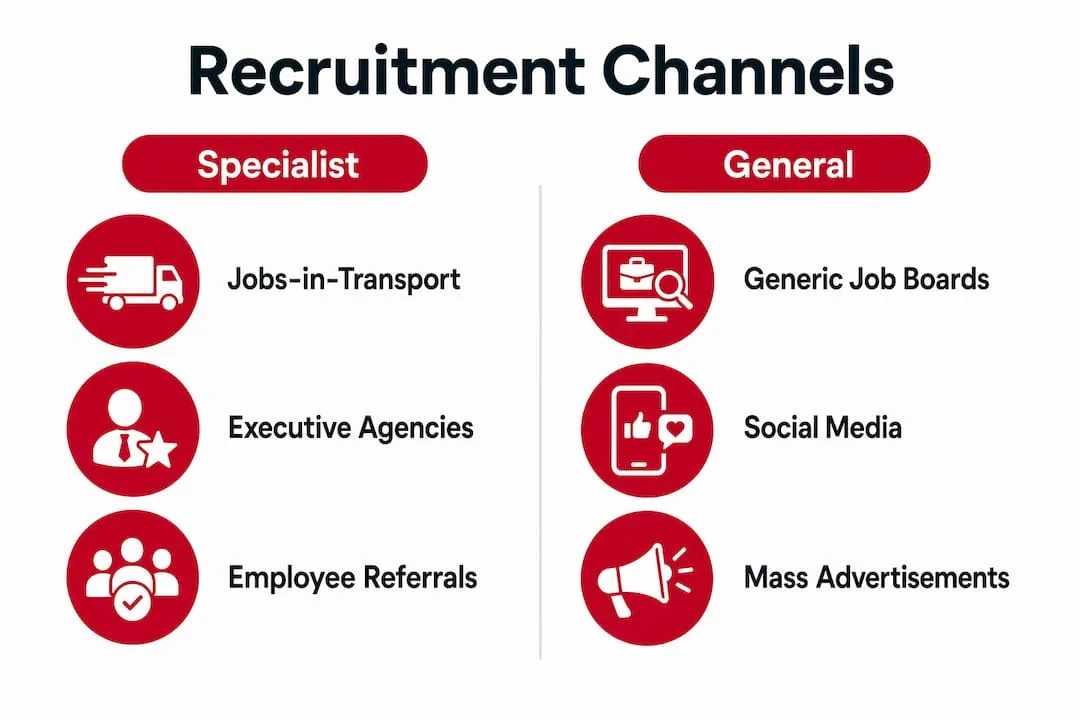
Niche job boards are the most cost-effective channel for mid-level and operational roles. Platforms like Jobs-in-Transport.com focus exclusively on transport sector vacancies, meaning your advert reaches professionals already working in highways, traffic management, transport technology, and project management rather than a general audience. The signal-to-noise ratio is far better than a generalist board.
Social media plays a supporting role that many employers underuse. LinkedIn is effective for planning and management roles, particularly when you post content that demonstrates your organisation’s technical capability and culture. Facebook groups dedicated to HGV drivers and logistics professionals are active communities where word-of-mouth recommendations carry genuine weight.
Employee referral programmes deserve more credit than they typically receive. Drivers and planners trust the opinions of colleagues far more than they trust job adverts. A structured referral scheme with a meaningful financial reward, typically £500 to £1,000 for a successful placement, generates candidates who already understand your operation and arrive with a realistic picture of the role.
Employer branding is not a marketing exercise. It is a recruitment tool. Candidates research your organisation before they apply. If your Glassdoor profile is thin, your LinkedIn page is inactive, and your website says nothing about your fleet or culture, you lose candidates before they ever contact you. Publish content that shows your equipment standards, your team, and your training investment.
Carrier intelligence from specialist recruiters gives you a further edge. Experienced transport recruiters track competitor carrier stability and can identify professionals who may be open to a move due to restructuring or operational changes at their current employer. This kind of timed outreach to passive talent is impossible to replicate through a job board alone.
What benefits and technologies attract and retain transport professionals?
Pay is the entry ticket. Everything else is what separates you from the next employer offering the same rate.
Transparent pay structures matter more than headline figures. Candidates want to know exactly how their earnings break down: base rate, overtime, night allowance, and bonus. Vague “competitive salary” language in job adverts signals that you are hiding something. Publish the full structure.
Guaranteed home-time schedules are among the most powerful retention tools available, particularly for HGV drivers. Retention hinges on dispatch responsiveness, load planning lead times, and equipment quality. Communicating these specifics during recruitment sets accurate expectations and reduces the early turnover that costs you most.
| Benefit category | What candidates actually want |
|---|---|
| Pay transparency | Full breakdown of base, overtime, and bonuses published upfront |
| Home time | Guaranteed schedule with advance notice of changes |
| Equipment | Modern, well-maintained vehicles with up-to-date safety features |
| Technology | Named platforms such as SAP TMS, Geotab, or AI-dispatch tools |
| Development | Funded CPC renewals, management pathways, and mentoring |
Technology adoption is now a genuine attraction factor. AI-dispatch hubs reduce fleet idle time by 15%, and tech-literate candidates actively seek employers who use modern systems. Naming specific tools in your job adverts, such as SAP TMS or Geotab, signals that your operation is forward-looking and that the role will develop their skills rather than stagnate them.
Career development pathways are underused as a recruitment lever. Many transport employers assume that drivers and operational staff are not interested in progression. The data says otherwise. Funding Transport Manager CPC renewals, offering mentoring for supervisory roles, and creating clear routes into fleet management or planning positions all increase both application rates and retention.
Pro Tip: Add a one-paragraph “life at [your company]” section to every job advert that names your fleet, your dispatch technology, and your training offer. Candidates who self-select based on this information arrive better matched and stay longer.
Flexible scheduling and family-friendly policies are increasingly cited by candidates as deciding factors, particularly among professionals returning to the sector after a career break. Four-day working patterns and predictable shift rotas are now competitive differentiators in operational transport roles.
How to structure the hiring process to secure the best candidates
A slow or opaque hiring process loses you candidates to competitors who move faster. Top transport candidates are secured within days in the current market. Speed and transparency are not optional.
Follow this sequence to build a process that works:
- Pre-screen on non-negotiables first. Check driving licence category, endorsements, and any mandatory certifications before you invest time in a full interview. This saves both parties from wasted conversations.
- Provide a realistic job preview. Realistic job previews reduce early turnover by giving candidates an honest picture of the physical and operational realities of the role. A short video walkthrough of a typical shift, or a half-day shadow, achieves this effectively.
- Run a structured competency interview. Ask scenario-based questions tied to the skills matrix you built at the start. “Tell me about a time you had to reroute mid-journey due to a road closure” reveals more than “How many years have you driven HGVs?”
- Make a decision within 48 hours. Communicate the outcome clearly, whether positive or not. Candidates who are left waiting assume you are not interested and accept other offers.
- Conduct thorough background checks promptly. DVLA licence checks, DBS checks where required, and reference verification should run in parallel with the offer process, not after it.
- Invest in structured onboarding. The first 90 days determine whether a new hire stays. Assign a mentor, schedule check-in conversations at 30 and 60 days, and address concerns before they become resignations.
| Hiring stage | Common mistake | Better approach |
|---|---|---|
| Job advert | Vague requirements | Named skills, tools, and pay structure |
| Screening | CV-only review | Licence check plus skills assessment |
| Interview | Unstructured conversation | Scenario-based competency questions |
| Decision | Delayed offer | 48-hour turnaround with clear communication |
| Onboarding | Sink-or-swim start | Structured 90-day plan with a named mentor |
Pro Tip: Send candidates a brief “what to expect” email the day before their interview. Include the format, duration, and names of the interviewers. This reduces no-shows and signals that you are an organised employer worth joining.
What recruitment mistakes undermine your efforts to hire transport professionals?
The most common errors are not dramatic failures. They are quiet, cumulative habits that erode your candidate pipeline over time.
- Generic job adverts that could apply to any employer in any sector. If your advert does not mention your fleet, your technology, or your culture, it is invisible to the candidates you most want.
- Over-reliance on a single channel. Posting only on one generalist board and waiting for applications is not a recruitment strategy. It is a lottery.
- Ignoring passive talent. The best transport professionals are usually employed. Reaching them requires specialist recruiters, targeted social outreach, and a visible employer brand, not just reactive advertising.
- Poor communication during the process. Candidates who receive no update after an interview tell colleagues. Word travels fast in transport networks.
- Neglecting retention after hire. Companies face turnover rates as high as 98% in driver roles without effective retention strategies. Hiring well and then ignoring the employee experience is the most expensive mistake you can make.
“The organisations that consistently attract strong transport candidates treat recruitment as an ongoing relationship, not a transactional event. They stay visible, communicate clearly, and make it easy for the right people to say yes.”
Failing to highlight professional development opportunities is a specific blind spot. Many employers assume candidates only care about pay. In practice, the professional development offer is often what tips a decision in your favour when two employers are offering similar rates.
Key takeaways
Attracting qualified transport professionals requires skills-based hiring, specialist sourcing channels, transparent benefits, and a fast, structured process that treats candidates as professionals worth competing for.
| Point | Details |
|---|---|
| Skills-based hiring | Assess attention to detail, problem solving, and communication alongside formal qualifications. |
| Specialist channels | Use niche platforms and specialist recruiters to reach passive and active transport talent. |
| Transparent benefits | Publish full pay structures, home-time schedules, and named technology platforms in every advert. |
| Fast decisions | Secure top candidates within 48 hours; delays hand them to competitors. |
| Retention from day one | Structured onboarding and realistic job previews reduce early turnover significantly. |
What I have learned about transport recruitment after years in this sector
The single biggest shift I have observed is that transport professionals, at every level, now expect to be treated like specialists rather than commodities. That sounds obvious, but most recruitment processes still do not reflect it.
The employers who attract the best candidates in 2026 are the ones who can answer three questions before the candidate even asks them: What technology will I be working with? What does my schedule actually look like? Where can this role take me in three years? If your job advert and interview process cannot answer those questions clearly, you are losing people to employers who can.
I have also seen the damage that slow processes cause. A transport planner or experienced HGV driver with a solid record is not sitting idle waiting for your decision. They have options. The organisations that treat a 48-hour decision turnaround as a standard, not an exception, consistently outperform those that run week-long approval chains.
The technology angle is not just about attracting younger candidates. Experienced professionals who have worked with Geotab, SAP TMS, or AI-dispatch platforms want to know their next employer is not going to put them back on paper-based systems. Naming your tech stack in your adverts is one of the cheapest and most effective signals you can send.
Finally, retention is part of recruitment. Every driver or planner who leaves within six months is a failure of the hiring process, not just the management process. Realistic job previews, structured onboarding, and genuine career conversations from week one are not HR niceties. They are the difference between a stable team and a permanent vacancy.
— Rob
Find transport professionals faster with Jobs-in-Transport
If you are ready to put these strategies into practice, Jobs-in-Transport.com gives you direct access to the professionals you need.
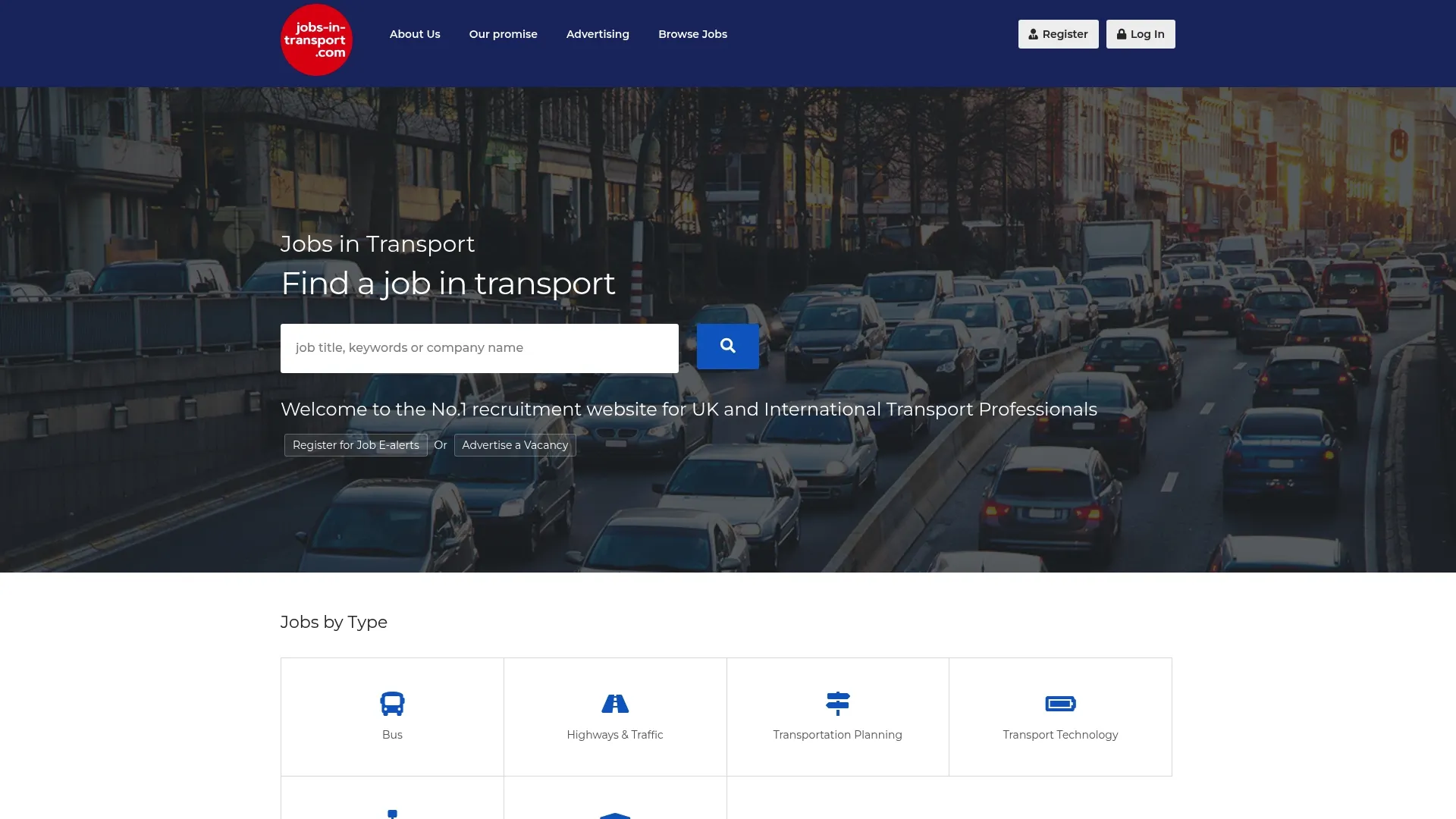
Since 2005, Jobs-in-Transport.com has connected transport employers with qualified candidates across highways, traffic management, transport technology, transportation planning, and project management. The platform is built specifically for the sector, which means your vacancy reaches professionals who are already working in transport, not a general audience scrolling past irrelevant listings. You can post roles, build an employer profile, and access CV search tools designed around the realities of transport recruitment. Explore the platform and see why specialist advertising consistently outperforms generalist boards for transport hiring.
FAQ
What qualifications should a transport professional have in 2026?
The Transport Manager CPC is the benchmark for road freight roles, while transport planners typically hold a degree in transport planning or civil engineering. Digital literacy in tools such as SAP TMS and Geotab is increasingly expected across operational and management positions.
How do I find transport talent beyond standard job boards?
Specialist platforms like Jobs-in-Transport.com, specialist recruitment agencies, and employee referral programmes consistently outperform generalist boards for transport roles. Targeted LinkedIn outreach and Facebook groups for logistics professionals also reach candidates who are not actively job hunting.
Why are transport professionals leaving roles so quickly?
Turnover rates reach 98% in driver roles where retention strategies are absent. The primary causes are poor dispatch communication, unpredictable schedules, and a lack of career development, all of which should be addressed during recruitment, not after.
How quickly should I make a hiring decision for transport roles?
Top candidates are typically secured within days in the current market. A 48-hour decision turnaround from final interview to offer is the standard you should aim for to avoid losing qualified professionals to faster-moving competitors.
Does employer branding really affect transport recruitment?
Yes. Candidates research employers before applying, and a visible, credible employer brand, including named technology, equipment standards, and team culture, directly increases application quality and reduces early turnover by attracting better-matched candidates.
Recommended
- Jobs in Transport, Bus jobs, Highways & Traffic jobs, Transportation Planning jobs, Transport Technology jobs, Project Management jobs, Transport Leaders jobs
- Jobs in Transport, Bus jobs, Highways & Traffic jobs, Transportation Planning jobs, Transport Technology jobs, Project Management jobs, Transport Leaders jobs


