
Spending hours scrolling through generic job boards, sending out dozens of CVs, and hearing nothing back is a frustration that many transport professionals know all too well. The transport sector is one of the UK’s most complex employment landscapes, spanning logistics coordination, infrastructure planning, fleet management, and cutting-edge technology roles. Generic platforms simply cannot capture the nuance of what employers in this space actually want. This article lays out a clear, step-by-step approach to finding the right transport role, preparing yourself effectively, and making applications that actually get responses.
Table of Contents
- Understanding the transport jobs market
- Preparing to search: Skills, CV, and training
- Where to find the best transport job opportunities
- Mastering the application process
- What most job seekers miss when searching for transport roles
- Expert help for your next transport job search
- Frequently asked questions
Key Takeaways
| Point | Details |
|---|---|
| Know the market | Focus on fast-growing sectors like EV systems and logistics when searching for roles. |
| Leverage specialist resources | Use niche job boards, referrals, and state programmes for targeted opportunities. |
| Upgrade your skills | Highlight tech and planning skills and keep your certifications up to date for high-demand jobs. |
| Apply smart | Make applications mobile-friendly, tailor your CV, and respond rapidly for better results. |
Understanding the transport jobs market
The transport industry is far broader than most job seekers realise when they first begin their search. Knowing which categories are growing and where the genuine shortages lie gives you a real strategic advantage before you even update your CV.
Main job categories in transport:
- Logistics and supply chain coordination: roles managing the flow of goods, scheduling deliveries, and overseeing warehouse operations
- Transport planning: professionals who design and assess movement networks, modal shifts, and sustainable travel strategies
- Project management: leaders who deliver infrastructure schemes, road upgrades, and rail programmes on time and within budget
- Mechanics and fleet technicians: skilled trades keeping vehicles roadworthy, with growing demand in electric vehicle (EV) servicing
- Transport technology: roles in telematics, traffic management systems, autonomous vehicle testing, and smart city infrastructure
- Highways and traffic engineering: specialists in road design, junction modelling, and safety audits
The shift towards electric vehicles and smart transport infrastructure is reshaping demand significantly. Employers in local authorities, infrastructure consultancies, and private logistics firms are all hunting for people who understand telematics systems and EV charging infrastructure. Meanwhile, traditional roles like diesel mechanics and transport planners remain critically short-staffed in many regions.
The skills gap in mechanics is particularly notable. Training programmes and local hire initiatives run by government bodies and state DOT agencies highlight exactly how severe this shortage has become, with mechanics training being offered through schemes like WorkSmart NY to address the pipeline gap. In the UK, similar pressures are evident across Highways England projects and local authority maintenance contracts.
Statistic callout: The construction and transport maintenance sectors are among those most actively investing in workforce development, with structured training pathways being created specifically to bring new talent into the industry at pace.
For a broader picture of where openings are appearing right now, it is worth checking the latest industry opportunities to see which employers are actively recruiting and which subsectors are seeing the most activity.

Understanding the market is not just about knowing job titles. It is about understanding the cycle of infrastructure investment, the legislative pressures pushing firms towards greener fleets, and the regional differences in demand. A transport planner based in a northern city may find opportunities linked to devolution projects, while someone in the south-east might be better placed to target rail or port-related logistics roles.
Preparing to search: Skills, CV, and training
Now that you know which transport jobs are in demand, it is time to get prepared and position yourself for success. Preparation is where most job seekers fall short, often underestimating what employers are actually screening for in 2026.
Identify your transferable skills first. Many professionals moving between transport subsectors overlook how valuable their existing experience is. A logistics coordinator who has managed routing software has directly transferable skills for a transport technology role. A project manager from construction can often pivot into infrastructure delivery within transport. Write down your actual day-to-day tasks and match them against job descriptions in your target area.
Where to find accredited training:
- Department for Transport apprenticeship frameworks
- Vocational colleges offering construction and transport pathways
- Local Enterprise Partnerships (LEPs) sponsoring funded courses
- Online platforms for OSHA-10, construction mathematics, and blueprint reading
The value of formal certification in transport cannot be overstated. Training covering construction math, blueprint reading, and OSHA-10 is offered through partnerships with institutions like SUNY EOC and Syracuse Build, demonstrating the kind of structured qualification approach that serious employers respond to. In the UK context, equivalent qualifications through CITB, CILT (Chartered Institute of Logistics and Transport), or Highfield are respected benchmarks.
Tech literacy is increasingly non-negotiable. Even if you are applying for a planning or management role rather than a purely technical position, familiarity with telematics platforms, fleet management software, and basic data analysis tools sets you apart from candidates who only offer traditional experience.
CV essentials for transport roles:
- A concise professional summary that names your transport specialism clearly
- Quantified achievements wherever possible (reduced route costs by 12%, managed a £3.5m scheme on schedule, etc.)
- A dedicated skills section listing software platforms, certifications, and vehicle categories if applicable
- Clear chronological experience with project types and scale indicated
Pro Tip: You can build your online CV directly on a specialist transport platform, meaning it is immediately visible to recruiters who are specifically searching for transport professionals rather than trawling through thousands of unrelated profiles.
Do not underestimate the power of a well-structured online profile. Recruiters for logistics firms and infrastructure consultancies often search candidate databases before advertising roles publicly. Being findable before a vacancy is even posted gives you access to opportunities that never appear on any job board.
Where to find the best transport job opportunities
With your CV ready and skills sharpened, the next challenge is knowing exactly where to look. Not all job hunting channels deliver equal results in the transport sector, and the difference between where you search and what you find can be dramatic.
Specialist versus generic job boards:
| Feature | Specialist transport boards | Generic job boards |
|---|---|---|
| Role relevance | High: roles match your sector directly | Low: flooded with unrelated listings |
| Employer quality | Verified industry employers | Variable, including agencies re-posting |
| CV visibility | Seen by transport recruiters specifically | Lost among millions of profiles |
| Niche roles | Regularly featured | Rarely listed |
| Local initiatives | Often highlighted | Almost never included |
The case for using a niche platform is straightforward. When employers in highways, logistics, or transport planning post roles, they want candidates who already speak the language of the industry. A generic platform introduces noise on both sides.
Top channels for transport job seekers:
- Specialist transport job boards with CV hosting and alert features
- Local authority and government portals listing infrastructure and planning roles
- Apprenticeship schemes through vocational colleges and DOT partnerships
- Professional associations such as CILT, ICE (Institution of Civil Engineers), and CIHT (Chartered Institution of Highways and Transportation)
- LinkedIn networks specifically within transport and logistics groups
- Referrals through former colleagues and site managers
Referrals deserve particular attention. Vocational school partnerships and apprenticeships are actively recommended for mechanics recruitment, with employers highlighting tech-forward candidates through telematics and EV system knowledge as the priority. The same principle applies more broadly: professionals who are already known within a network get introduced to roles before those positions are ever advertised.
Pro Tip: Look at moving industry careers pages for related logistics and transport businesses, as many companies post vacancies on their own websites before syndicating to job boards, giving early applicants a genuine head start.
To understand the depth of support available through a specialist recruiter network, reading about our network gives a clear picture of the connections that a niche platform brings to your search.
Mastering the application process
Once you know where to find openings, how you apply can make as much difference as what you apply for. Many transport professionals are skilled at the job itself but lose out at the application stage through avoidable errors.
Proven steps for efficient transport applications:
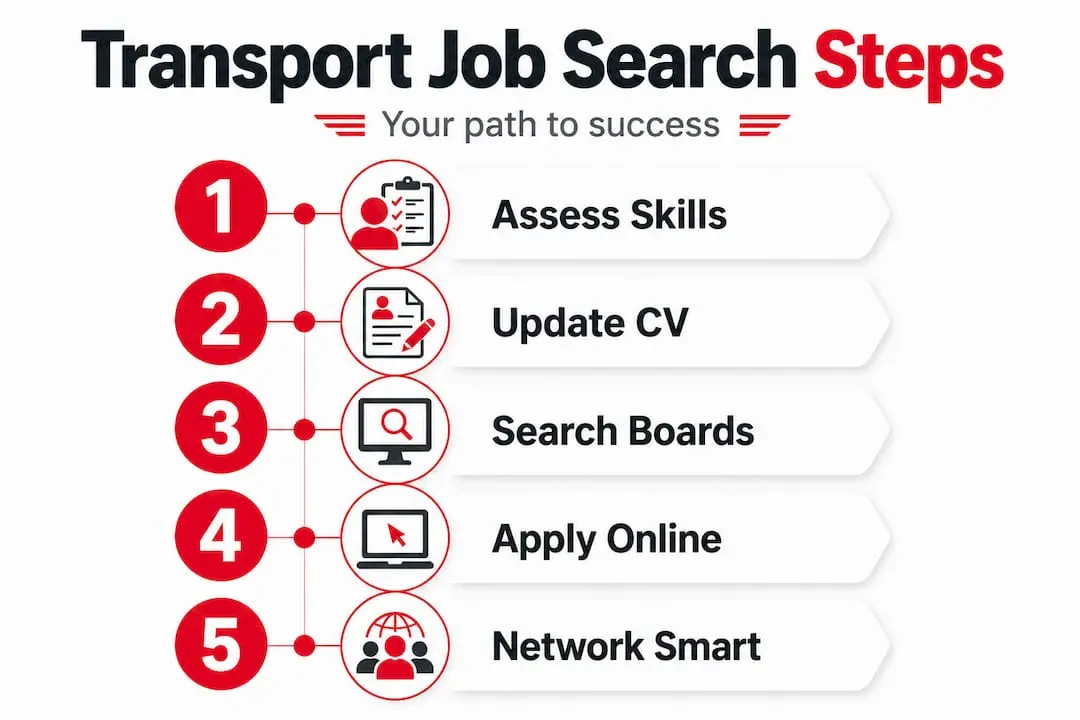
- Tailor every application: Reference the specific project type, vehicle categories, or planning software mentioned in the job description. Generic CVs signal disinterest.
- Apply via mobile where possible: Transport and logistics roles often have recruitment managed by time-pressed operational managers who review applications on their phones. A clean, mobile-friendly format matters.
- Follow up within 48 hours: A brief, professional message confirming your application and expressing specific interest shows initiative. Most candidates never follow up at all.
- Target local schemes actively: Many infrastructure projects have local hire commitments written into their planning conditions, meaning regional candidates get prioritised if they make themselves visible.
- Use specialist agencies strategically: A good transport recruitment agency already has relationships with hiring managers and can place your profile in front of decision-makers directly.
- Check for new postings daily: The fastest-moving roles in logistics and project management close within days of posting.
“Streamlining applications with mobile-friendly formats and fast responses while using referrals and school partnerships produces higher retention rates in high-turnover fields like mechanics.”
One of the most common mistakes is treating your transport job search like a numbers game. Sending the same CV to fifty roles in a week rarely produces results. Sending five well-targeted, properly tailored applications to the right employers almost always does. Quality of application matters far more than volume in a sector where hiring managers know exactly what they are looking for.
You can also contact an employer directly through specialist platforms, which removes the anonymity of a generic application and immediately differentiates you from candidates who only apply through standard portals.
For roles in logistics and removals, reviewing a live online job application from an active transport employer gives you a real sense of the information they prioritise, which you can then mirror in how you present your own experience.
What most job seekers miss when searching for transport roles
Here is an uncomfortable truth that we have observed over nearly two decades of working with transport professionals: the candidates who struggle most are not the least qualified. They are often the most experienced, and that experience has made them complacent about the job search process.
Seasoned professionals tend to rely on the methods that worked last time they changed roles. Post CV, wait for calls, repeat. But the transport jobs market has changed fundamentally. Employers are no longer waiting for applications. They are actively searching databases, reaching out through professional networks, and filling roles through referrals before a vacancy even goes live.
Apprenticeships and vocational partnerships are consistently underused by mid-career professionals who assume these routes are only for new entrants. In reality, many apprenticeship frameworks now include higher and degree-level options that are perfectly suited to experienced professionals seeking structured upskilling in areas like EV systems, traffic modelling, or infrastructure project management.
Tech skills represent perhaps the biggest missed opportunity. A transport planner who can demonstrate proficiency in data visualisation tools or a logistics coordinator who understands telematics dashboards does not just get noticed. They genuinely become easier to hire because they reduce the employer’s training investment. Reading our candidate stories shows exactly how professionals who have combined experience with new technical skills have accelerated their career progression significantly.
Networking within niche communities, whether online groups for highways professionals or regional CILT branches, consistently surfaces opportunities that never appear publicly. The professionals who adapt fastest to the current market are those who treat their network as a living resource, not something they only activate when they need a new role.
Expert help for your next transport job search
With these strategies in mind, connecting with the right platform can make your transport job search much more effective.
Finding transport roles through a specialist resource puts you in a completely different position to someone scrolling through a generic aggregator. The transport sector job board at Jobs-in-Transport.com has been matching professionals with relevant opportunities since 2005, building a network of verified employers across highways, logistics, project management, traffic technology, and transport planning.
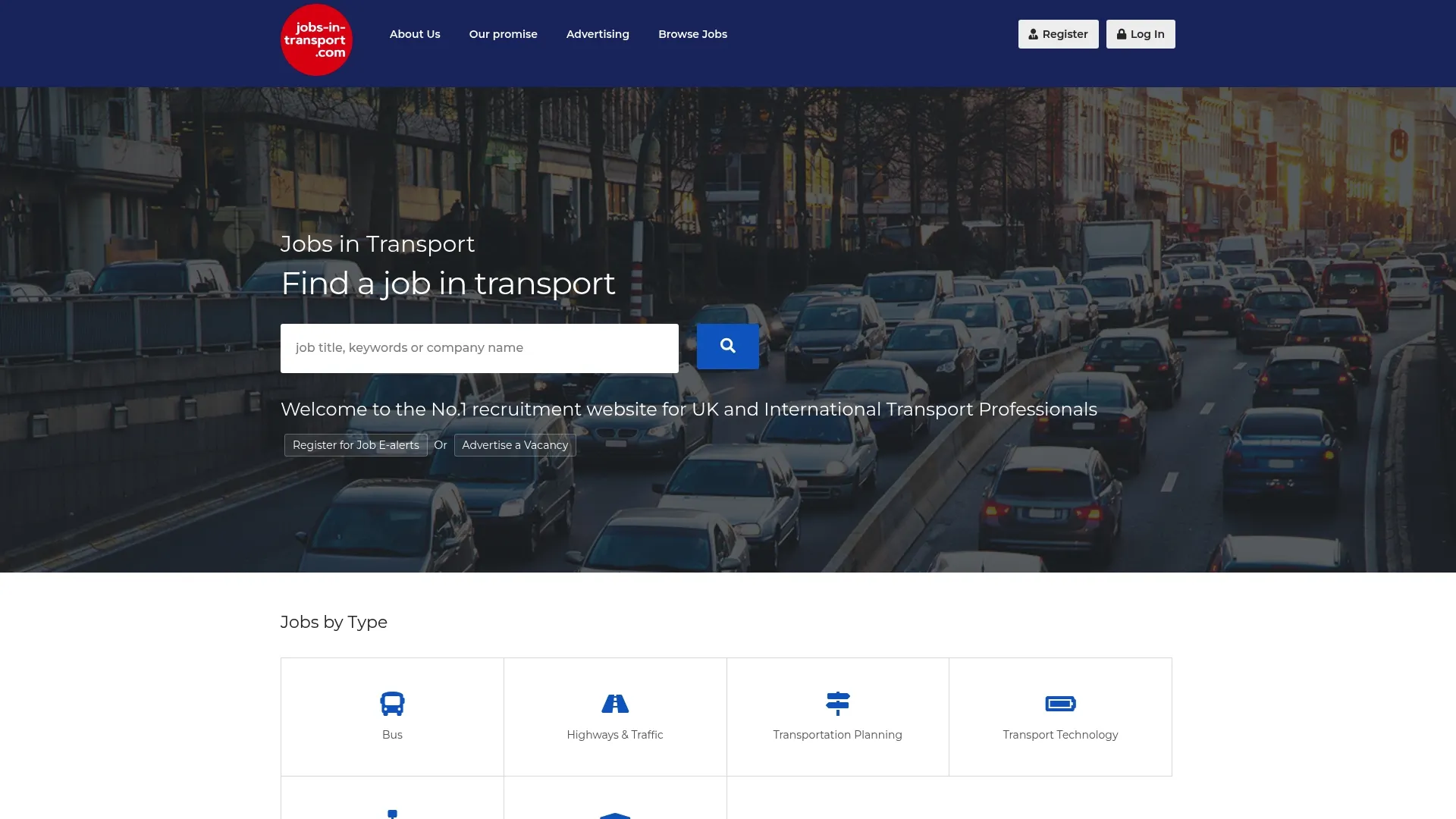
Every listing on the platform is relevant to your sector. Employers who post here are specifically looking for transport professionals, which means your CV reaches the right decision-makers rather than disappearing into an unfiltered pile. Whether you are looking to register your CV, set up job alerts, or explore how we support jobseekers at every stage of their search, the platform is built around the specific needs of transport professionals. Your next role in the industry is closer than you think.
Frequently asked questions
What qualifications do I need for a transport job?
For many roles, relevant industry certifications and training covering construction math, blueprint reading, and OSHA-10 will make you a strong candidate, alongside sector-specific qualifications such as CILT membership or CITB cards for site-based roles.
How can I improve my chances of getting hired quickly?
Focusing on mobile-friendly, fast-response applications and actively leveraging referral networks and professional contacts will significantly speed up your transport job search compared to relying on cold applications alone.
Are there schemes for new entrants in the transport industry?
Yes, many government and state DOT training programmes offer entry-level routes and local hire initiatives, particularly in mechanics, construction transport, and infrastructure maintenance, with equivalent UK pathways available through CITB and Highways England schemes.
Which skills are most in demand for transport jobs?
Tech literacy, knowledge of EV systems and telematics tools, and transport planning competencies are increasingly sought after, with employers prioritising candidates who can bridge traditional operational experience with modern technology platforms.
Recommended
- Jobs in Transport, Bus jobs, Highways & Traffic jobs, Transportation Planning jobs, Transport Technology jobs, Project Management jobs, Transport Leaders jobs
- Jobs in Transport, Bus jobs, Highways & Traffic jobs, Transportation Planning jobs, Transport Technology jobs, Project Management jobs, Transport Leaders jobs


