
Use a targeted multi-channel mix, specialist boards plus your careers site and measured paid and referral channels, to reach the right candidates and reduce legal risk. The twin priorities are matching channels to audience and protecting against indirect discrimination from narrow advertising choices. Measurement is what turns a scattergun approach into one that gets cheaper and faster over time.
TL;DR:
- Pair a careers page with a specialist board for technical vacancies, while generalist boards suit high volume roles and professional networks reach passive senior candidates.
- Acas recommends advertising each vacancy in at least two different ways or places; check channel demographics and wording to reduce indirect exclusion risk.
- Use UTM tags on paid links and record each applicant’s source; review live campaigns weekly and the overall channel mix monthly.
- Track interview to offer ratios, offer acceptance, and early retention, not just application volume, then shift spending toward channels that produce stronger shortlists.
- Advertise flexible working explicitly when the role allows it; guidance links this practice to more applications and greater applicant diversity.
Table of Contents
- Which channels should you use to distribute a job ad?
- How do you choose the right channels for a vacancy?
- Avoiding discrimination risk when you pick advertising channels
- How do you measure and improve your channel mix over time?
- Where a specialist transport board fits in the mix
- Advertise transport sector roles with us
- FAQ
- Sources
Which channels should you use to distribute a job ad?
Most employers draw from a mix of channel types, and the right combination depends on the role.
Your own careers page can carry your employer brand and may integrate with your applicant tracking system. Generalist job boards and aggregators give volume for roles with a large candidate pool, such as administrative or entry-level positions. Specialist industry boards earn their place for technical roles where candidates search by discipline rather than by generic job title, a trait common in engineering, planning and transport-sector work.
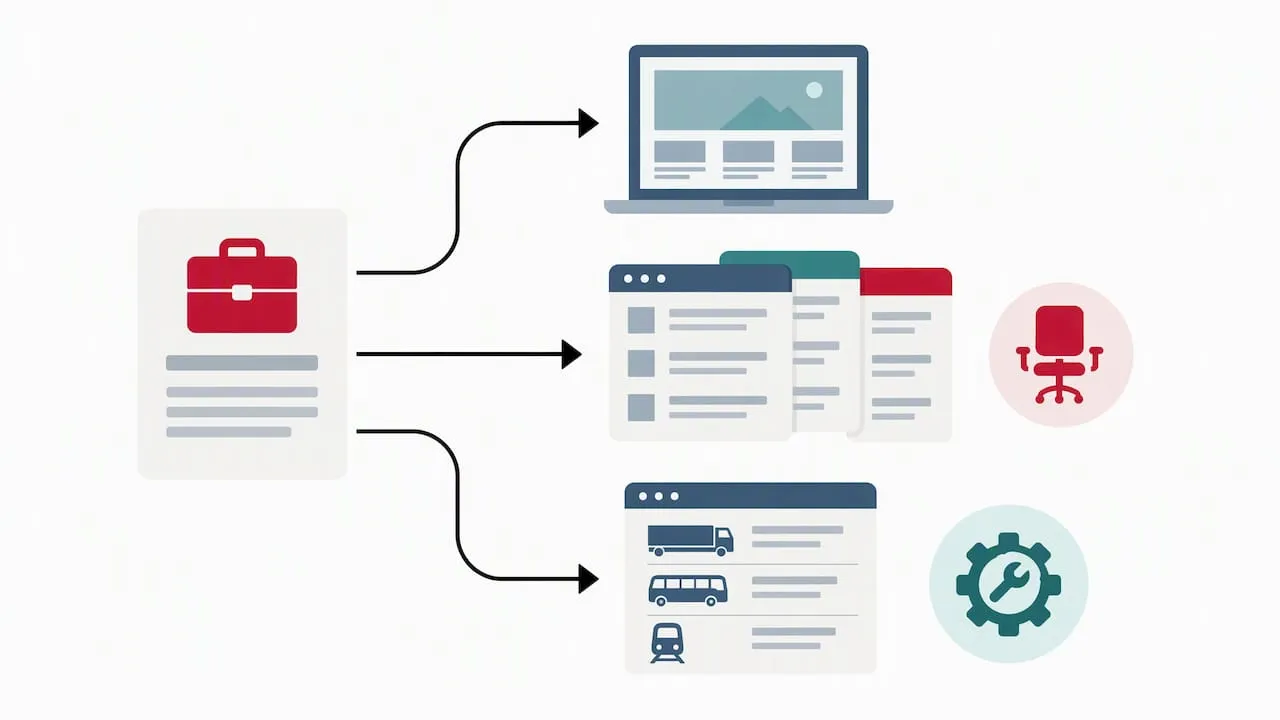
Professional networking sites such as LinkedIn work well for senior roles and for reaching passive candidates who are not actively job hunting. Social networks and geo-targeted ads can help you reach younger and local audiences. Recruitment agencies and search consultants earn their fee on senior or hard-to-fill roles where speed and discretion matter more than cost per hire. Employee referrals and internal advertising can be a useful route to finding candidates, since colleagues may refer people they believe fit the culture.
Jobcentre Plus and other public sector advertising channels offer broad, free reach and a useful compliance anchor for employers who want to demonstrate open access to all candidates. Finally, careers events, university careers services and trade press remain strong for early-careers recruitment and niche sector hires where face-to-face contact or industry credibility counts.
- Careers page: useful for employer brand and cost control.
- Specialist boards: a useful option for technical, discipline-specific roles.
- Referrals and internal adverts: can support a faster search and help identify candidates who may fit the culture.
How do you choose the right channels for a vacancy?
Picking channels well starts with knowing who you are trying to reach and ends with deciding how you will judge success.
- Build a short candidate persona: seniority, specialism, and where that person is likely to search.
- Match channel type to role seniority, using specialist boards or agencies for technical or senior posts and broader boards for high-volume roles.
- Weigh budget against expected time-to-hire, since cheaper channels often take longer to produce a shortlist.
- Decide whether you are chasing active jobseekers or need to reach passive candidates through networking or targeted outreach.
- Use internal referrals where they fit, but check referral patterns periodically so one channel does not quietly narrow your applicant pool.
- Set clear KPIs before you post: time-to-fill, interview rate, offer-to-hire rate and any diversity targets you are tracking.
Pro Tip: Write the job specification before choosing channels, not after. A vague spec invites the wrong applicants regardless of where you advertise.
The CIPD’s resourcing and talent planning research finds that corporate websites, professional networking, recruitment consultants and internal advertising rank among the most effective attraction methods overall, though effectiveness varies by sector and role type. That variation is the reason a decision framework matters more than a fixed channel list: what works for a graduate scheme rarely works for a senior transport planner search.
Avoiding discrimination risk when you pick advertising channels
Where you advertise a vacancy can create legal exposure as easily as what the advert says. GOV.UK guidance on preventing discrimination warns that relying on a narrow set of advertising channels can indirectly exclude candidates with protected characteristics, even when that is not the intention.
Acas recommends advertising a vacancy in at least two different ways or places, precisely to reduce the risk that your channel mix quietly filters out a wider pool of qualified candidates. Combining a specialist board with a generalist one, or pairing a careers page with a social media push, satisfies both the recruitment goal and this safeguard.
A few practical checks make inclusive advertising routine rather than an afterthought:
- Research the demographic reach of each channel before relying on it as your sole source.
- Run job adverts through a language-bias check to remove gendered or exclusionary wording.
- Advertise flexible working options explicitly where the role allows it, since evidence shows this widens applicant pools and increases the diversity of applications received.
- Loop in your EDI lead or HR adviser before finalising channel choice for a sensitive or senior role.
How do you measure and improve your channel mix over time?
Tracking where candidates come from is the difference between a channel strategy and a guess. Set up source tracking from the start: use UTM parameters on paid links and capture a source field in your applicant tracking system at the point of application.
- Track quality metrics, not just volume, including interview-to-offer ratio, offer-acceptance rate and early retention.
- Run small tests on job titles, benefits call-outs and audience targeting rather than changing everything at once.
- Review live campaign performance weekly while a vacancy is open, and review your overall channel mix monthly.
- Reallocate spend away from channels that produce high volume but low quality, towards niche channels that consistently produce better shortlists.
Pro Tip: A channel that produces fewer applicants but a higher interview-to-offer ratio is usually worth more than one that floods your inbox.
The UK Candidate Attraction Report 2025 points to careers sites, professional networks and specialist boards as consistently strong sourcing channels, reinforcing why candidate-focused content on your own site pays off alongside any paid distribution. For more detail on writing and optimising the adverts themselves, our guide to job ad SEO covers the practical side of getting found once you have chosen your channels.
Where a specialist transport board fits in the mix
A generalist board may not be enough for some technical transport roles. Titles like transport planner or traffic engineer may be familiar to candidates already working in the sector, and a specialist board can make those roles easier for them to find.
We built Jobs-in-Transport around that gap: a platform focused entirely on transport, highways, rail, logistics and related disciplines, where employer profiles and listings reach candidates already searching within the field. For a role such as a transport planner, one possible mix is a careers page listing, a specialist board placement, and targeted LinkedIn outreach to passive candidates, each serving a different purpose in the campaign. We have seen that combination work well for roles described in our pieces on recruiting active travel planners and recruiting transport modellers, where sector relevance narrows the shortlist faster than volume alone.
— Rob
Advertise transport sector roles with us
For employers with a technical or specialist transport vacancy, a sector-focused listing may help attract candidates with relevant experience alongside a generalist board. We offer four ways to reach transport professionals directly: a Premium+ Job Listing, a Premium Job Listing, a Standard Job Listing, and an employer profile for ongoing visibility beyond a single vacancy.

- Premium+ and Premium listings suit roles where you want maximum visibility against other featured vacancies.
- A Standard listing suits a straightforward vacancy with a clear specification.
- An employer profile suits organisations hiring regularly across the transport sector.
Check current advertising rates and post your next transport vacancy with us today.
FAQ
What is the best way to distribute a job ad?
There is no single best channel: Acas recommends advertising in at least two different ways or places to reach a wider pool and reduce discrimination risk. A careers page paired with a specialist or generalist board, depending on the role, is a reliable starting mix.
How much should I budget for job ad distribution?
Budget depends entirely on the channels chosen and the provider: specialist listings, agency fees and paid social campaigns all carry different costs. Jobs-in-Transport’s own employer listings are priced on our advertising rates page, ranging from a Standard Job Listing up to a Premium+ Job Listing.
How long does a typical job ad distribution campaign take?
Timelines vary by role seniority and channel mix, with high-volume roles often filling faster through generalist boards and senior or technical roles taking longer through specialist boards or agency search. Reviewing performance weekly while a vacancy is live helps you spot early whether your current mix is on track or needs a channel change.
Can advertising in only one place count as discrimination?
It can create indirect discrimination risk if that single channel disproportionately excludes people with a protected characteristic, according to GOV.UK guidance for employers. Advertising through more than one channel and checking language for bias are practical ways to reduce that risk.
Does advertising flexible working actually widen the applicant pool?
Yes, evidence cited in gender equality guidance for employers shows that advertising flexible working options increases both the volume and diversity of applications received. Stating flexibility explicitly in the advert, rather than leaving it to be asked about at interview, tends to produce the stronger effect.
Sources
- Advertising a job - Recruitment - Acas
- Resource and talent planning report 2024
- UK Candidate Attraction Report 2025 identifies top candidate sourcing channels, biggest priorities and challenges for the year ahead | Onrec


