
Free listings on gov.uk sit at the bottom, single job-post fees generally start from modest amounts and can reach several hundred pounds or higher, subscription and multi-post plans suit steady hiring volumes, and recruitment agencies typically charge a percentage of first-year salary or a fixed fee. The one rule that matters more than any headline price: judge every channel by its cost per qualified applicant, not its sticker price. Find a Job and Teaching Vacancies push the lower end of that range down to zero for eligible employers.
TL;DR:
- Employers should prioritize evaluating the true cost per qualified applicant rather than just the headline price when selecting job advertising channels.
- Hidden costs such as sponsorship uplift fees, database access, seat licenses, and screening hours can significantly increase overall expenses.
- For low-volume hiring, free government channels and basic listings usually offer the most cost-effective options, while high-volume recruiting benefits from subscriptions.
- Niche or specialist roles are often more cost-efficient to post on sector-specific boards or through agencies due to improved relevance and reduced screening time.
- Carefully estimating total spend using the six-step process ensures more accurate budgeting, preventing overpayment and unnecessary labor costs.
Table of Contents
- What does job board advertising cost in the UK?
- What hidden costs push the total spend higher?
- How do you calculate the true cost per hire?
- Where should you post: free, generalist, or specialist channels?
- Why does sector relevance lower your true cost for transport hires?
- What most employers get wrong about job board budgets
- Get the right listing for your next transport vacancy
- Sources
- FAQ
What does job board advertising cost in the UK?
Job board advertising costs in the UK run across four distinct pricing structures, and knowing which one applies to your hiring situation matters more than memorising a single average figure.
Single-post pricing is the simplest model: you pay once for one listing to run for a set period, usually two to four weeks. This tends to sit between £50 for a basic listing on a generalist site and £400 or more for a sponsored or featured slot on a higher-traffic platform. Niche or sector-specific boards often price toward the upper half of that range because they promise a smaller, more relevant audience rather than raw traffic.
Sponsored placements and cost-per-click (CPC) campaigns work differently. Instead of a flat fee, you pay per click or per application, and your listing appears higher in search results or gets pushed to a wider aggregator network. This model suits employers who want to control spend precisely and are prepared to monitor performance daily, but costs can escalate quickly for competitive job titles in areas like logistics or engineering, where multiple employers bid for the same candidate pool.
Subscription and multi-post plans flatten the cost per hire when you’re recruiting continuously. Paying a monthly or annual fee for a bundle of postings usually beats paying per-listing once you’re advertising five or more roles a quarter, since the per-post cost drops sharply the more you use the allowance.
Agency fees operate on a different logic entirely: a percentage of the placed candidate’s first-year salary, often a significant proportion typical of recruitment agencies, or occasionally a fixed retained fee for senior or specialist roles. Agencies make sense when a role is hard to fill, confidential, or when internal recruiting capacity simply doesn’t exist.
Quick budgeting rules worth pinning to your process:
- If you’re hiring fewer than three roles a year, single-post pricing or free government channels usually beat a subscription.
- If you’re hiring five or more roles a quarter, a multi-post subscription almost always wins on cost per hire.
- If the role is niche, technical, or senior, a specialist board or agency route often costs less overall than throwing volume at a generalist site, even though the headline fee looks higher.
- If budget is genuinely tight, start free and add paid sponsorship only where the free channel isn’t generating volume.
What hidden costs push the total spend higher?
The advertised price on a job board is rarely the full story. Several add-ons sit behind the headline fee, and they can quietly double your real cost per hire if you don’t plan for them.
Typical extras include:
- Sponsored or featured placement — an uplift fee to push your ad above organic listings, often 20% to 100% on top of the base price.
- CV or resume database access — a separate charge for searching candidates who haven’t applied to your specific listing.
- Seat licences — some platforms charge per recruiter or hiring manager who needs login access, which adds up fast in larger teams.
- ATS integration fees — connecting the board to your applicant tracking system sometimes carries a setup or per-post surcharge.
- Renewal or bump-up costs — reposting a stale listing to refresh its visibility usually isn’t free.
None of these show up in the number a salesperson quotes you first, and none of them are optional once you’ve committed to a channel that requires them.
The bigger hidden cost, though, is time. A board that floods you with 150 applications, of which 12 are worth a phone call, costs you real labour hours even if the listing itself was free. Screening capacity is a genuine, measurable expense, and a smaller niche board that sends 20 applications with eight worth calling is often cheaper overall, even at a higher headline price, according to a job board pricing comparison framework built for exactly this comparison.
To capture the total cost properly, work through these steps in order:
- Add the base listing fee to every add-on you’ll actually use (sponsorship, database access, seats).
- Estimate total applications the listing will generate, using past campaigns or the platform’s own benchmarks.
- Estimate what share of those applications are genuinely qualified for the role.
- Multiply your average screening time per application by the total volume to get a labour cost.
- Add posting cost and labour cost together to get your true total spend.
Pro Tip: Track the hours your team spends screening applications from each board for one full hiring cycle. Most employers are shocked to discover their “free” channel costs more in labour than their paid one did in fees.
How do you calculate the true cost per hire?
Six steps turn a vague budget guess into a number you can actually defend to your finance team.
- Define the hiring need — role seniority, urgency, and how niche the required skillset is.
- Choose a pricing model — single post, CPC, subscription, or agency, based on volume and urgency.
- List every add-on you’ll need — sponsorship, database access, seats, ATS fees.
- Estimate expected yield — total applications and the likely qualified share, from past data or platform benchmarks.
- Calculate cost per qualified applicant — total spend divided by qualified applicants, not total applicants.
- Add workflow cost — screening hours multiplied by an hourly rate for whoever does the shortlisting.
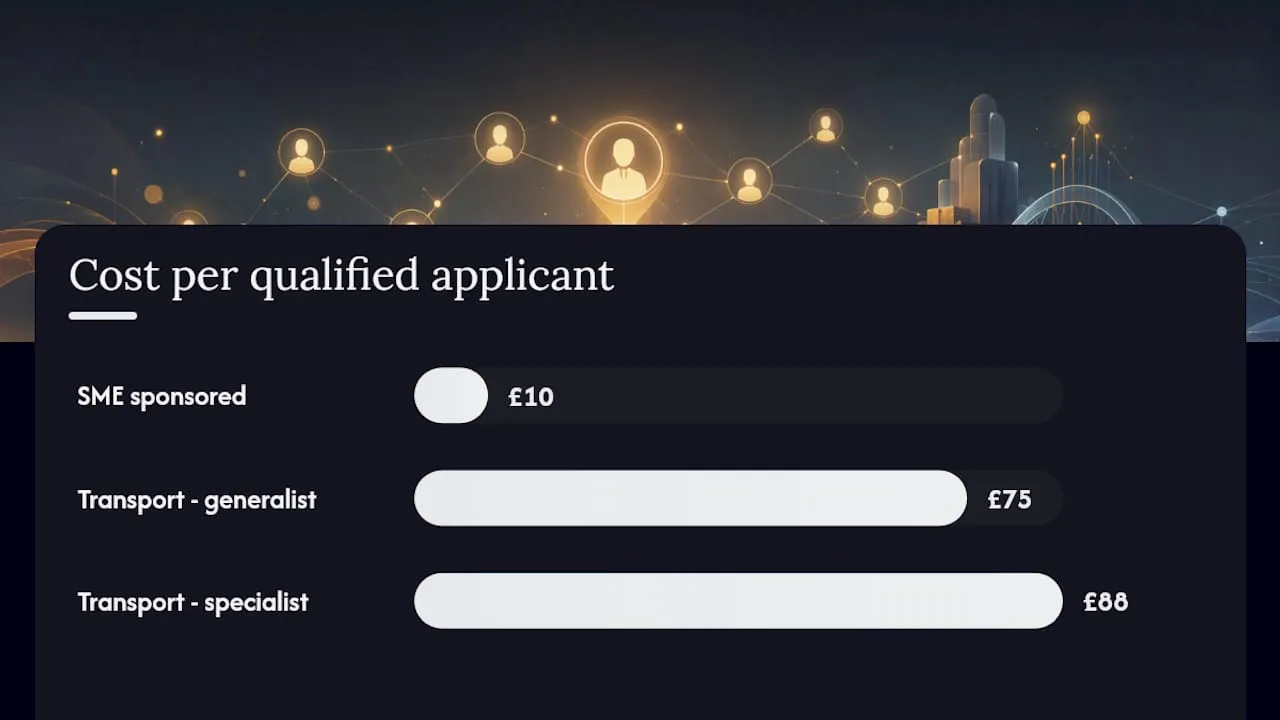
Scenario A: an SME hiring an office administrator. You post free on Find a Job, then add a £150 sponsored boost on a generalist board for two weeks. Total spend: £150. You receive 90 applications, 15 of which are genuinely qualified. Cost per qualified applicant: £10. Screening 90 applications at 10 minutes each adds roughly 15 hours of labour, which is the real cost driver here, not the £150 fee.
Scenario B: a niche transport role, such as a traffic signals engineer. A generalist board’s £150 sponsored slot generates 40 applications, only 2 relevant. A specialist transport listing at £795 generates 18 applications, 9 of them genuinely qualified. Cost per qualified applicant: £75 on the generalist board versus £88 on the specialist one, but screening time drops from roughly 7 hours to under 3, and the eventual hire is far more likely to actually fit the role.
That trade-off matters more than it looks on paper. Recent UK benchmarking from Appcast’s 2026 recruitment marketing report shows overall apply rates rising and median advertising costs softening across the market, but technical and specialist roles remain stickier and costlier to fill regardless of the broader trend.
Where should you post: free, generalist, or specialist channels?
Start with the free options before spending anything. Find a Job, run by the UK government, is free for every employer and a sensible default for standard vacancies with no urgency. Teaching Vacancies is free specifically for state-funded schools in England, making it the obvious first stop for teaching and school support roles rather than a paid generalist board.
Once you’ve exhausted free reach, the choice comes down to relevance versus volume:
- Use generalist paid boards when the role is common, location isn’t restrictive, and you need application volume fast.
- Use subscription bundles once you’re consistently posting five or more roles a quarter, since the per-listing cost drops sharply.
- Use specialist sector boards when the role requires niche skills, qualifications, or industry knowledge that a generalist audience simply won’t have in useful numbers.
Timing and ad quality affect apply rates as much as which board you choose. Posting early in the week tends to outperform Friday listings, concise job titles convert better than jargon-heavy ones, and keeping the application process under five minutes noticeably reduces drop-off, according to Appcast’s 2026 data. If you’re writing the listing itself, a quick review of job ad SEO practices can lift visibility before you spend a penny on sponsorship. Employers who also want their careers page working harder to reduce reliance on paid boards sometimes bring in specialist support, such as the website and SEO services offered by BasicBS, to strengthen the employer brand pages candidates land on.
Why does sector relevance lower your true cost for transport hires?
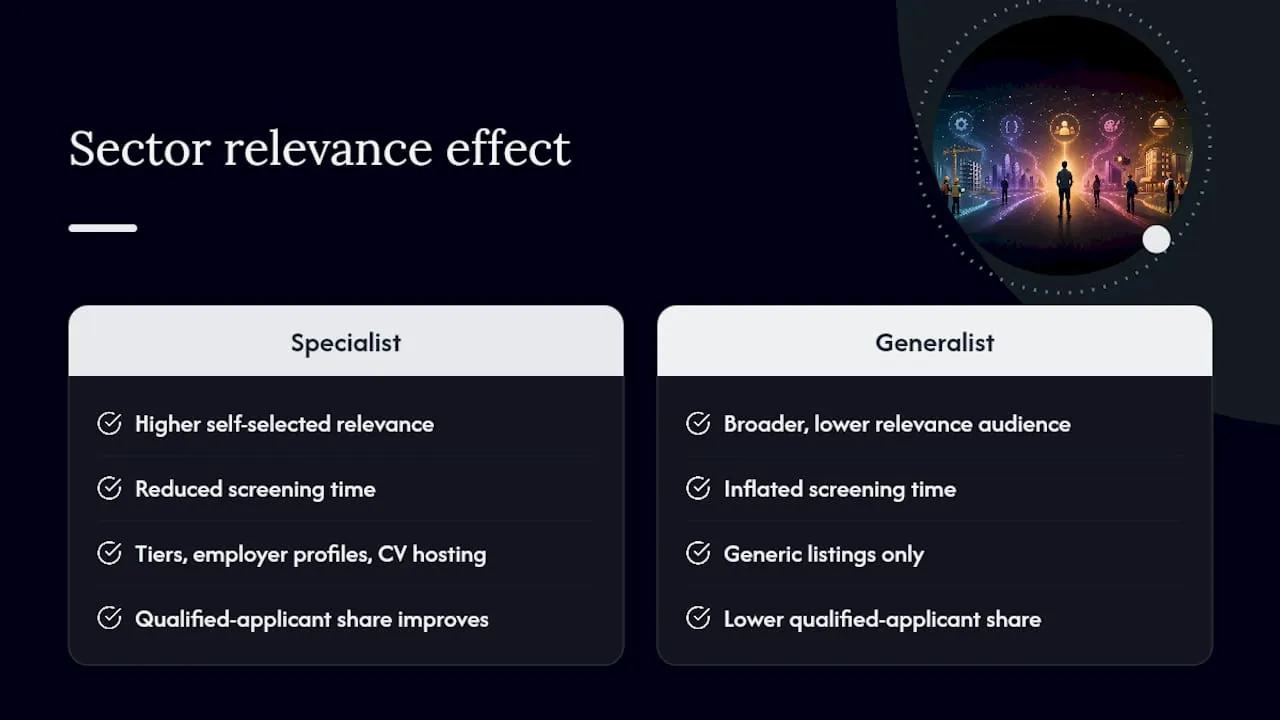
A specialist board doesn’t just find candidates faster. It finds candidates who already understand the terminology, qualifications, and regulatory context of a role, which cuts the screening time that quietly inflates every generalist campaign.
The listing structure of a specialist transport job board typically includes various tiers of job listings for roles of differing visibility needs, employer profiles for frequent hirers to build recognition, and CV hosting services to access transport professionals who may not have applied directly.
Applying the six-step framework above to a transport-specific vacancy, the qualified-applicant share typically improves precisely because the audience already self-selects for relevant experience. Exact current pricing and package details sit on the advertising rates page.
What most employers get wrong about job board budgets
Spend on paid placement only once you’ve measured what free channels actually deliver for that specific role; niche or senior vacancies usually justify the extra fee, routine ones rarely do.
Three mistakes come up repeatedly. Employers ignore screening time entirely, treating a “cheap” board as cheap even when it triples shortlisting hours. They skip estimating qualified yield, comparing headline prices instead of cost per usable applicant. And they overpay for generic reach when a role needed relevance, not volume.
Run the six-step estimate before your next vacancy goes live. It takes fifteen minutes and it will change which channel you choose.
— Rob
Get the right listing for your next transport vacancy
Jobs-in-transport gives you what a generalist board can’t: an audience that already works in highways, rail, logistics, or traffic management, so fewer of your applicants need screening out before you get to a shortlist. For a routine vacancy, the Standard Job Listing at £795 covers most hiring needs. For a senior, urgent, or hard-to-fill role, the Premium (£895) or Premium+ (£1,045) tiers push your listing higher and keep it visible longer, which matters when the qualified pool is small.

If you’re hiring repeatedly rather than once, an employer profile builds recognition across multiple campaigns instead of starting cold each time. Check current package details and book your listing on the advertising rates page, or send a quick enquiry through the contact page if you want advice on which tier fits your next vacancy.
Sources
Verify posting guidance at Find a Job for employers, check Teaching Vacancies for schools, review Appcast’s 2026 benchmarks, and see live pricing on the Jobs-in-transport rates page.
- UK recruitment marketing in 2026: what the data reveals | Appcast
- Job board pricing comparison for employers
FAQ
How much does it cost to advertise a job in the UK?
Costs range from free on government services to £50 to £400 or more per single paid listing, with subscriptions or agency fees applying for higher volumes or specialist roles. The right figure depends entirely on role type, urgency, and how niche the required skills are.
Is it free to advertise a job on Jobcentre or Find a Job?
Yes, Find a Job is completely free for employers across the UK, and it’s a sensible starting point for standard vacancies before spending on paid boards.
How much does it cost to advertise on a charity job board?
Charity-focused boards typically price similarly to generalist sites, often between £100 and £300 per listing, though some offer discounted rates for registered charities. Confirm sector discounts directly with the platform, as they vary and aren’t universally advertised.
Can you run recruiting ads for free in the UK?
Yes. Beyond Find a Job, state-funded schools in England can post entirely free through Teaching Vacancies, and many employers also use free organic social posting alongside these government channels.
What does a job listing cost on Jobs-in-transport?
A Standard Job Listing costs £795, Premium is £895, and Premium+ is £1,045, each a one-off fee. Employer Profiles start from £300; exact package details are listed on the advertising rates page.


