
For most UK jobseekers chasing career progression, LinkedIn’s professional network earns time and attention, whilst those hunting active, immediate vacancies get more from Indeed’s job board. Employers filling specialist or senior roles get more value from networking-style sourcing, while high-volume or shift-based hiring suits a job board. For transport roles specifically, a niche board like Jobs-in-Transport.com adds focused reach that general platforms cannot replicate.
TL;DR:
- For senior or specialist vacancies, use targeted networking to reach passive candidates; prioritize job boards for urgent, high volume, or shift roles.
- Jobseekers should build complete profiles for networking based outreach, but use CV led job boards when speed, location filters, and application tracking matter.
- Test the same vacancy on two channels for two weeks, then compare application, interview, and hire rates before committing more budget.
- Subscription access suits regular hiring, sponsored listings suit a single urgent vacancy, and free posts may rank lower and attract fewer applications.
- When hiring non UK nationals for roles requiring sponsorship, check GOV.UK’s licensed sponsor register before advertising and confirm the employer’s eligibility.
Table of Contents
- LinkedIn vs Indeed at a glance: how the two platform types differ
- What each platform does well, and where it struggles
- How to choose the right platform for your situation
- What pricing and reach actually mean for your results
- Where a specialist transport job board fits into the picture
- Comparing the practical tools: CV uploads, alerts and tracking
- How listing quality compares for transport-specific vacancies
- Ease of use for candidates and for hiring teams
- Fitting recruitment platforms into your wider HR toolkit
- Balancing reach and relevance: an editor’s view
- Get your transport vacancy in front of the right candidates
- FAQ
- Sources
LinkedIn vs Indeed at a glance: how the two platform types differ
LinkedIn and Indeed solve different problems, and the difference starts with what each platform actually is. LinkedIn is a professional network: a place where people build a profile, connect with colleagues, follow companies and get found even when they are not actively applying for anything. Indeed is a job board and aggregator: a search engine for live vacancies, built around the moment someone decides to apply for work now.
That distinction shapes candidate intent. On LinkedIn, a good share of the audience is passive, meaning they are employed, not actively job hunting, but open to the right approach from a recruiter or hiring manager. On Indeed, almost everyone browsing is active: they have opened the site specifically to find and apply for a job. Forbes Advisor’s comparison notes that one platform is built around matching employers to posted vacancies, while the other centres on professional networking with job listings as a secondary feature.
For UK hiring, that split plays out clearly across role types:
- Senior and specialist roles (transport planning leads, directors of highways, principal engineers) tend to respond better to networking-style outreach, where reputation and connections matter.
- Volume and shift-based roles (drivers, warehouse operatives, traffic management operatives) are usually filled faster through job-board search and quick-apply functions.
- Mid-career technical roles (transport modellers, traffic signal engineers) often sit in between, benefiting from exposure on both platform types.
- Graduate and entry-level roles generally do better on a job board, where candidates are actively searching rather than waiting to be approached.
Both platforms are widely used across UK sectors, including transport, logistics and infrastructure, so the choice is rarely about availability. It is about matching the platform’s design to what you are actually trying to achieve, whether that is building a pipeline of passive talent or filling an urgent vacancy this month.
What each platform does well, and where it struggles
Each platform type has a role it plays reliably, and a role it tends to play badly. Understanding both halves helps you avoid wasting a listing fee or a week of job-searching effort on the wrong channel.
- Networking-style platforms excel at sourcing passive candidates. Someone not actively looking can still be reached through a well-written message, a shared connection or a company follow, which matters for senior transport planning or engineering roles where the best candidates are rarely browsing job boards.
- Networking-style platforms strengthen employer brand. A detailed company page, employee updates and industry content build recognition over time, which helps when competing for scarce specialists in areas like transport technology.
- Job boards excel at reach and volume. A single posting can surface hundreds of applications quickly, which suits time-sensitive hiring for bus drivers, highways maintenance crews or seasonal traffic management staff.
- Job boards handle shift and temporary roles better. Quick-apply features and straightforward search filters suit candidates who want to move fast, rather than build a long-term professional profile.
- Candidate experience differs sharply between the two. A networking profile takes longer to build and rewards completeness and consistency, while a job-board application is typically a CV upload and a short form, favouring speed over polish.
In practice, a highways authority hiring a principal transport planner benefits from targeted outreach to people who are not actively job hunting. A logistics operator filling twenty warehouse shifts for the next quarter gets far more value from the broad exposure a job board delivers. Matching the vacancy type to the platform’s strength, rather than defaulting to one channel out of habit, is what separates efficient hiring from a long, frustrating search.
How to choose the right platform for your situation
Before posting a vacancy or investing hours building a profile, it helps to run through a short checklist. The right answer depends on role seniority, budget, timeline and, for employers hiring from overseas, legal constraints around right to work.
- Time to hire: if you need someone within weeks, prioritise a job board; if you can wait for the right fit, networking-style sourcing can pay off.
- Role seniority: senior and niche technical roles often justify the extra effort of relationship-based sourcing.
- Budget: job boards and sponsored listings have more predictable costs than ongoing networking-style recruitment activity.
- Candidate location and right to work: employers hiring non-UK nationals must check the register of licensed sponsors on GOV.UK before advertising roles that require sponsorship.
Employers should ask themselves: do we need passive sourcing for a hard-to-fill specialist role, or volume for a high-turnover position? Jobseekers should ask: am I targeting roles that reward networking and relationship-building, or roles where fast, direct applications matter more? The answer usually points clearly towards one platform type over the other, or towards using both in a specific order.
Pro Tip: Run the same vacancy on two channels for two weeks and compare application rate, interview rate and hire rate before committing further budget to either one.
What pricing and reach actually mean for your results
Employer pricing in the UK generally falls into three shapes: a subscription for ongoing access to search and messaging tools, pay-per-click or sponsored listings that charge based on engagement, and free postings with limited visibility. Each shape produces different outcomes, so it pays to understand what you are actually buying before a budget is committed.
- Subscription models suit employers hiring regularly, since the cost is spread across multiple vacancies and ongoing candidate searches.
- Pay-per-click and sponsored listings suit a single urgent vacancy, since cost scales directly with visibility and applicant interest.
- Free postings typically rank lower in search results and attract fewer applications, which matters when a role needs to be filled quickly.
Audience size matters less than audience fit. A platform with millions of general users can still produce poor results for a specialist transport role if none of those users have relevant experience, while a smaller, targeted audience can produce a shorter shortlist of genuinely qualified candidates. When budgeting, factor in the time cost of screening a large, broad applicant pool against the time saved by a more targeted but smaller response. The cheapest listing fee is not always the cheapest hire once screening hours are counted.
Where a specialist transport job board fits into the picture
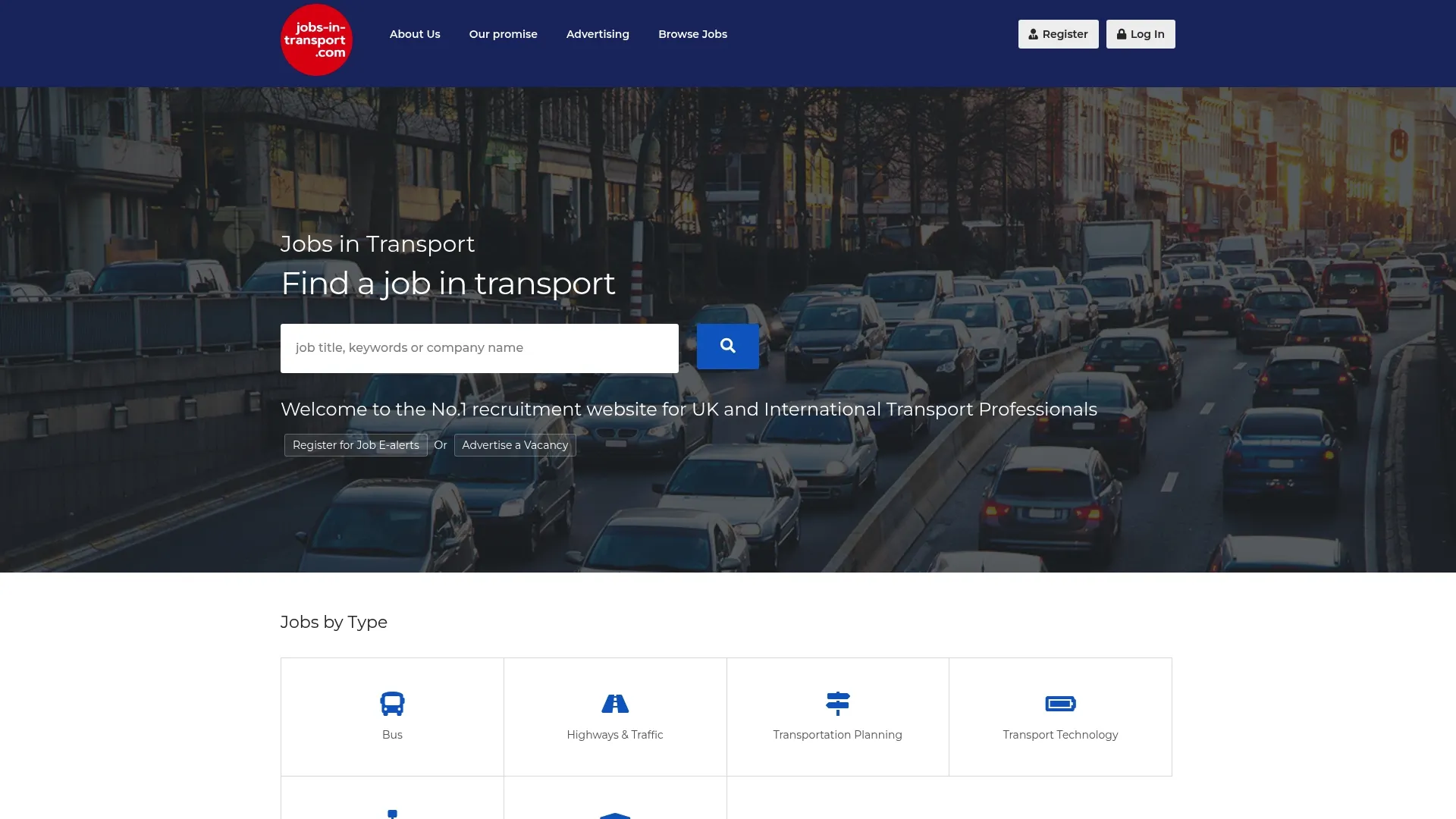
A sector-specific board adds something broad platforms cannot: an audience that has already self-selected into transport, logistics and infrastructure careers. Posting on a niche board alongside a broader platform typically means fewer, more relevant applications rather than a flood of unrelated CVs to filter through.
We built Jobs-in-transport around that principle. Our history in the sector since 2005 means our listings sit in front of candidates who are already working in or actively seeking transport careers, across:
- Job listings categorised by discipline, from highways and traffic management to rail, bus and logistics.
- CV hosting that keeps a candidate’s profile visible to employers searching for transport-specific skills.
- Employer profiles that give hiring teams a dedicated space to showcase their organisation to a relevant audience.
- Job alerts that notify candidates the moment a matching vacancy goes live.
The most effective approach for a hard-to-fill transport role combines a broad platform for general reach with a niche listing for relevance, rather than relying on either alone.
Comparing the practical tools: CV uploads, alerts and tracking
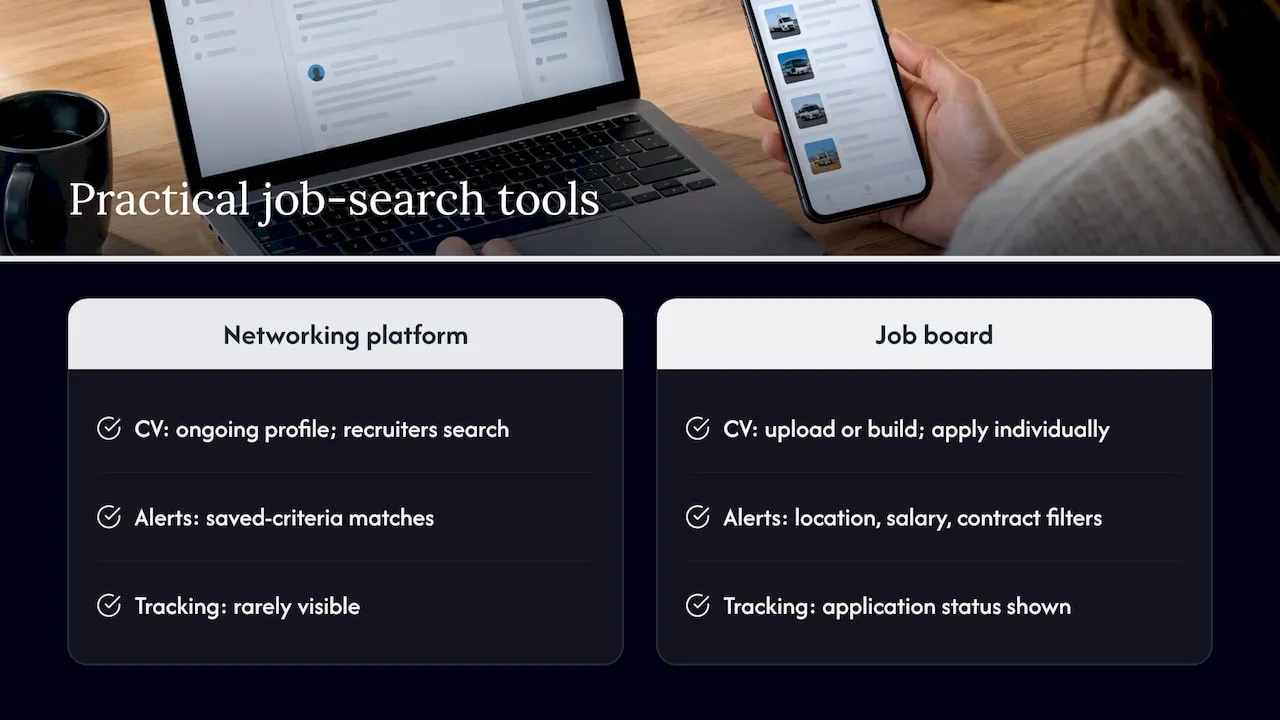
Both platform types offer the core mechanics of modern job searching, but they implement them differently. Networking-style platforms build a profile once and keep it updated continuously, so a CV upload becomes almost secondary to the profile itself; recruiters search by skill, title and connection rather than by parsing an uploaded document. Job boards centre on the CV directly: candidates typically upload or build a CV, then apply to each role individually, with the document doing most of the work.
Job alerts function similarly across both, notifying candidates when new vacancies match their saved criteria, though job boards tend to offer more granular filtering by location, salary band and contract type, which matters for shift-based transport roles where exact location often decides whether someone applies.
Application tracking differs more sharply. Job boards usually show a candidate exactly where their application stands, while networking platforms rarely offer that visibility once a message or application has been sent. For transport-sector hiring specifically, we provide CV hosting and job alerts built around the categories candidates actually search for, which keeps the process closer to the straightforward, document-led model jobseekers expect from a specialist board.
How listing quality compares for transport-specific vacancies
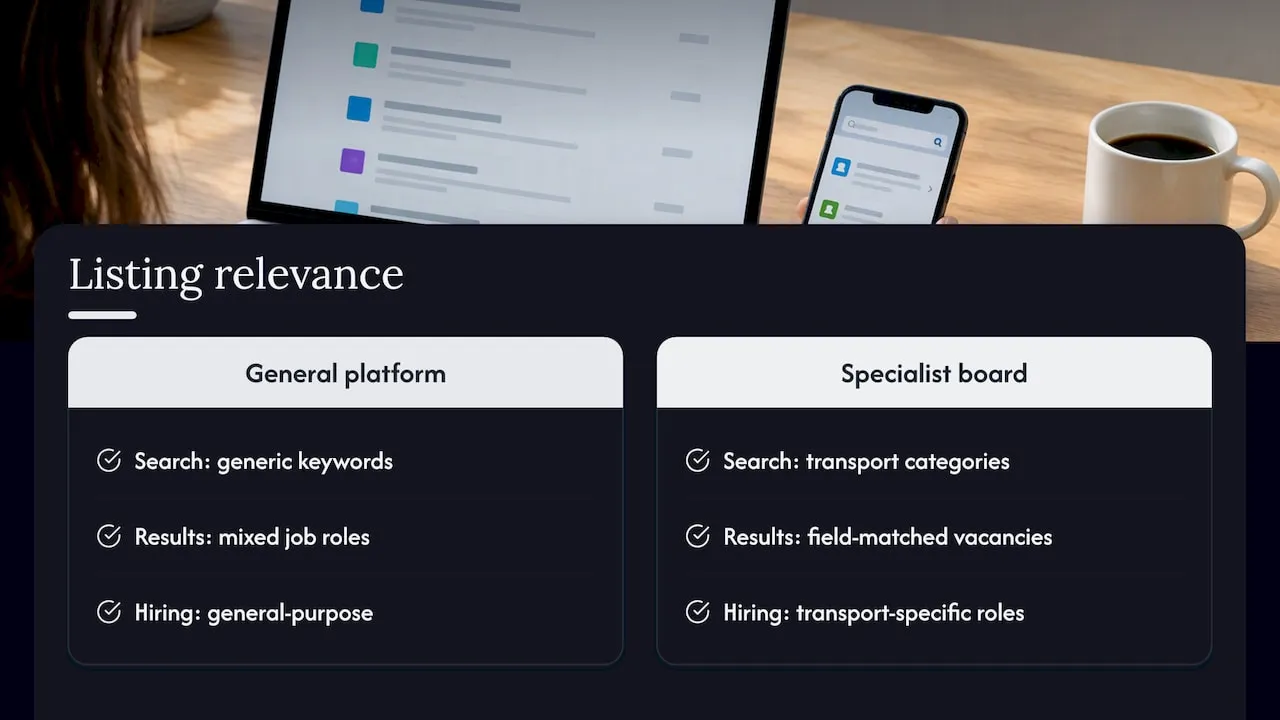
The sheer volume of listings on a general platform does not guarantee relevance, and this matters most in a sector like transport, where job titles and required qualifications vary considerably between highways, rail, bus and logistics. A general search for “transport planner” on a broad platform can return results ranging from entry-level logistics coordinators to senior infrastructure consultants, leaving candidates to filter through a lot of noise.
A specialist board reduces that noise by design. Because every listing on Jobs-in-transport sits within transport-specific categories such as highways and traffic, transportation planning or rail, candidates searching within the sector see vacancies that already match their field, rather than results pulled in by generic keyword matching. For employers, that means the applications arriving are more likely to come from people with genuinely relevant experience, which shortens the screening process considerably.
This is less about one platform being better overall and more about fit for purpose: broad platforms serve general hiring well, but a sector board earns its place when the role requires specific transport knowledge that a generic search simply is not built to surface.
Ease of use for candidates and for hiring teams
Candidate experience differs between a profile-based platform and a straightforward job board. Building a complete, effective profile on a networking platform takes ongoing effort, including a summary, work history, endorsements and regular activity, all of which reward people who update it consistently. A job board, by contrast, asks for a CV and a short application, which suits candidates who want to move quickly from search to submission without maintaining a long-term profile.
For employers, interface design shapes how efficiently a vacancy gets posted and managed. A straightforward job board typically offers a simpler posting flow, categorised listings and clearer visibility into application volume, which matters for hiring teams without dedicated recruitment software. We designed our employer profile pages with that simplicity in mind, giving transport employers a direct way to present their organisation without needing to learn a complex system.
Neither approach is universally easier. A networking platform rewards patience and relationship-building, while a job board rewards speed and clarity, so the right fit depends on whether you are building a long-term talent pipeline or filling a vacancy against a deadline.
Fitting recruitment platforms into your wider HR toolkit
Most transport employers already use some combination of applicant tracking systems, payroll software and HR management tools, and how well a job platform fits alongside them affects day-to-day efficiency. General platforms often integrate with widely used applicant tracking systems, allowing applications to flow directly into existing pipelines without manual re-entry.
Specialist boards tend to work best as a complementary channel rather than a fully integrated system component, feeding qualified, sector-relevant applications into whatever tracking process an employer already runs. For many transport employers, that means receiving applications by email or through a dedicated employer dashboard, which still slots into existing hiring workflows without requiring new software. Our employer profiles are built to work this way: straightforward enough to sit alongside whatever recruitment or HR tools a transport organisation already relies on, rather than demanding a separate integration project.
Balancing reach and relevance: an editor’s view
The mistake we see most often is treating platform choice as a loyalty decision rather than a tactical one. Reach and relevance pull in different directions, and the smartest hiring and job-search strategies accept that trade-off rather than fight it.
For employers, the rule of thumb is simple: match the platform to the hardest-to-fill part of the role, not the easiest. For jobseekers, the rule is to invest profile-building time where recruiters are actually searching for your exact skill set, and spend application time where vacancies are posted in real time. Neither platform wins outright; the question is always which job you are trying to get done this month.
— Rob
Get your transport vacancy in front of the right candidates
Posting on a general platform widens your net, but a transport vacancy often needs an audience that already understands the sector. Our job listing options give employers tiered visibility among candidates actively searching transport-related categories, alongside employer profiles that keep your organisation visible between hiring rounds.
A niche listing works well alongside a broader platform when a role needs sector-specific experience, or on its own when budget favours a single, targeted channel. Our advertising rates and listing options set out exactly what each tier includes, so you can choose the right fit for your next transport hire.
- Compare listing tiers and employer profile options on our rates page.
- Reach candidates already searching within transport-specific categories.
- Combine a niche listing with broader platforms for hard-to-fill specialist roles.
FAQ
Which job portal is best in the UK?
There is no single best platform; the right choice depends on the role. A networking-style platform suits senior or passive-candidate sourcing, a general job board suits high-volume or urgent hiring, and a specialist board like Jobs-in-transport adds relevance for transport-specific vacancies.
Do people use LinkedIn in the UK?
Yes, LinkedIn is widely used across UK professional sectors, including transport, infrastructure and logistics, for networking, job searching and employer branding. Its usage spans both active jobseekers and passive professionals open to new opportunities.
Does the United Kingdom use Indeed?
Yes, Indeed is commonly used by UK jobseekers and employers as a general job board for posting and searching live vacancies. It is particularly popular for volume hiring and roles that require a fast turnaround, such as shift-based and temporary positions.
Why are people getting rid of LinkedIn?
Some jobseekers scale back their use of networking platforms when they feel the effort of maintaining a profile outweighs the results, particularly for roles that reward fast, direct applications over relationship-building. This does not reflect a decline in overall usage, but a mismatch between platform type and the kind of role someone is pursuing, which is why pairing a networking platform with a job board or specialist board often works better than relying on one alone.


