
Transport careers have quietly undergone one of the most significant transformations of any UK industry sector. What was once a world of clearly defined technical roles, drivers, engineers, planners, operating largely in isolation, has evolved into a landscape where a single job profile might demand commercial acumen, stakeholder diplomacy, multi-modal project experience, and data literacy all at once. For professionals already working in the sector and for those considering entering it, understanding what modern transport employers actually want is not just useful. It is essential for staying competitive.
Table of Contents
- What defines a modern transport job profile?
- Exploring core job types: from operations to strategy
- Skills and experience: what employers really seek
- Career progression and emerging opportunities
- Why the reality of modern transport jobs still surprises most professionals
- Discover your next opportunity in modern transport
- Frequently asked questions
Key Takeaways
| Point | Details |
|---|---|
| Roles now demand versatility | Modern transport jobs blend technical, strategic, and customer-focused skills for career success. |
| Cross-modal experience is an advantage | Employers highly value professionals with skills across different transport modes and business functions. |
| Career growth needs upskilling | Continued training and lateral moves help professionals advance in modern transport careers. |
| Support is widely available | Dedicated job boards and employer training pathways make finding and growing in transport roles more accessible. |
What defines a modern transport job profile?
The days of purely siloed transport roles are largely behind us. Today’s employers are looking for professionals who can operate fluidly across disciplines, bridging technical delivery with strategic thinking and client management. This shift reflects broader changes in how transport infrastructure is funded, procured, and delivered in the UK and internationally.
Modern transport roles are characterised by their cross-modal nature. A professional working in transport planning might need to assess the impact of a new bus route on pedestrian flow, cycling infrastructure, and rail connectivity, all within the same project scope. That kind of integrated thinking was rarely expected of a single individual a generation ago.
One of the clearest illustrations of this trend is the emergence of the Transport Programme Manager role. As programme manager role requirements demonstrate, modern transport projects can require profiles that combine strategic client and project leadership with lifecycle delivery across road and rail, indicating genuine cross-modal expectations baked directly into the job description. This is not an exception. It is increasingly the norm.
Key characteristics that define a modern transport job profile include:
- Cross-modal project responsibility: overseeing delivery across road, rail, and active travel simultaneously
- Stakeholder management: engaging with local authorities, government bodies, contractors, and communities
- Commercial and procurement awareness: understanding contracts, frameworks, and supplier relationships
- Client-facing communication: translating technical complexity into clear, actionable reporting
- Operational understanding: knowing how day-to-day service delivery affects strategic outcomes
“The most sought-after transport professionals today are not the ones who know one mode perfectly. They are the ones who can connect modes, people, and objectives into a coherent programme of work.”
If you are exploring whether specialising in transport is the right move for your career, it is worth understanding that specialism no longer means narrowness. It means depth within a broad operational context. And if you are actively searching, familiarising yourself with 2026 transport recruitment steps will help you position your profile effectively from the outset.
Exploring core job types: from operations to strategy
Transport’s job landscape spans a surprisingly wide range of functions, and the boundaries between them are increasingly porous. Where operations, customer service, and strategy once sat in separate departments with limited overlap, modern employers actively seek professionals who can move between these areas and add value across all of them.

Rail operators are a useful illustration. Avanti West Coast’s careers page frames working roles across areas such as Train Driver, Customer Service specialist, and Marketing, emphasising training and opportunities for personal and professional development. This “people plus operations plus growth” framing reflects a broader industry recognition: technical capability alone no longer drives career advancement or organisational performance.
Here is a comparative overview of key modern transport job types, the skills they require, and their typical development paths:
| Role | Primary function | Core skills needed | Typical advancement |
|---|---|---|---|
| Train Driver | Operational delivery | Technical competence, safety awareness | Senior Driver, Traction Instructor |
| Customer Service Lead | Passenger experience | Communication, conflict resolution | Station Manager, Experience Manager |
| Transport Planner | Strategic modelling | GIS, data analysis, policy knowledge | Principal Planner, Technical Director |
| Programme Manager | Project leadership | Stakeholder management, procurement | Programme Director, Client Lead |
| Traffic Engineer | Technical design | AutoCAD, signal modelling, safety audit | Senior Engineer, Project Manager |
| Highways Consultant | Delivery and advisory | Contract management, technical review | Associate, Technical Principal |
What is striking about this table is not just the variety, but the way each role now blends what were traditionally separate competencies. A Traffic Engineer today may also be expected to run client workshops, contribute to bid writing, and co-ordinate with planning authorities. A Customer Service Lead in rail may manage digital channels, accessibility compliance, and commercial performance targets simultaneously.
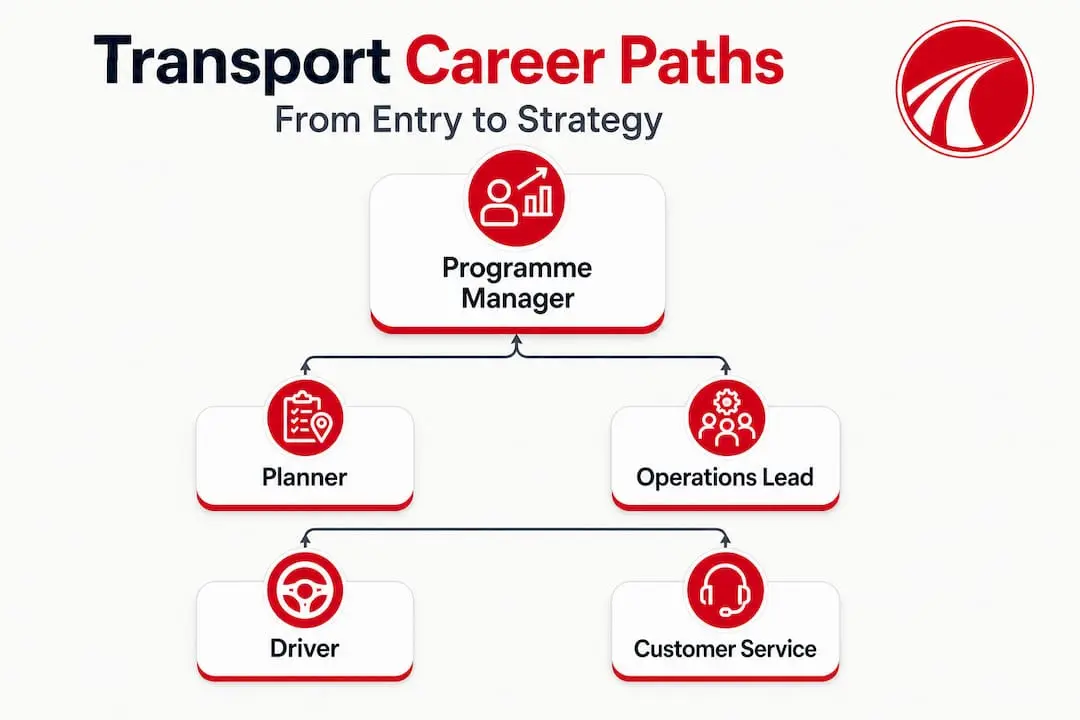
This evolution has a practical implication for job seekers: your CV needs to reflect breadth as well as depth. Employers reading applications in 2026 are actively looking for evidence that you have operated across functions, not just mastered one.
The following steps outline how to position yourself effectively within this diverse job landscape:
- Audit your existing experience across modes (road, rail, bus, active travel) and functions (technical, commercial, client-facing)
- Identify the gaps between your current profile and the roles you are targeting
- Seek cross-functional projects within your current role to build evidence of versatility
- Pursue relevant qualifications in project management, procurement, or stakeholder engagement
- Tailor each application to highlight cross-modal achievements, not just technical outputs
Pro Tip: Many transport employers offer internal training pathways that allow you to move laterally into emerging strategic or customer-focused roles. Explore professional development in transport options before assuming you need to change employer to change direction.
Skills and experience: what employers really seek
Understanding the job types available is only half the picture. The more pressing question for most transport professionals is: what specific skills and experiences do employers actually prioritise when they review an application?
The honest answer is that employers in 2026 are seeking a blend that would have seemed unusual even a decade ago. Technical competence remains the entry ticket. But it is the “soft” skills, a term that somewhat undersells their complexity, that increasingly determine who advances and who stagnates.
The skills most consistently in demand across modern transport job profiles include:
- Stakeholder management: the ability to build productive relationships with diverse groups, from contractors to elected members
- Multi-modal project delivery: demonstrable experience managing work that spans more than one transport mode
- Client-facing communication: presenting complex technical material clearly and persuasively, both in writing and verbally
- Commercial and procurement knowledge: understanding frameworks, contract types, and supplier performance management
- Data literacy: interpreting transport modelling outputs, performance metrics, and operational data to inform decisions
- Adaptability and change management: navigating organisational change, regulatory shifts, and evolving project scope
As cross-modal experience requirements in senior roles confirm, Transport Programme Manager profiles specifically note cross-modal experience and commercial and procurement skills as particularly advantageous. This is not boilerplate. It reflects genuine operational demand from organisations managing complex, multi-strand programmes.
The question of how to build these skills is equally important. On-the-job experience remains the most credible source of evidence, but formal courses in project management (APM, PRINCE2, or MSP), procurement, and leadership development all add legitimate weight to a CV. Equally valuable is networking for transport careers, which often opens doors to lateral projects, secondments, and informal mentoring that formal training cannot replicate.
It is also worth noting that transport professional training has become more accessible in recent years, with many organisations offering funded pathways for employees who demonstrate the motivation to develop.
Pro Tip: When updating your CV, avoid listing skills in isolation. Instead, write achievement statements that demonstrate versatile impact. For example: “Led stakeholder engagement across road and rail workstreams, securing agreement from six local authority partners within a 12-week programme timeline.” That kind of specificity tells an employer far more than a bullet point saying “stakeholder management.”
Career progression and emerging opportunities
One of the most persistent myths in transport careers is that progression is linear and slow. In reality, the sector offers more lateral mobility and faster advancement than most professionals realise, particularly for those willing to invest in their own development and embrace cross-sector experience.
Rail to highway moves, planning to operations transitions, and client-side to contractor-side shifts are all increasingly common and valued by employers. An engineer who has spent five years in rail signals and then moves to a highways consultancy brings a systems thinking perspective that many highway specialists lack. That difference is increasingly recognised and rewarded.
The Avanti West Coast careers model is instructive here. The operator explicitly frames roles across technical, customer, and commercial functions as interconnected, with training and personal development embedded throughout. This reflects a maturing industry understanding that rigid career silos limit both individual growth and organisational agility.
Here is a practical overview of how career ladders look across some key transport profiles:
| Starting role | Required skills | Likely advancement path |
|---|---|---|
| Graduate Planner | GIS, data analysis, report writing | Planner, Senior Planner, Principal Planner |
| Train Driver | Safety, traction knowledge | Senior Driver, Instructor, Operations Manager |
| Project Co-ordinator | Scheduling, stakeholder liaison | Project Manager, Senior PM, Programme Manager |
| Traffic Engineer | Design tools, safety audit | Senior Engineer, Associate, Technical Director |
| Customer Experience Officer | Communication, service delivery | Team Leader, Service Manager, Head of Experience |
The steps most likely to accelerate your progression in today’s market are:
- Seek a cross-modal project: volunteer for or negotiate involvement in a project that spans your usual area
- Invest in a recognised qualification: APM, Chartered membership of relevant professional bodies, or formal procurement training
- Build your external profile: publish insights, attend industry events, and engage with professional networks
- Ask for structured feedback: understand where your current employer sees your development gaps
- Monitor emerging specialisms: transport technology, active travel planning, and net zero transport strategy are all creating new senior roles
Opportunities in career growth with training are expanding across the sector, particularly as major infrastructure programmes and decarbonisation commitments drive sustained demand for hybrid leaders who combine technical, commercial, and strategic capability.
Why the reality of modern transport jobs still surprises most professionals
Here is something that does not get said often enough: many experienced transport professionals are caught off-guard by how much the sector’s expectations have changed, and how quickly. It is not that the technical knowledge they built over years has become worthless. It is that technical knowledge alone has quietly dropped from being a differentiator to being a baseline requirement.
The professionals who thrive in today’s market are not necessarily the most technically brilliant. They are the ones who understand that commercial awareness and people skills now carry as much weight as engineering competence or planning credentials. This is a genuine mindset shift, and it is harder than it sounds for someone who built their identity around technical mastery.
The second thing that surprises people is how much value lateral moves carry. Most professionals still think of a sideways move as a step back. In modern transport, moving from rail to highways, or from project delivery to client advisory, is often the fastest route to senior leadership. Employers actively value the perspective that comes from having worked across modes, functions, or organisational types.
The uncomfortable truth is that building transport expertise in 2026 is not about going deeper into one narrow channel. It is about being broad enough to lead complex programmes while being credible enough technically to earn the respect of specialists. That combination is rarer than most people assume, which is precisely why it commands a premium in the jobs market.
Continuous reinvention is not a buzzword in this context. It is a practical survival strategy. The professionals who embrace it early, seeking new challenges, building new skills, and volunteering for unfamiliar projects, consistently outpace those who wait for the market to demand it of them.
Discover your next opportunity in modern transport
Armed with a clearer picture of what modern transport careers look like and what employers genuinely value, the next step is finding the right opportunities to put that knowledge into practice.

Jobs-in-Transport.com has been connecting transport professionals with relevant opportunities across the UK and internationally since 2005. Whether you are targeting a strategic programme management role, an operational position in rail, or a people-focused leadership post, the platform brings together modern transport jobs across every major specialism in one place. You can browse current listings, set up job alerts tailored to your profile, and host your CV for employer visibility. To learn more about what the platform offers job seekers, visit about Jobs-in-Transport.com, or contact employers directly to start building connections in your target sector today.
Frequently asked questions
What is a modern transport programme manager?
A modern transport programme manager leads strategic projects across different transport modes such as road and rail, often managing both commercial and operational aspects. As programme manager role descriptions confirm, these roles combine strategic client leadership with lifecycle delivery across multiple transport modes.
What skills are most in demand for transport careers today?
Employers seek versatility: project delivery, procurement, cross-modal knowledge, and strong communication for client or customer-focused roles. Cross-modal and procurement skills are explicitly noted as advantageous in senior transport programme roles.
Can you move between sectors in transport, like rail to highway?
Yes, many modern roles actively encourage lateral moves and value experience across different transport areas for career growth. Lifecycle delivery across road and rail is a stated advantage in current programme manager role specifications.
Are there strong career ladders with training in transport?
Major operators offer career ladders and training support for both technical and people-focused roles, helping professionals develop at every stage. Avanti West Coast’s careers page highlights training and advancement opportunities across a broad range of job types, from operational to commercial functions.
Recommended
- Jobs in Transport, Bus jobs, Highways & Traffic jobs, Transportation Planning jobs, Transport Technology jobs, Project Management jobs, Transport Leaders jobs
- Jobs in Transport, Bus jobs, Highways & Traffic jobs, Transportation Planning jobs, Transport Technology jobs, Project Management jobs, Transport Leaders jobs


