
If you need consistent, year-round freight planning capacity, hire permanently and budget three to six months to full productivity. If demand is a short-term spike, a contractor fills the gap faster. Either way, advertise on a sector-specific job board to reach candidates who already understand freight, and screen for proactive problem-solving over software checkboxes: TMS skills are trainable, judgement under pressure is not.
TL;DR:
- Hiring a freight planner requires three to six months for full productivity, with contractors offering faster short-term coverage during demand spikes.
- Core skills include route planning, carrier liaison, exception management, with TMS knowledge being mandatory but not sufficient without problem-solving ability under pressure.
- Salary expectations vary by experience, with specialization such as customs or multimodal expertise commanding higher pay and slower candidate pools.
- Operational signs like rising overtime and backlog indicate capacity strain, while strategic growth signals include new lanes or seasonal peaks, influencing recruitment timing.
- Using a sector-specific job board ensures targeted applications from candidates already familiar with freight, increasing the chances of a successful hire.
Table of Contents
- What does a freight planner actually do?
- How much does hiring a freight planner cost?
- When should you recruit a freight planner?
- What does good performance look like in this role?
- Five common hiring mistakes and how to avoid them
- How do you assess candidates and spot red flags?
- Which recruitment route fits your situation?
- What does a realistic 60-day hiring timeline look like?
- Why use a specialist transport job board for this hire?
- What hiring managers often miss
- How Jobs-in-Transport.com helps you hire freight planners
- Sources
- FAQ
What does a freight planner actually do?
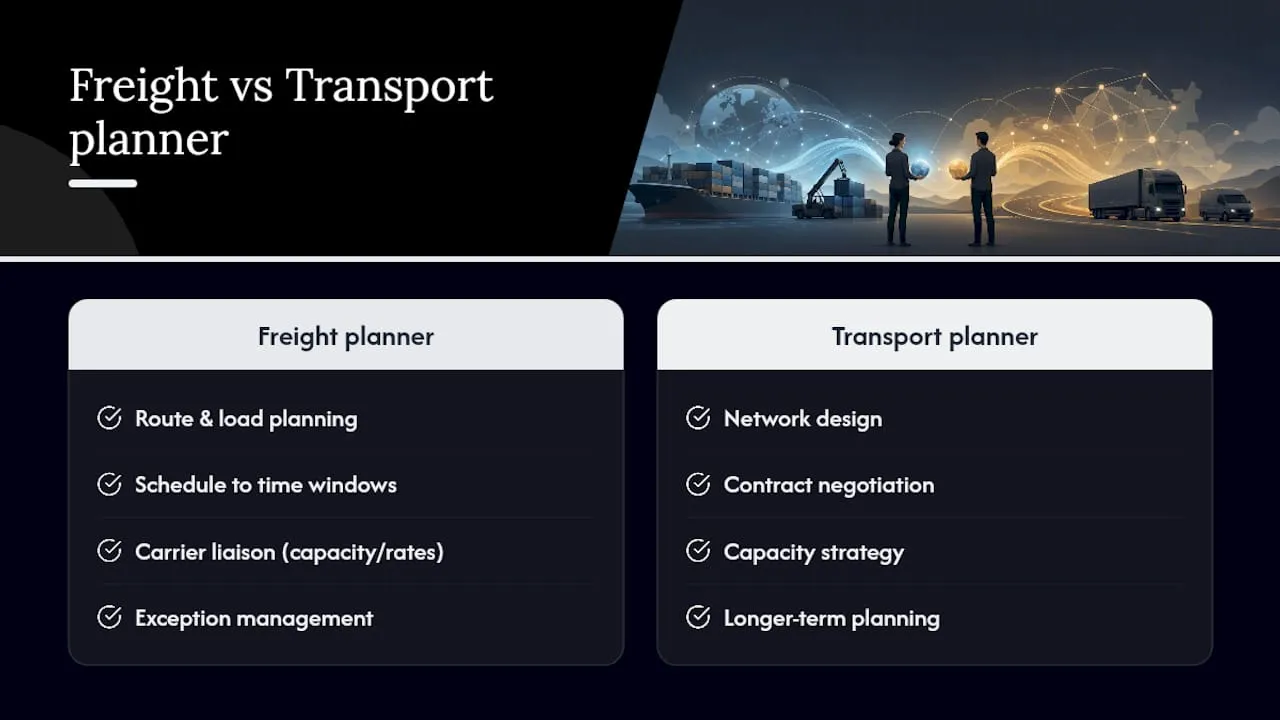
A freight planner’s day runs on sequencing and adjustment, not just data entry. Core tasks include route and load planning, sequencing collections and deliveries to hit time windows, liaising with carriers on capacity and rates, and managing exceptions when a vehicle breaks down or a customer changes a delivery slot. Job adverts consistently list load planning, scheduling, carrier liaison and exception management alongside routine reporting duties in TMS platforms and spreadsheets.
That’s different from a transport planner, whose remit often stretches into network design, contract negotiation and longer-term capacity strategy. A freight planner works the operational layer: today’s loads, tomorrow’s bookings, this week’s carrier problems.
Technology matters here, but not in the way most job specs suggest. A candidate needs working knowledge of a Transport Management System (TMS), strong Excel skills for building and checking load sheets, and comfort with tracking tools that flag delays before a customer calls to complain. None of that replaces judgement. As one industry perspective puts it, TMS proficiency is table stakes; the real differentiator is spotting a capacity gap three days out and fixing it before it becomes a missed delivery.
How much does hiring a freight planner cost?
Salary expectations vary by seniority and specialism, and most employers underestimate the total cost of a hire once advertising, agency fees and interview time are added up.
- Junior freight planner: entry-level roles typically sit at the lower end of the market, often paired with a structured training plan and close supervision for the first few months.
- Mid-level freight planner: candidates with two to five years’ experience command a noticeably higher band, reflecting independent handling of a full desk without daily oversight.
- Senior or specialist freight planner: those with customs clearance knowledge, multimodal experience (road, rail, sea) or team-lead responsibility sit at the top of the market and are harder to source quickly.
Beyond base pay, budget for job advertising, any recruitment agency percentage fee if you use one, assessment or testing time, and the hours your operations team spends interviewing. Specialisms push pay up because they shrink the candidate pool: a planner who understands customs documentation post-Brexit, or who has coordinated multimodal freight, is worth more precisely because fewer people can do it well.
When should you recruit a freight planner?
Two kinds of signal tell you it’s time to hire: operational strain and strategic growth.
Operational signs show up in the numbers before anyone says it out loud. Rising overtime on the planning desk, ETAs slipping more often, and a growing backlog of unresolved exceptions all point to a team stretched past capacity. If your current planner is firefighting instead of forecasting, that’s your cue.
Strategic triggers are different: opening new lanes, seasonal peaks in specific sectors, or steady volume growth that has outpaced your last headcount review. These call for planning ahead of the need, not reacting to it.
Not every trigger justifies a permanent hire immediately. A short-term contractor or a temp-to-perm arrangement suits a defined seasonal peak or a one-off project, letting you test the workload before committing to a full-time role.
What does good performance look like in this role?
Set the bar before you write the advert, not after the first review. Strong freight planners hit measurable operational targets: on-time delivery rate, carrier utilisation, and a low or shrinking count of open exceptions at end of day. Behind those numbers sit behavioural traits that matter just as much, including proactive communication with carriers before a problem escalates and a habit of forecasting tomorrow’s capacity needs rather than reacting to today’s.
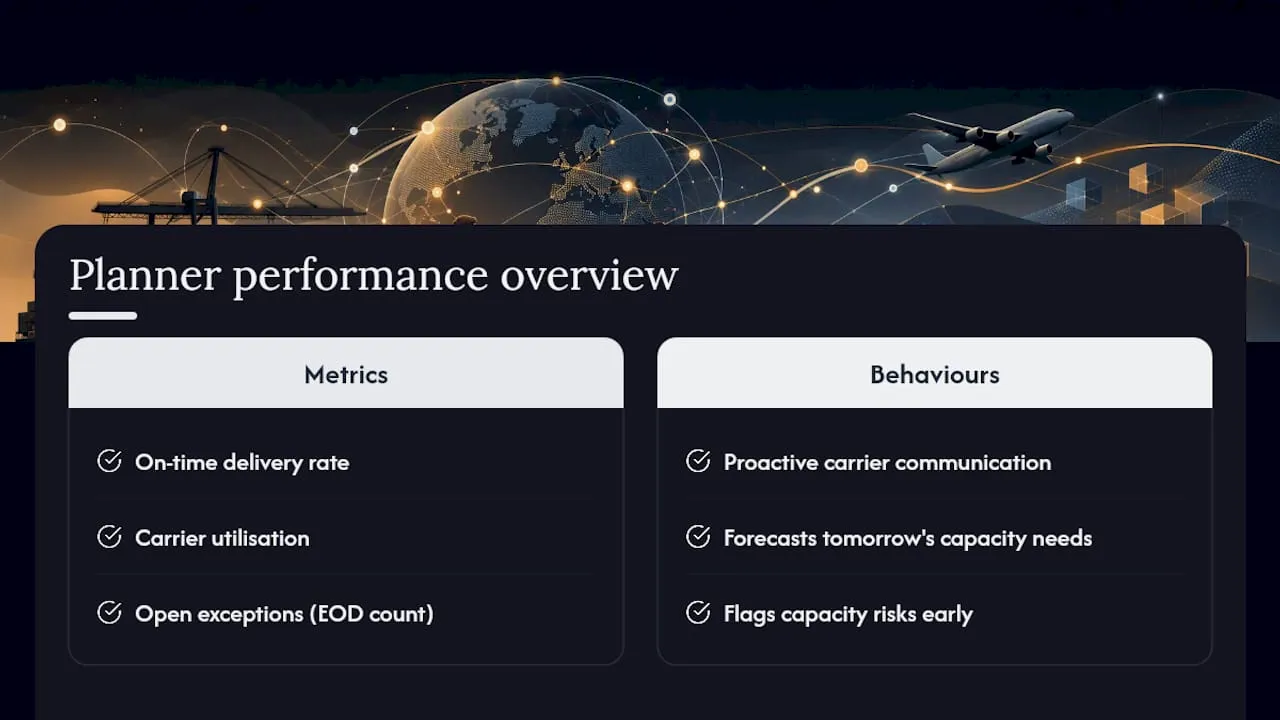
Day to day, expect a competent planner to produce a clean load plan each morning, flag capacity risks with enough lead time to act, and keep carriers and customers updated without being chased. Someone who waits for a manager to ask “what’s happening with this delivery?” is behind the standard you should be hiring for. Someone who has already emailed the answer is meeting it.
Five common hiring mistakes and how to avoid them
Most bad freight planner hires trace back to one of the same five errors.
- Hiring for tool skills instead of problem-solving. A candidate who knows every TMS button but freezes when a lane collapses will cost you more than they save. Run a scenario test instead of just checking software familiarity.
- Writing vague job descriptions. “Assist with freight planning” tells nobody what success looks like. Map the advert to concrete day-one deliverables: load plans produced, systems used, KPIs owned.
- Underestimating onboarding time. Employers routinely under-budget probation planning, which pushes time-to-productivity back by weeks. Set week-by-week objectives from day one.
- Neglecting cross-team fit. Skipping operations staff in the interview process is a common shortcut. Including the team the planner will work with daily reduces early turnover, because both sides can assess fit before signing anything.
- Poor pay benchmarking. Offering last year’s rate for this year’s market loses good candidates to competitors. Check current bands before the advert goes live, not after it’s failed to attract applicants.
How do you assess candidates and spot red flags?
A strong shortlist starts with a clear rubric, not a gut feeling. Sort requirements into three tiers before you look at a single CV.
- Must-haves: hands-on TMS experience, confident Excel skills (pivot tables, lookups, not just formatting), and evidence of handling live exceptions under time pressure.
- Nice-to-haves: multimodal or customs experience, sector-specific carrier relationships, or exposure to a particular commodity type relevant to your business.
- Behavioural fit: communication style, composure under pressure, and how they describe past mistakes (candidates who own errors and explain the fix are a better bet than those who deflect).
For assessment, a live planning exercise or short data task reveals far more than a CV ever will, because it shows how someone actually thinks through a capacity clash rather than how they describe thinking through one. Pair that with a structured behavioural interview built around real scenarios: a missed collection, a carrier price hike, a customer escalation.
Red flags worth walking away from: inability to explain a past planning decision, vague answers about exception handling, or references who can’t confirm specific outcomes when you call them.
Pro Tip: Ask every reference the same question: “What would you trust this person to handle without checking in?” The answer tells you more about capability than any CV bullet point.
Which recruitment route fits your situation?
The right hiring route depends on four things: how predictable your freight demand is, how urgent the gap is, your budget, and how deep the skill requirement runs.
- Steady, predictable volume + moderate urgency → permanent hire, advertised on a sector job board for reach and speed.
- Short-term spike or defined project → contractor or temp-to-perm arrangement.
- Urgent gap, limited internal recruiting time → recruitment agency support, accepting the fee for speed.
- Specialist skill (customs, multimodal) + hard-to-find talent → targeted sector advertising plus a wider search window.
Run through those four axes before you commit to a route. Reviewing broader recruitment marketing approaches can also help you decide how much of the search to handle in-house versus outsource.
What does a realistic 60-day hiring timeline look like?
Plan the hire in stages, with a named owner for each one, so nothing stalls waiting on a decision.
- Weeks 1 to 2: HR or the hiring manager finalises the job description and advertises it, ideally on a specialist channel that reaches active freight planning candidates.
- Weeks 3 to 4: shortlist, run assessments, and hold structured interviews including an operations stakeholder; extend an offer by the end of week four where possible.
- Weeks 5 to 6: onboarding begins under the line manager, with a named mentor and clear weekly objectives rather than a vague “settling in” period.
- Weeks 7 to 8: first formal review against those objectives, checking KPI ownership and independence on routine tasks.
Delays usually come from slow shortlisting or unclear objectives during onboarding. A written 60-day plan with weekly milestones closes both gaps and noticeably shortens the time it takes a new planner to work independently.
Why use a specialist transport job board for this hire?
General job boards flood you with unrelated applications. A platform built for the sector does the filtering before you ever see a CV. Jobs-in-Transport.com has focused exclusively on transport recruitment since 2005, covering roles from freight planning through to highways and traffic management.
- Sector-specific reach means applications arrive already screened by relevance, not volume.
- Employer profiles and featured listings put your vacancy in front of candidates actively searching this field.
- Guidance on writing stronger job adverts helps you attract the right applicants from the first posting, not the fifth.
What hiring managers often miss
Most employers over-index on software checklists and under-index on onboarding. A candidate who has never touched your specific TMS but has a track record of spotting problems early will outperform someone who ticks every tool box but freezes under pressure. Build the interview around scenarios, not software names, and give the first eight weeks a real plan.
— Rob
How Jobs-in-Transport.com helps you hire freight planners
A generalist job board buries your vacancy under hundreds of unrelated roles. Jobs-in-transport gives you the alternative: a sector-only audience already searching for freight and logistics work, so your advert reaches relevant candidates faster instead of getting lost in the noise.

Employers can choose from a Standard, Premium or Premium+ Job Listing, priced at £795, £895 and £1,045 respectively as one-off fees, with higher tiers giving your vacancy greater visibility to registered candidates. If you’re building a longer-term pipeline rather than filling one role, an Employer Profile starting from £300 keeps your company visible to jobseekers browsing the sector year-round. Sector advertising like this tends to produce a higher interview-to-hire ratio than general portals, because the people who apply already know the difference between a freight planner and a transport planner.
Ready to fill the role? Head to the advertising rates page to post your vacancy, or contact the team if you’d rather talk through which listing tier fits your hiring timeline.
FAQ
How much do freight planners get paid?
Pay depends heavily on seniority and specialism: junior planners sit at the lower end of the market, mid-level planners with independent desk experience earn noticeably more, and senior or specialist planners with customs or multimodal expertise command the highest rates. Current market bands are worth checking before you advertise, since they shift with demand.
What qualifications do I need to be a freight planner?
There’s no single mandatory qualification, but employers generally look for TMS experience, strong Excel skills, and a background in logistics, supply chain or transport operations. Practical problem-solving ability, tested through scenario exercises, often outweighs formal credentials in hiring decisions.
Is freight planning a stressful job?
It can be, particularly during exception handling when deliveries slip or carriers fall through at short notice. The stress is manageable when planners have clear systems, realistic workloads and support from operations colleagues rather than working the desk in isolation.
What are the core responsibilities of a freight planner?
The role covers route and load planning, sequencing deliveries and collections, liaising with carriers on capacity, and resolving exceptions such as breakdowns or missed windows. Daily reporting through a TMS and spreadsheets sits alongside these tasks as routine but essential work.
Where should I advertise a freight planner vacancy?
A sector-specific board reaches candidates already familiar with freight operations, which shortens time-to-hire compared with general job portals. Jobs-in-transport offers Standard, Premium and Premium+ listings from £795, alongside employer profiles for longer-term visibility.


