
Post a clearly scoped vacancy on a specialist transport job board, such as Jobs-in-transport, alongside your local authority recruitment channels, and you will reach qualified candidates within weeks rather than months. This guide gives you a working advert checklist, screening criteria, UK salary benchmarks, and onboarding steps built from real council job postings.
TL;DR:
- Use niche transport job boards like Jobs-in-Transport, local authority portals, and LinkedIn to target specialized candidates already searching for sustainability roles.
- Focus your advert on specific core duties, clear essential criteria, and practical details such as working pattern, grade, and license requirements to filter suitable applicants.
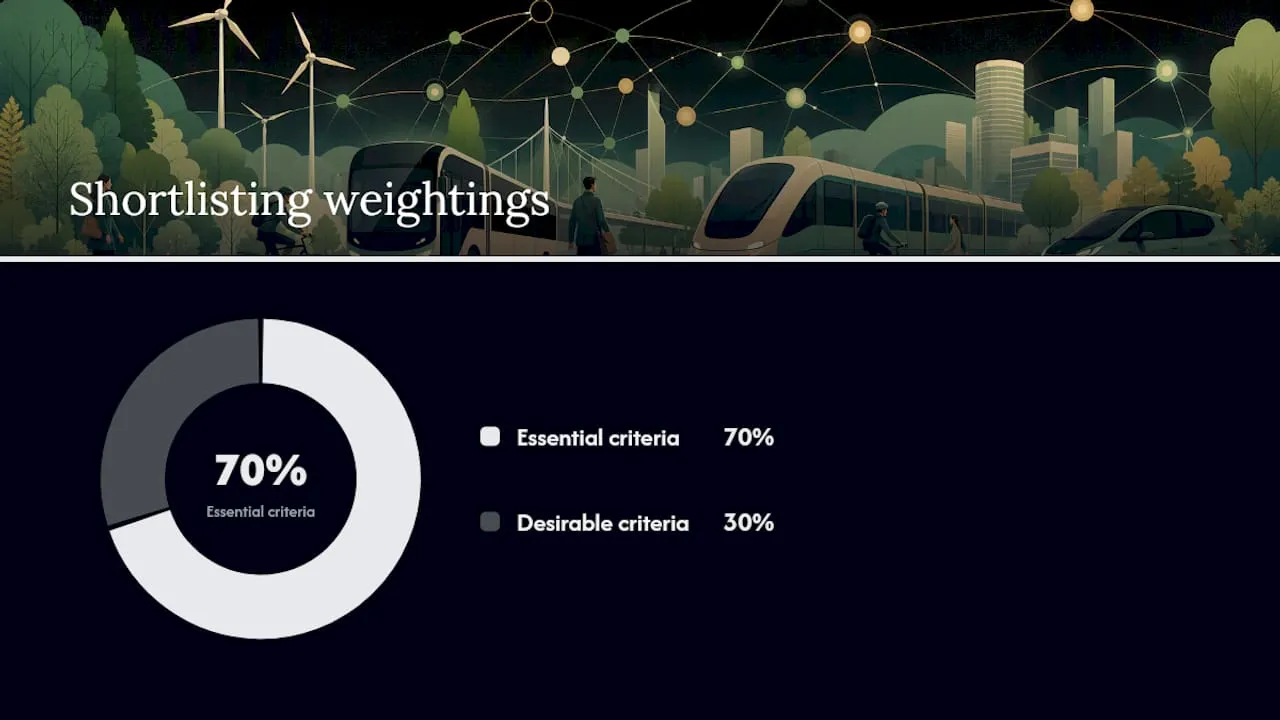
- Implement a scoring system that prioritizes essential criteria at 70 percent to ensure objective shortlisting and avoid bias based on vague qualifications.
- For assessment, combine CV screening, brief telephone interviews, competency-based panel questions, and practical tasks to reliably evaluate candidate suitability.
- Prioritize quick, targeted recruitment processes and post roles where niche audiences actively search to reduce time-to-hire and avoid missing funding or contract deadlines.
Table of Contents
- What to include in the job advert and person specification
- Where to advertise your vacancy for maximum reach
- How to shortlist, assess and interview candidates
- Salary, grading and contract benchmarks
- Onboarding and KPIs for the first six months
- Why Jobs-in-Transport.com works for this hire
- An honest read on what actually moves the needle
- Post your vacancy on Jobs-in-Transport.com
- Sources
What to include in the job advert and person specification
A vacancy for a Sustainable Transport Officer lives or dies on specificity. Vague adverts asking for someone “passionate about sustainability” attract dozens of unsuitable applications and bury the two or three candidates who could actually do the job.
Start with job purpose and three to five core duties. Most postings centre on active travel schemes, behaviour-change campaigns, and contract management, mirroring the structure councils already use in their job summary fields.
Essential vs desirable criteria:
- Degree or equivalent experience in transport planning, environmental science, or a related field
- Demonstrable experience delivering active travel schemes (cycling infrastructure, school travel plans, car club management)
- Working knowledge of procurement and contract monitoring, particularly for senior posts overseeing subsidised transport contracts
- Proficiency in Excel and, ideally, GIS mapping tools for analysing usage data
- Strong stakeholder engagement skills, since most roles involve schools, parish councils, and transport operators
Practical details to specify:
- Working pattern (full-time 37 hours is standard; note any hybrid expectations)
- Grade, salary band, and whether the post is permanent or fixed-term
- Driving licence requirement if site visits are frequent
- DBS check requirement if the role involves school engagement
Build a short scoring grid weighting essential criteria at 70% and desirable criteria at 30%, so shortlisting stays objective rather than gut-feel.
Pro Tip: Borrow the phrasing from a live advert like the one for the Sustainable Travel Officer role at Lincolnshire County Council. Copying a proven structure saves you drafting time and signals to candidates that the role is genuinely established.
Where to advertise your vacancy for maximum reach
Sector job boards and LinkedIn dominate live sustainable transport vacancy listings, and specialist boards tend to aggregate council and consultancy roles that generalist sites miss entirely.
Your channel mix should include:
- Niche transport job boards such as Jobs-in-transport, which reaches candidates already searching within highways, transport planning, and sustainability categories rather than a generic audience
- Local authority recruitment portals and Find a Job council pages, which public-sector candidates check by habit and which lend the post immediate credibility
- LinkedIn, using a targeted post plus a small paid boost aimed at transport planning and sustainability job titles rather than a broad “marketing” audience
- Professional bodies including CIHT, IEMA, and organisations like Sustrans, which hold direct lines to early-career and specialist active-travel talent
- University careers services, useful for graduate-level positions or placement-to-permanent pipelines
Time your advert to avoid school holidays if the role touches school travel planning, and use CV database alerts on your chosen board to surface passive candidates who match your criteria before they even apply.
How to shortlist, assess and interview candidates
A repeatable process beats ad hoc judgement every time, especially when applications include candidates from planning, engineering, and community engagement backgrounds who all look plausible on paper.
- CV sift against your weighted scoring grid, filtering out anyone missing essential criteria outright
- Telephone screening (15 to 20 minutes) to confirm availability, salary expectations, and basic competency evidence
- Scored panel interview using competency-based questions tied to stakeholder engagement, data analysis, and project delivery
- Task or presentation, such as a short written brief on a local active-travel scheme with proposed success metrics, which reveals analytical thinking better than any interview answer
For mid and senior posts, build in a data interpretation exercise using real transport usage figures, since senior sustainable travel officer roles often carry direct responsibility for tendering and monitoring subsidised passenger transport contracts.
Verify right-to-work status, qualifications, and, where the role involves site visits or school contact, a valid driving licence and DBS check before confirming an offer.
Pro Tip: Ask candidates to bring one example of a time a stakeholder disagreed with their recommendation. How they describe resolving it tells you more about real-world fit than any rehearsed “tell me about yourself” answer.
Salary, grading and contract benchmarks
Councils generally advertise sustainable transport roles against Green Book pay scales, with entry-level officer posts sitting lower than senior positions carrying contract-management responsibility.
Public-sector adverts commonly reference Local Government Pension Scheme access and Green Book terms, shaping the total reward package well beyond base salary.
Contract types vary by funding source:
- Permanent posts for core policy or programme roles with ongoing budget lines
- Fixed-term contracts, typically one to two years, common where funding comes from a specific grant or scheme
- Secondments, useful for cross-department active travel initiatives without a permanent headcount change
Benefits regularly offered alongside salary include Local Government Pension Scheme membership, flexible or hybrid working, and cycle-to-work schemes, all of which matter disproportionately to candidates drawn to this field precisely because they care about sustainable travel themselves.
Benchmark your own offer against job level, responsibility for contracts or budgets, and local market rates rather than a single national figure, since a senior officer managing bus contracts commands a different band than an entry-level active travel coordinator.
Onboarding and KPIs for the first six months
The first 90 days set the tone for everything that follows. A new Sustainable Transport Officer needs stakeholder introductions, data access, and one visible early win before momentum stalls.
- Weeks 1 to 4: stakeholder mapping, systems access, and shadowing an existing project
- Weeks 5 to 12: deliver a starter project, such as a school travel audit or a cycle route feasibility study, that produces a tangible output
- Months 4 to 6: own a full workstream, such as a behaviour-change campaign, with defined success metrics
Set KPIs covering project delivery milestones, measurable active-travel trip increases, stakeholder engagement targets, and contract compliance where relevant. Line managers should run weekly 1:1s during probation, tapering to fortnightly once the officer is delivering independently.
Pro Tip: Give the new hire one small, visible project in month one rather than three large ones. A single completed audit builds more internal credibility than three half-finished strategies.
Why Jobs-in-Transport.com works for this hire
Jobs-in-transport has connected transport professionals with employers since 2005, covering highways, transportation planning, and transport technology roles alongside sustainability positions. That focus means your advert sits among a self-selecting audience already searching for exactly this kind of work, rather than competing for attention on a generalist board.
Employers can choose standard or featured listings, host CVs, and set up candidate alerts so relevant applicants find the role even before you actively promote it. Councils and consultancies advertising EV infrastructure and behaviour-change project roles use the same specialist channels for a reason: generic job boards simply don’t concentrate this talent pool the way a niche platform does.
An honest read on what actually moves the needle
The conventional advice on hiring for this role focuses almost entirely on sustainability credentials, and that’s the wrong emphasis. Look at what senior postings actually reward, and it’s procurement literacy, contract monitoring, and stakeholder negotiation that separate the candidates who deliver from the ones who write good policy documents nobody implements.
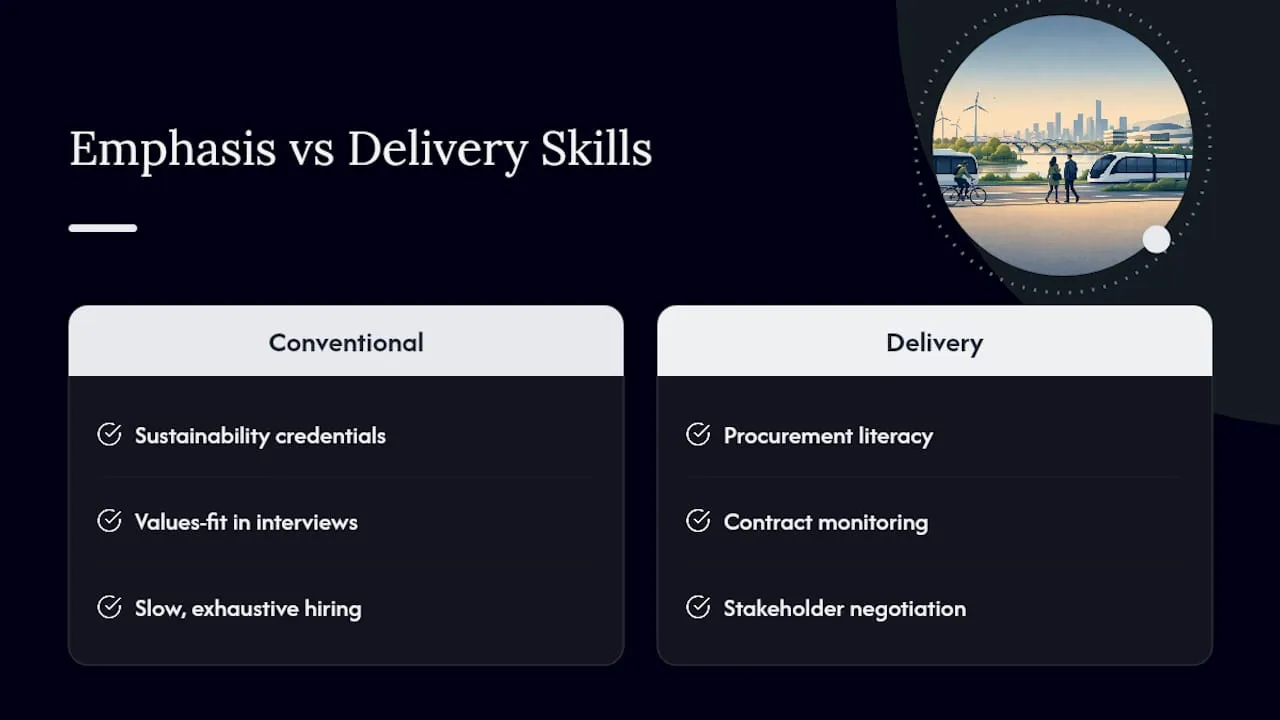
Public-sector hiring managers over-index on values-fit in interviews and under-index on evidence of delivery under constraint. Ask any candidate to walk you through a scheme that got delayed or cut, and how they adapted, rather than why they care about cycling infrastructure. Anyone can talk about caring. Fewer can show you a project they rescued.
The other gap is speed. Fixed-term funding cycles mean a slow six-week recruitment process can cost you half a contract’s useful life before the person even starts. Prioritise a tight, scored shortlisting process over an exhaustive one, and post the vacancy somewhere candidates in this niche field are actually looking, rather than hoping volume on a generalist board sorts itself out.
— Rob
Post your vacancy on Jobs-in-Transport.com
Jobs-in-Transport.com is the specialist alternative to generalist job boards for this exact hire, giving your advert direct visibility among transport professionals rather than competing against thousands of unrelated postings for attention.

Getting started takes four steps: create an employer account, choose your listing type (standard or featured, depending on how quickly you need candidates), upload your advert using the checklist above, and promote it as featured if the role needs filling fast. A specialist audience means fewer unsuitable applications and less time spent sifting CVs from candidates who have never worked near a transport contract. For background on how the platform supports employers, visit the Jobs-in-transport about page, or head straight to the main site to create your listing and get your Sustainable Transport Officer role in front of the right people this week.


