
Hire a traffic marshal with a recognised banksman certificate and photo ID, then confirm their suitability with a short supervised shift before they work alone. Verify a documented risk assessment already justifies the role, and pull candidates from specialist channels like Jobs-in-Transport.com or trusted local labour pools. Skip any of those steps and you’re gambling with a role designed to stop people getting hurt.
TL;DR:
- Posting on specialist transport job boards like Jobs-in-Transport ensures your advert reaches candidates with the correct certificates and relevant experience.
- Employers should explicitly specify certificate types, site-specific duties, and job conditions in the vacancy to attract suitable applicants and filter out unqualified ones.
- Verification procedures must include checking current certificates, matching photo ID, and confirming site-specific requirements such as DBS checks or safety scheme recognition.
- Conduct supervised practical shifts and sign off observed tasks before allowing marshals to work unsupervised, ensuring they understand your site layout and safety protocols.
- Maintaining a central record of training certificates, induction sign-offs, and refresher due dates helps ensure compliance and readiness during audits.
Table of Contents
- Writing a job specification that attracts the right traffic marshal
- Where to find traffic marshal candidates quickly
- What screening and compliance checks does the law expect?
- How do you onboard a traffic marshal safely?
- Keeping a reliable pool of traffic marshals
- What recruiting for UK sites has taught me about this role
- Post your traffic marshal vacancy where the right candidates actually look
- Sources
- FAQ
Writing a job specification that attracts the right traffic marshal
Most bad hires start with a vague advert. If your listing just says “traffic marshal needed, immediate start,” you’ll get a flood of applicants who’ve never held a card and half a dozen who won’t turn up. A tight specification does the filtering for you before the interview stage.
Start with the actual duties, because they vary more than people assume:
- Segregating vehicles and pedestrians on live sites
- Guiding reversing vehicles and directing plant movements
- Controlling site gates and managing visitor or delivery access
- Using recognised hand signals and, on larger sites, two-way radios
Certificate requirements need to be explicit, not implied. According to Indeed’s UK role guidance, construction listings frequently require CPCS or NPORS cards, sometimes alongside a CSCS card where site access is managed by turnstile or badge. Not every certificate covers the same ground, and treating them as interchangeable is one of the quickest ways to end up with someone unsuitable on day one.
Then flag anything site-specific: does the role interface with the public, work near mobile plant, run night shifts, or require an Enhanced DBS because vulnerable groups are nearby? State the contract type (permanent, temporary, agency), the pay band, whether it’s an immediate start, and what refresher training you expect within the first few months. Candidates who lack the right card will self-select out, which saves everyone time.
Where to find traffic marshal candidates quickly
Speed and quality usually pull in opposite directions in recruitment, but not here, provided you use the right channels in the right order.
- Sector-specific pages on larger job sites. Mainstream boards work as a secondary net, particularly for one-off event cover or short-notice logistics work, where listings such as construction-focused adverts show realistic pay bands and certificate expectations worth mirroring in your own advert.
- Internal promotion and shadowing. A labourer or junior operative who already knows your site layout and your team often makes a more dependable marshal than an unknown temp, and demand data from sector job boards suggests employers lean on this route more than the adverts alone would suggest.
- Agencies, briefed properly. If you use a temping agency, demand evidence upfront: training certificates, a site risk assessment, and clarity on who supervises the marshal during their first shift. Agencies that can’t answer those questions plainly aren’t worth the discount.
Pro Tip: Put the certificate requirement and the pay rate in the first line of your advert, not buried in the description. Candidates without the right card will drop out immediately, and you’ll stop wasting time on calls that go nowhere.
What screening and compliance checks does the law expect?
UK employers have a duty to run a risk assessment of vehicle movements on site and confirm the people managing that risk are actually competent to do it. That assessment is what justifies appointing a marshal in the first place, and current guidance from Training Station makes clear this obligation sits with the employer, not the candidate.
Screening should follow a consistent sequence:
- Check the training certificate matches what your site needs (CPCS A73, NPORS N403, or equivalent) and that it’s current.
- Verify photo ID against the certificate to confirm you’re hiring the person who actually holds it.
- Confirm whether your principal contractor requires CSCS-linked cards or recognition under a Safety Scheme in Procurement such as CHAS, SafeContractor, Constructionline, or SMAS.
- Decide whether the role needs an Enhanced DBS check, particularly on sites bordering schools, hospitals, or public footpaths.
- Take up references focused on safety record, not just punctuality.
Legislation doesn’t set a fixed expiry date on traffic marshal training, but many principal contractors informally expect recent certification before they’ll approve someone for a live site. That expectation isn’t written into statute, so it’s worth confirming directly with whoever manages your supply chain pre-qualification, since a candidate arriving with a five-year-old certificate might be perfectly competent but still get bounced at the gate.
Keep records centrally: certificate copies, ID checks, induction sign-off sheets, and the date the next refresher is due. When an auditor or SSiP assessor asks for evidence, “we’re pretty sure he did a course” doesn’t hold up.
How do you onboard a traffic marshal safely?
A certificate proves someone understands the general theory. It doesn’t prove they know your gate layout, your exclusion zones, or which reversing alarm means what on your particular fleet. That gap is where onboarding earns its keep.
- Deliver a proper site induction. Walk them through the Traffic Management Plan, exclusion zones, vehicle routes, and your communication procedures, whether that’s radio, whistle, or hand signal.
- Run supervised practical shifts before solo deployment. Blended training that pairs classroom or online theory with workplace practical instruction tends to produce marshals who cope better with the unexpected, rather than freezing when a reversing lorry doesn’t behave like the training video.
- Sign off specific observed tasks. Don’t just tick “induction complete.” Note that they’ve demonstrated safe reversing guidance, gate control under pressure, and correct radio use.
- Set a refresher date and log it centrally, aiming for review every two to three years in line with what most principal contractors expect.
- Run a scenario-based check before leaving them unsupervised. Ask what they’d do if a pedestrian ignored a signal, or a delivery driver argued about site access.
Keeping a reliable pool of traffic marshals
Recruiting a marshal once is the easy part. Keeping a dependable pool of them, shift after shift, month after month, is where most sites actually struggle.
Offer a route forward. Marshals who can add plant cards or step into a supervisory role tend to stay longer, and shadowing newer recruits gives your experienced people a reason to stick around rather than drift to the next agency job. Run refresher training on a rolling basis rather than waiting for certificates to lapse en masse, and keep one central log of who’s trained, who’s due, and who’s overdue.
Build a small trusted pool rather than relying on whoever an agency sends that week. Pair that with a contingency agreement with a vetted provider, so you have a fallback when someone calls in sick, and agree an escalation protocol in advance so nobody’s improvising at 7am on a live site.
- Track attendance reliability and near-miss reports per marshal, not just per site.
- Log induction sign-offs and refresher due dates in one place, not scattered across email threads.
Pro Tip: Ask your agency partner what happens if their marshal doesn’t show up. If they can’t answer in one sentence, that’s your answer about how reliable they’ll actually be.
What recruiting for UK sites has taught me about this role
The cheapest marshal on the shortlist is rarely the cheapest option once you factor in a missed reversing signal or a principal contractor bouncing your supplier at pre-qualification stage. Site-specific competence, proven through a supervised shift, consistently beats a lower day rate.
The most common mistakes I see are avoidable: adverts that never mention which certificate is required, employers who skip photo ID checks because “the agency vouched for him,” and sign-off processes that amount to a handshake rather than an observed task list. Fix those three things and most hiring problems disappear.
Using a specialist board rather than a general jobs site also changes the shape of your shortlist. You get fewer applicants, but a higher proportion of them already hold the right card, which shortens the whole process considerably.
— Rob
Post your traffic marshal vacancy where the right candidates actually look
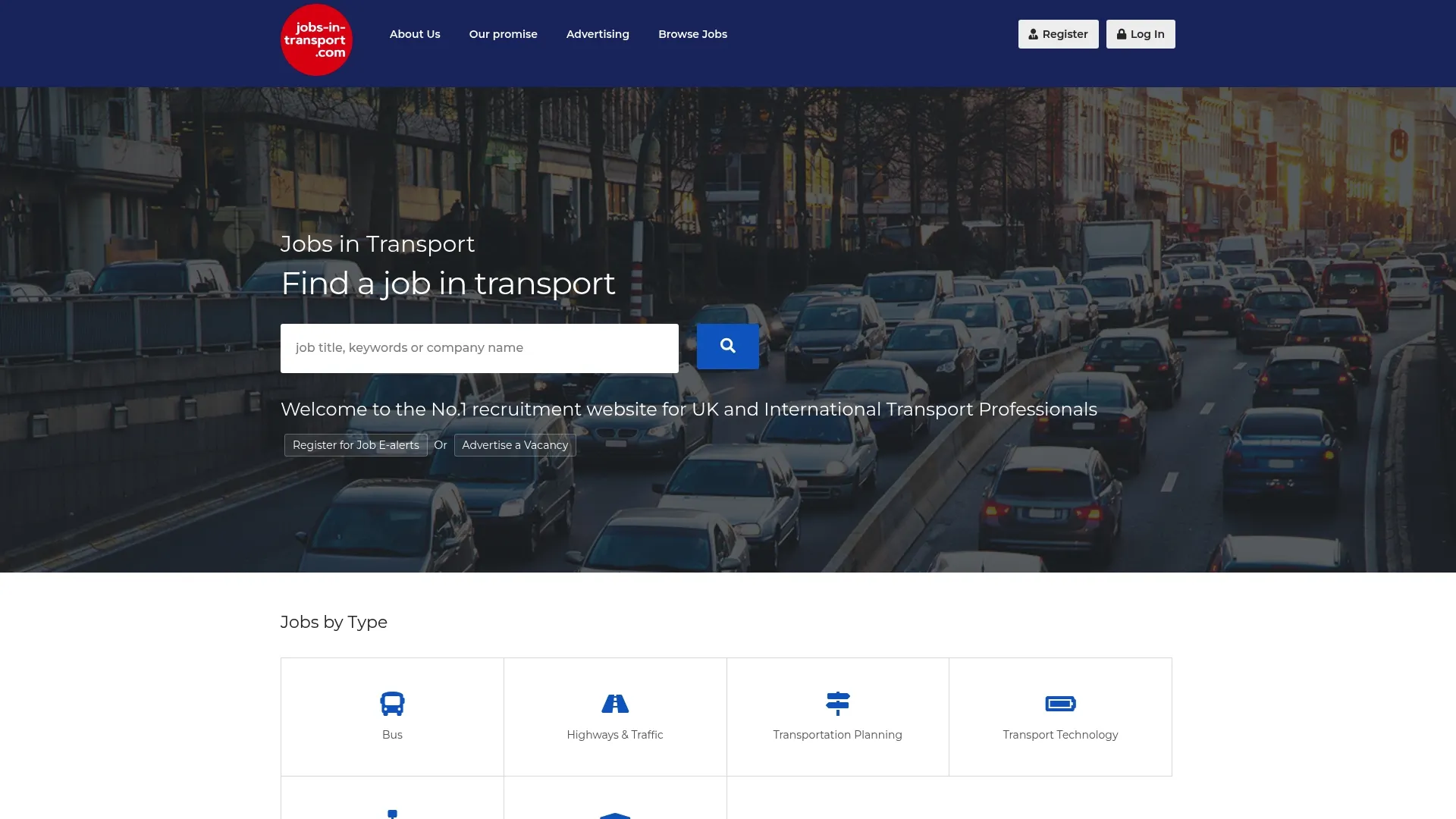
Jobs-in-Transport is the alternative to scattering your advert across general job sites and hoping the right person notices. Because such platforms focus specifically on highways, traffic management, and transport roles, your listing reaches people who are more likely to hold the certificates this role demands, rather than a generic pool you then have to filter manually.
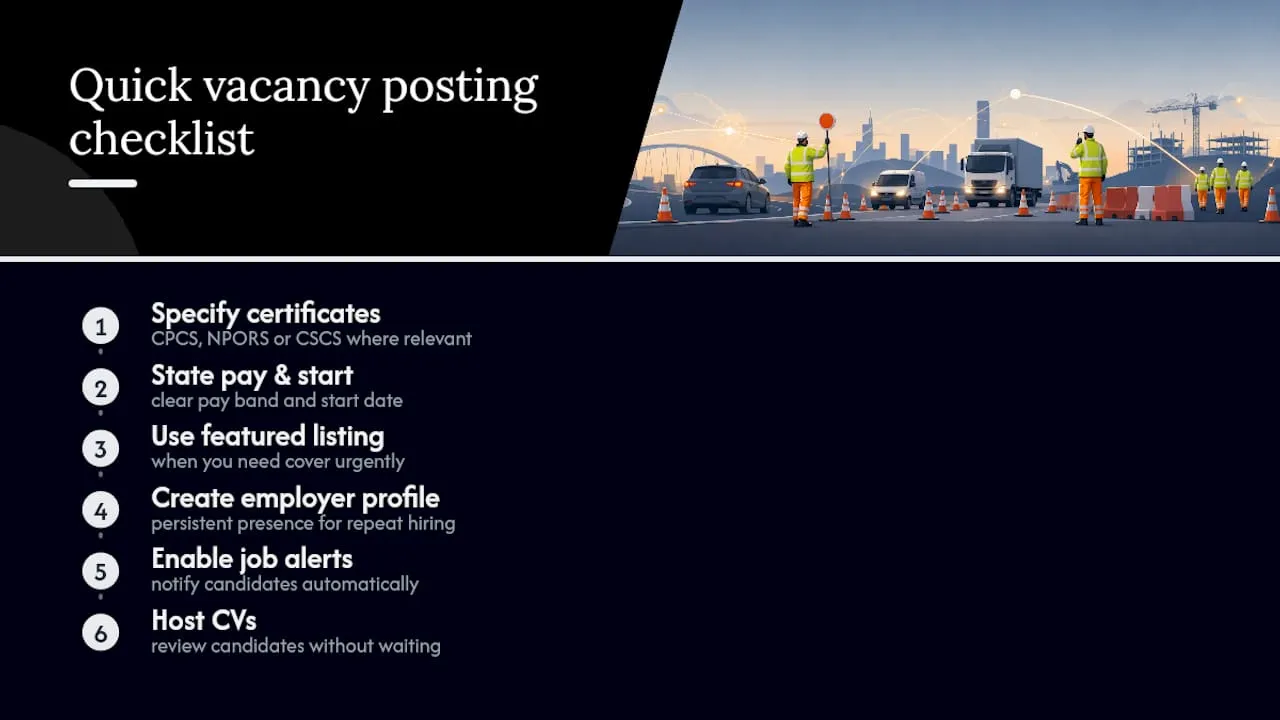
Posting a vacancy takes minutes: list the certificate requirement (CPCS, NPORS, or CSCS where relevant), state the pay band and start date clearly, and use a featured listing if the site needs cover urgently. Building an employer profile gives your organisation a persistent presence for repeat hiring, so you’re not starting from scratch every time a project ramps up. Set up job alerts on your side too, and CV hosting means you can review candidates without waiting for applications to trickle in one by one.
Ready to get your vacancy in front of qualified marshals? Jobs-in-transport and start building your shortlist today.
Sources
For legal context and certificate expectations, see Training Station’s guidance on requirements and their practical route into the role. For refresher training options, Cozys’ Transport Manager training pages are worth a look. Keep certificate and induction copies on file for SSiP audits.
- Traffic marshal training requirements: What the law says and what employers expect — Training Station
- Traffic Marshall – St Michaels, Torbay | £19 | jobs24
- Traffic Marshal job description — Indeed UK
FAQ
What certificate does a traffic marshal need?
Most UK sites expect a CPCS A73 or NPORS N403 card, sometimes alongside a CSCS card where the principal contractor manages site access through a badge system.
How long does traffic marshal training take?
Classroom courses typically take a few hours to a full day, and blended options combining online theory with practical instruction are increasingly common.
Do traffic marshals need a DBS check?
Only where the site interfaces with the public or vulnerable groups, such as sites near schools or hospitals; check your specific project’s requirements before advertising.
How often should traffic marshal training be refreshed?
There’s no legal expiry date, but many principal contractors expect recent certification before approving someone for a live site.
Where’s the fastest place to post a traffic marshal vacancy?
Specialist boards like Jobs-in-transport reach candidates who already hold relevant certificates, which typically shortens time-to-hire compared with general job sites.


