
The right way to recruit a transport PMO analyst is a precise job spec that tests domain fit, advertised on niche transport channels, filtered through a scenario-based assessment before interview. Update your current advert against the checklist below, then post to a specialist board such as Jobs-in-transport or reserve a featured listing. Expect to pay somewhere between £34,000 and £56,000 depending on scope, for someone with three to five years of relevant experience.
TL;DR:
- Transport PMO analysts should have strong core delivery skills, advanced reporting tools, and sector-specific knowledge like depot logistics and timetable constraints.
- Advertising should explicitly state the transport sub-sector, clear responsibilities, outcome measures, and pay/battern to attract qualified candidates quickly.
- Niche transport job boards and forums outperform generalist sites for sourcing candidates, with screening focusing on tool proficiency, project experience, and transport understanding.
- Scenario exercises about schedule slips, governance gaps, and cost variances reveal real transport domain competence during interviews.
- Onboarding must follow structured milestones, including stakeholder mapping, initial governance reports, and dashboard ownership, with retention supported by career development and visibility.
Table of Contents
- What skills, experience and certifications should you prioritise?
- How do you write a job description that attracts the right candidates?
- Where should you advertise and how do you screen candidates fast?
- What interview questions actually test transport PMO competence?
- How do you onboard and retain a transport PMO analyst?
- What separates a good transport PMO hire from a bad one?
- How Jobs-in-Transport helps you fill the role faster
- Sources
What skills, experience and certifications should you prioritise?
Strong PMO fundamentals matter more than a long CV, but transport exposure is what separates a competent analyst from one who slows your programme down asking basic operational questions in month two.
Prioritise these areas when you screen CVs and score interviews:
- Core PMO delivery skills: scheduling, cost tracking, risk registers, and governance reporting that a delivery board would actually trust.
- Data and reporting tools: advanced Excel is non negotiable; Power BI or Tableau, plus MS Project or Smartsheet, cover most transport programmes. Basic SQL or scripting is a genuine bonus, not a requirement.
- Transport domain knowledge: depot logistics, timetable constraints, fleet turnaround, and enough transport economics to understand why a schedule slip on one route cascades elsewhere.
- Certifications: PMP or CAPM plus PRINCE2 or APM are desirable rather than mandatory, and candidates typically need a mix of these credentials alongside sector-relevant analytical skills, with three to five years of PMO or project-coordination experience as a common baseline.
Pro Tip: When your candidate pool is thin, hire for PMO rigour and transport curiosity over a perfect sector CV. You can teach timetable structures in three weeks; you cannot easily teach someone to care about why the 07:42 keeps running late.
Degrees in transport, logistics, engineering or business are the most common academic backgrounds among applicants, which is worth knowing before you write a spec that accidentally excludes strong candidates from adjacent fields.
How do you write a job description that attracts the right candidates?
A vague PMO advert pulls in generalists who have never touched a timetable. A sharp one filters them out before they apply, which saves you hours at shortlisting.
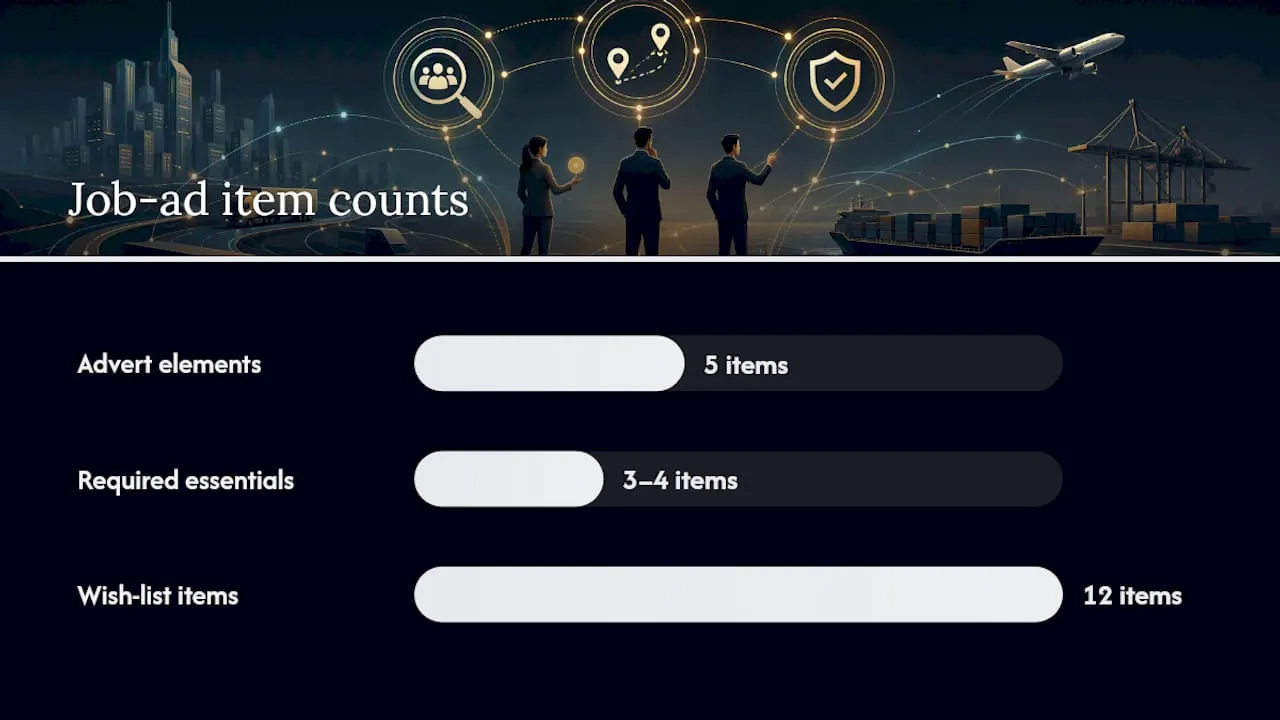
Structure the advert around five elements:
- Headline and mission: one line stating the PMO remit and that it sits inside a transport programme, not a generic IT or construction project.
- Responsibilities: governance and standards, scheduling, stakeholder reporting, and building the dashboards leadership actually reads, echoing the core duties most PMO adverts list.
- Outcomes and measures: on-time delivery rates, quality of governance artefacts, and how quickly risks get escalated rather than buried.
- Required versus desirable: keep the required list short. Three or four essentials beat a wish list of twelve.
- Pay band and working pattern: state the number and whether it’s hybrid or onsite. Guesswork here costs you good applicants.
Add a line on career progression and CPD support. Advertising pay bands and CPD support openly increases the quality of applicants for niche PMO roles in transport, and it’s one of the cheapest changes you can make to an advert this week.
Where should you advertise and how do you screen candidates fast?
Generalist job boards flood you with applications that go nowhere. Niche channels give you fewer applicants but a much higher hit rate, which is what actually matters when you’re trying to fill a role in weeks, not months.
Run sourcing through these channels, in rough priority order:
- Specialist transport job boards such as Jobs-in-Transport.com, where featured postings and CV search put your advert in front of people already working in the sector.
- Sector associations and forums, where passive candidates who aren’t actively job-hunting still browse.
- Targeted LinkedIn campaigns filtered by transport, logistics, or infrastructure employers rather than a generic PMO search.
- Staff referrals, which tend to produce the best cultural and domain fit at the lowest cost.
- Specialist recruiters for senior or hard-to-fill roles where time pressure justifies the fee.
Once applications land, filter on must-have keywords (specific tools, project sizes, sector terms) before you read a single cover letter. A six-question phone screen then confirms availability, notice period, tool proficiency, one concrete transport project example, salary expectations, and working-pattern fit, all in under fifteen minutes.
A short practical pre-screen task, such as building a one-page risk register from a mock brief, reduces interview time and improves hire quality by filtering out candidates who can’t produce basic governance artefacts under time pressure.
What interview questions actually test transport PMO competence?
Behavioural questions alone let generic PMO candidates talk their way through. Scenario exercises force them to reason about the operational reality your programme actually faces.
Run three scenario exercises at interview or assessment stage:
- The slipping schedule: give the candidate a route rollout that’s two weeks behind and ask them to identify the top three risks and a recovery plan. Strong answers name resourcing, permits, and stakeholder sign-off as likely culprits.
- The governance gap: describe a project where a steering board hasn’t seen a RAID log in a month. Ask what the candidate does in the first 48 hours.
- The cost variance: hand over a simplified budget tracker showing a 12% overspend and ask them to explain probable causes and next steps.
Pair these with technical questions on variance analysis, scheduling logic, and dashboard design, plus behavioural prompts on escalating a stalled stakeholder or handling a governance failure that reached a director’s desk. A short Excel or Power BI work-sample task, scored against a simple rubric, separates candidates well: junior applicants describe what a dashboard should show, mid-level candidates build one unprompted, and senior candidates ask clarifying questions about the audience before they start. Scenario-driven questioning and work-sample tasks reveal domain fit far better than purely behavioural interviews.
How do you onboard and retain a transport PMO analyst?
The first 90 days decide whether this hire sticks. Rush the induction and you’ll be back on Jobs-in-Transport within a year.
Structure onboarding around three milestones:
- First 30 days: stakeholder mapping, shadowing operational teams, and a transport induction covering depot and timetable basics.
- Days 30 to 60: first governance reports delivered independently, plus targeted upskilling on your specific tools.
- Days 60 to 90: full dashboard ownership and a mentorship check-in to catch early friction.
Pro Tip: Send the new analyst to sit with an operations team for a day in week two. It does more for domain fluency than any induction deck.
Retention comes down to a visible career ladder, real CPD budget, and rotation onto different transport projects rather than the same governance loop for three years. On pay, benchmark against comparable roles; public-sector transport employers often publish bands around £34,000 to £56,000 depending on scope, while private-sector operators can pay more for scale and responsibility.
What separates a good transport PMO hire from a bad one?
The best transport PMO analysts I’ve seen do one thing differently: they ask about depot constraints, fleet turnaround, or timetable knock-on effects before anyone asks them to. That’s operational curiosity, and it predicts early performance far better than a polished PMO CV with no sector exposure. Pure governance skill without that curiosity gets you someone who produces a beautiful RAID log for a problem they don’t actually understand.
When Jobs-in-Transport advises hiring managers on adverts, the checklist is short: state the pay band, name the transport sub-sector explicitly, keep the required-skills list under five items, and add one scenario question about cost drivers before the interview even starts. Candidates who can’t reason about backhaul or load consolidation in a five-minute conversation rarely improve much once hired.
— Rob
How Jobs-in-Transport helps you fill the role faster
Jobs-in-Transport is the specialist route to transport candidates that generalist boards simply can’t match, because every applicant browsing the site already works in or wants to work in this sector. Rather than sifting hundreds of unrelated CVs from a broad job board, you’re reaching people who already understand depots, timetables and route economics.

The employer offering covers standard job posts, featured listings for higher visibility on competitive roles, CV hosting and search, and targeted campaigns for harder-to-fill senior positions. If you’re under time pressure, a managed posting service can get your advert live and in front of qualified transport professionals within days rather than weeks. Check the employer services overview for what’s included, or read more about the platform’s background if you want the fuller picture before committing budget.
Ready to move? Head to the employer landing page to post your PMO analyst role, or get in touch with the team about a featured listing or managed posting for an urgent hire. If you’re also refreshing your PMO templates while you’re at it, EasyMove’s project-management guidance for large moves has some useful planning structures worth borrowing.


