
Recruiting skilled transport professionals in the UK has never been more demanding. Across logistics, highways, traffic management, and project management, employers are competing fiercely for a shrinking pool of qualified candidates, and the skills gap continues to widen year on year. Technical roles face 57.7% severe difficulty in recruitment, with salaries rising just to maintain interest. If you want to consistently secure top transport talent, you need more than a job advert posted on a general board. You need a structured, repeatable recruitment process built specifically for this sector.
Table of Contents
- Understanding the UK transport recruitment landscape
- What you need before you recruit: Preparation and planning
- Step by step: The transport recruitment process
- Checking your results: Verification and continuous improvement
- What most transport recruiters miss (and how to fix it)
- Advance your recruitment success with Jobs-in-Transport.com
- Frequently asked questions
Key Takeaways
| Point | Details |
|---|---|
| Plan before you recruit | Define roles, align resources, and clarify requirements for best results. |
| Use a stepwise system | Following a structured process helps attract, screen, and secure top talent efficiently. |
| Track and improve | Regularly measure hiring outcomes and adapt your strategy using real-world data. |
| Think long-term pipelines | Focus on ongoing talent development, not just immediate vacancies, to stay ahead. |
Understanding the UK transport recruitment landscape
With the problem clearly framed, let’s map out exactly what you’re facing so you can plan intelligently rather than react to each vacancy in isolation.
The UK transport sector in 2025 and into 2026 presents a complicated picture. Some roles are filling relatively easily, while others sit vacant for months. Vehicle technicians grew by 28.7% to 191,797 in Q1 2025, yet despite that growth, 57.7% of employers report severe or very severe recruitment difficulties for fitters, mechanics, and technicians. By comparison, roughly 50% of employers report no problem at all filling van driver positions. This contrast tells you something important: supply and demand are not evenly distributed across transport disciplines.
The challenges around drivers being wanted have evolved too. HGV driver vacancies actually fell in the same period, yet HGV salaries rose 7.5%, suggesting employers are paying more just to hold onto existing staff and attract the smaller pool of available candidates. This is a classic sign of a tightening labour market, not a stable one.
Here is a snapshot of current recruitment difficulty across common transport roles:
| Role | Recruitment difficulty | Key pressure |
|---|---|---|
| Vehicle mechanics/fitters | Very severe (57.7%) | Skills shortage, ageing workforce |
| HGV drivers | Moderate to severe | Licence costs, lifestyle factors |
| Transport planners | Moderate | Specialist knowledge required |
| Project managers (transport) | Moderate | Competition from wider infrastructure |
| Van drivers | Low | Good candidate supply |
| Logistics coordinators | Low to moderate | Varied experience levels |
Key patterns you should know about before you launch any campaign:
- Pipeline erosion: Fewer young people are entering technical transport trades, creating a long-term shortage that salary alone cannot fix.
- Turnover pressure: Driver and warehouse roles see persistently high turnover, which means you are often recruiting reactively rather than proactively.
- Candidate expectations have shifted: Transport professionals now assess employer brand, flexibility, and career progression alongside pay.
- Niche skills are hardest hit: Roles requiring regulatory knowledge, route optimisation software, or specialist vehicle experience are the most difficult to fill quickly.
Understanding who we are and what we specialise in helps contextualise why sector-specific recruitment strategies consistently outperform generic approaches. The transport market requires a targeted response, not a broad one.

What you need before you recruit: Preparation and planning
Having reviewed the sector’s recruitment challenges, let’s identify exactly what you need in place before launching your candidate search.
Preparation is where most transport recruitment campaigns either succeed or fail before a single candidate applies. Many organisations jump straight to writing a job advert without aligning internally, defining the actual skills required, or confirming the budget they are working with. That approach creates confusion, delays, and ultimately poor hiring decisions.
Start with a clear, honest role profile. This is not simply a copy-pasted job description from the last time you hired. A genuinely useful role profile defines the essential technical skills, the desirable-but-not-essential experience, the reporting structure, and the realistic career development that comes with the position. The transport job market news section offers useful context on what candidates currently prioritise when considering new roles.
“Companies making clear, skill-based job descriptions increase suitable applications by 30%.”
That statistic matters because most employers write role profiles for themselves, not for candidates. They list every qualification they would ideally want, including requirements that are genuinely optional, and end up discouraging strong candidates who meet 80% of the criteria.
The checklist below covers the essentials before you go live with any vacancy:
- Internal sign-off: Confirm budget, start date, and line manager availability for interviews before advertising.
- Skills mapping: Separate must-have competencies from nice-to-have ones. Be honest about what is truly essential.
- Salary benchmarking: Check current market rates against current data so you are competitive from day one.
- Screening criteria: Decide in advance which questions or assessments will shortlist candidates effectively.
- Interview panel: Identify who will interview, what they will assess, and how decisions will be made consistently.
- Candidate experience plan: Map out every touchpoint from application acknowledgement to offer, so no candidate is left waiting without communication.
The recruitment promise that specialist platforms make is centred on connecting prepared employers with relevant candidates quickly. But that speed only works when you have done the groundwork. The Routes to Results methodology developed by crooton provides a practical framework for transport and logistics employers who are navigating talent shortages and high turnover specifically in driver and warehouse roles.
Pro Tip: Write your job requirements from the candidate’s perspective. Ask yourself, “Would a qualified but modest candidate feel confident applying for this?” If the answer is no, you are likely filtering out good people before they even click apply.
Step by step: The transport recruitment process
Once all is ready, it is time to execute your recruitment plan. Here is how to progress step by step.
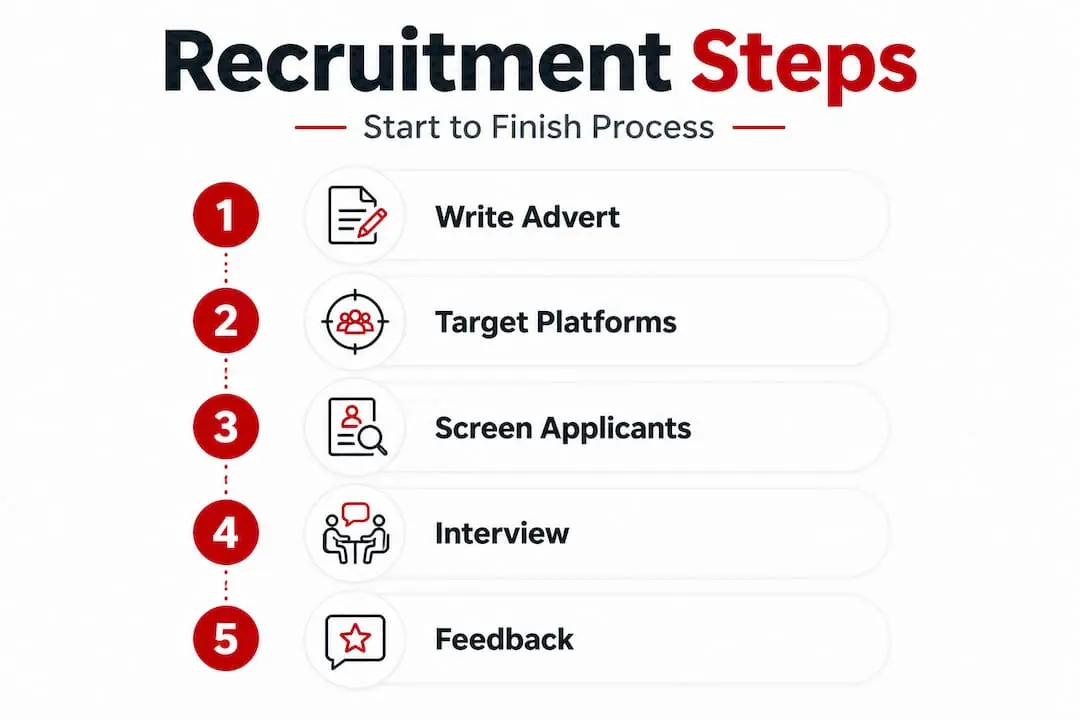
Knowing the steps in sequence makes a significant difference to both speed and quality. Each stage builds on the previous one, and skipping ahead almost always creates rework.
Comparing core approaches:
| Approach | Best for | Strengths | Weaknesses |
|---|---|---|---|
| Direct sourcing | Volume roles, known markets | Lower cost, brand control | Time intensive, needs internal resource |
| Agency-led | Niche/urgent roles | Speed, specialist networks | Higher cost, less control |
Step 1: Craft the job advert for visibility and appeal
Your advert is the first impression candidates get of your organisation. It needs to describe the role accurately, reflect the culture honestly, and make applying feel achievable. Use plain language, include the salary range (or at minimum a band), and keep the essential requirements to what is genuinely required. Adverts that include salary details consistently attract more applications than those that do not.
Step 2: Use specialist job boards and networks
General job boards attract general candidates. If you are hiring a transport planner, a traffic signals engineer, or a fleet manager, posting on a platform built for that audience produces far better results. The about transport recruitment page explains how niche boards serve both active and passive candidates who would never visit a generalist site.
Step 3: Structured screening, tools, and interviews
Unstructured interviews are notoriously unreliable for predicting job performance. Build a consistent shortlist of questions that map directly to the competencies in your role profile. For technical roles, include a practical element, whether that is a scenario-based question, a written exercise, or a practical skills check. Score each candidate against the same criteria so your decision is defensible and objective.
Step 4: Government and sector support resources
You do not have to run every campaign from scratch. Work experience guidance for logistics employers published by the government provides a structured approach to building pipelines through work placements and apprenticeships. The Freight Workforce Group brings together employers, training providers, and government to address attraction, training, and retention across the sector. These resources are free and often underused.
Step 5: Candidate experience and feedback
Transport professionals talk to one another. A poor candidate experience spreads quickly through networks. Acknowledge every application, communicate outcomes promptly, and provide brief feedback to unsuccessful shortlisted candidates where possible. These small actions protect your employer brand and often mean a near-miss candidate applies again or refers someone else.
Pro Tip: If your shortlist is thin, revisit your minimum requirements before re-advertising. Often a single unnecessary qualifier (such as requiring a specific software certification instead of general technical aptitude) cuts out a large portion of otherwise suitable candidates.
Checking your results: Verification and continuous improvement
After the recruitment process, continuous evaluation ensures lasting success and sharper campaigns in the future.
Most transport employers measure recruitment success by a single metric: did we fill the role? But that question tells you almost nothing about whether you recruited well. A more useful question is: did the person stay, perform well, and feel positive about the process?
Key performance indicators to track consistently:
- Time to fill: How many days from vacancy opening to accepted offer? Benchmark this per role type.
- Quality of hire: Track 90-day and 12-month retention rates by role category.
- Application-to-shortlist ratio: A very low ratio suggests your advert is attracting the wrong audience. A very high ratio may indicate your criteria are too broad.
- Candidate satisfaction score: A short post-process survey to shortlisted candidates yields valuable insight on communication, clarity, and fairness.
- Cost per hire: Include advertising spend, management time, and any agency fees to get a true figure.
Here is an example tracking table for three common transport roles:
| Role | Target time to fill | Actual time to fill | 90-day retention | Candidate score |
|---|---|---|---|---|
| HGV driver | 21 days | 34 days | 82% | 3.8/5 |
| Transport planner | 35 days | 42 days | 91% | 4.2/5 |
| Vehicle technician | 45 days | 68 days | 78% | 3.5/5 |
When actual time to fill consistently exceeds your target, it signals either a problem with the advert, the salary offered, the screening process, or a genuine market shortage. Each of those has a different solution, and data helps you distinguish between them.
The Routes to Results guide from crooton specifically outlines measurable methodologies for transport recruiters to track and improve campaign performance. Acting on candidate feedback is one of its most actionable recommendations. When candidates tell you the application was confusing, the interview felt disorganised, or the timeline was unclear, those are direct improvements you can make before the next campaign. For employers interested in the next generation of transport professionals, the graduate transport news section provides insight into early-career expectations and emerging skills.
What most transport recruiters miss (and how to fix it)
Having covered the full recruitment cycle, let us look at what genuinely separates good recruitment from great in 2026 UK transport.
There is a persistent belief in transport recruitment that raising the salary offer is always the primary lever. Pay matters, of course. But relying solely on salary increases to fill technical vacancies has a ceiling, and that ceiling is lower than many employers expect. Building talent pipelines is crucial precisely because salary-led recruitment does not address the root cause: there are simply not enough trained people in the market right now.
The employers consistently doing this well are not necessarily paying the most. They are building relationships earlier, before candidates are actively looking. That means engaging with training providers, attending careers events at colleges, and offering structured work experience to people who might become excellent technicians or planners in 12 to 18 months, not today.
Here is the uncomfortable truth: most recruitment budgets are allocated entirely to finding people who are ready to work immediately. Almost nothing is invested in developing the people who will be ready soon. That creates an endless cycle of competing for the same small pool of fully qualified candidates, often just recycling talent from one employer to another within the sector without growing the overall pool at all.
Partnering with apprenticeship providers and logistics colleges creates a different dynamic. You help shape the training, you build early loyalty, and you get first access to emerging talent before your competitors even know they exist. We have seen this approach work across jobs-in-transport.com employer communities time and again, particularly for technical and project management roles where the talent pool is most constrained.
Pro Tip: Contact your local further education college’s transport or engineering department directly. Offer a site visit, a guest lecture, or a structured work placement scheme. The cost is minimal. The pipeline benefit, over two to three years, is significant.
The recruiters who will succeed consistently in 2026 and beyond are those who treat recruitment not as a transactional event but as a continuous relationship-building activity. That mindset shift is worth more than any single advert or agency contract.
Advance your recruitment success with Jobs-in-Transport.com
For those ready to professionalise their recruitment strategy, here is your next step towards securing transport talent consistently and cost-effectively.
The gap between employers who fill transport roles efficiently and those who struggle often comes down to one thing: where they look. Jobs-in-Transport.com has been connecting transport employers with sector-specific professionals since 2005, offering targeted job listings, CV hosting, employer profiles, and vacancy alerts across highways, traffic management, logistics, project management, and more.
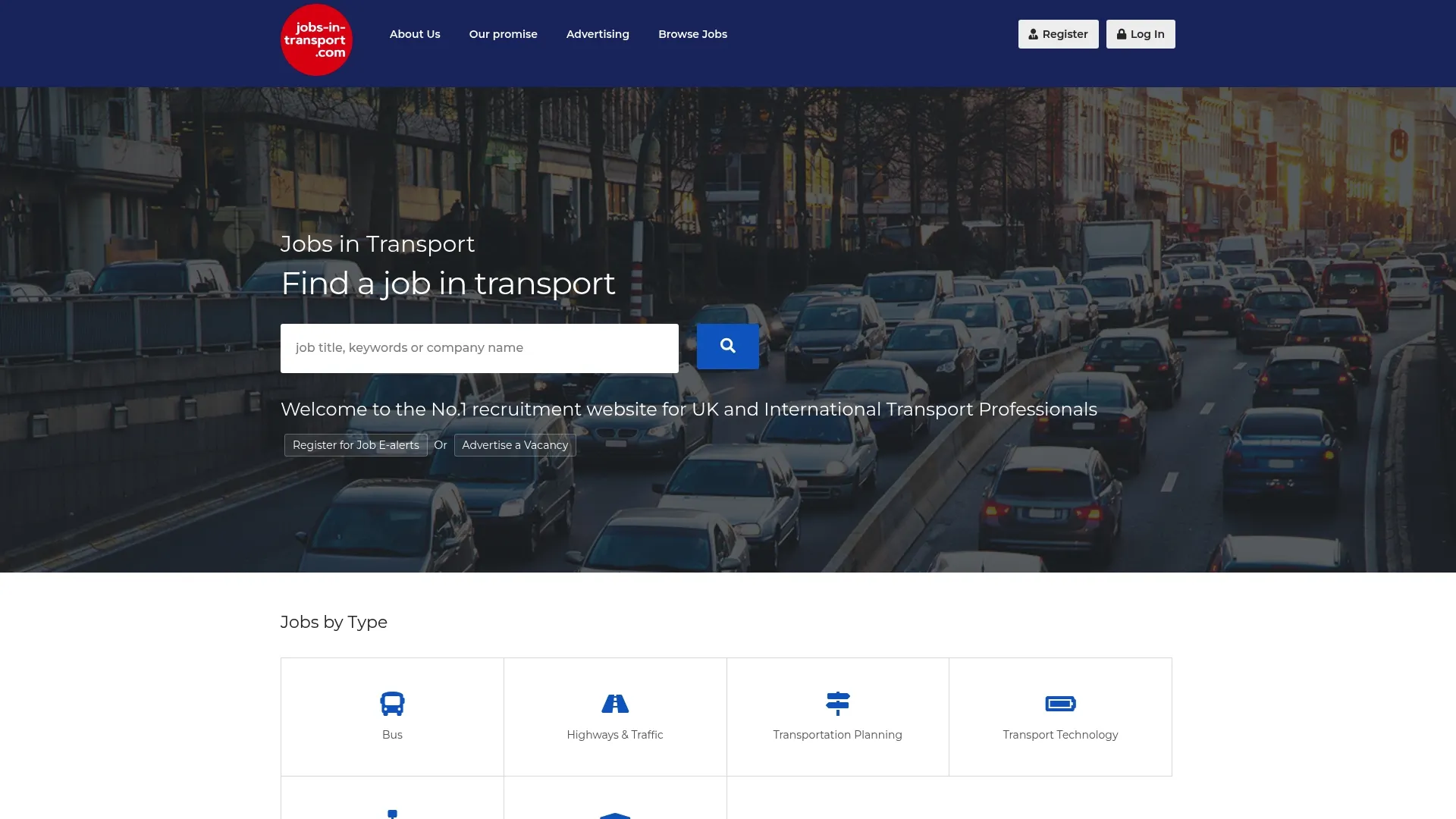
Whether you are hiring a senior project manager, a traffic engineer, or a fleet coordinator, the platform’s specialist audience means your vacancy reaches professionals who are genuinely active in the transport field. Explore employer tools and our approach to see how a focused recruitment partner can reduce your time to fill, improve candidate quality, and support a longer-term talent strategy across your organisation.
Frequently asked questions
What are the most difficult transport roles to recruit in the UK?
Technical roles including vehicle mechanics, fitters, and technicians carry the highest recruitment difficulty, with 57.7% of employers reporting severe difficulty specifically for these positions due to acute skills shortages across the sector.
How can employers increase their chances of hiring the right transport candidates?
Clear, skill-based job requirements and targeted advertising on specialist platforms consistently improve candidate quality. The Routes to Results methodology provides structured steps specifically designed for transport and logistics employers facing competitive hiring conditions.
Are salaries for transport roles increasing in the UK?
Yes, particularly for HGV drivers and technical positions where HGV salaries rose 7.5% as demand continues to outpace the available supply of qualified professionals.
What government support exists for transport recruitment?
The Freight Workforce Group and logistics work experience guides provide practical frameworks for employers to attract, train, and retain transport staff, including structured work placement pathways that build longer-term candidate pipelines.


