
The UK transport sector is far more competitive than most professionals realise. With 280 applications per role reported across the industry, simply having the right licences and experience is no longer enough to land an interview. Recruiters spend seconds, not minutes, scanning each submission. Your CV is the single document that either opens a door or closes it permanently. Whether you are targeting logistics coordination, transport planning, or project management, this guide will show you exactly how to craft a CV that commands attention and converts applications into genuine opportunities.
Table of Contents
- Why your CV is critical in the UK transport job market
- What employers look for: Essential CV elements in transport jobs
- How to showcase compliance and safety credentials on your CV
- CV strategies to stand out: Navigating high-volume applications
- Our perspective: What most transport professionals miss when crafting their CV
- Take the next step in your transport career
- Frequently asked questions
Key Takeaways
| Point | Details |
|---|---|
| Competition is fierce | Hundreds apply for each transport job so your CV must stand out quickly. |
| Highlight compliance credentials | Transport employers prioritise certifications and safety records on CVs. |
| Customisation is vital | Tailor your CV to every role, using keywords and metrics. |
| Showcase results and skills | Demonstrate your real-world impact and technical skills clearly. |
Why your CV is critical in the UK transport job market
Having established how fierce competition truly is, it is worth understanding precisely why the CV carries so much weight in this sector. Transport recruiters are not leisurely browsing applications. They are processing large volumes quickly, often under pressure to fill safety-critical roles fast. Your CV must communicate your value within the first ten seconds of being opened.
Consider the scale of the challenge. 24% of HGV firms currently report active vacancies, which sounds promising until you factor in the sheer number of candidates chasing each position. Demand exists, but so does intense competition. A generic CV will not survive this environment.
What separates a shortlisted CV from one that is discarded? Several things, but formatting and relevance are the two most common differentiators. Recruiters working across the UK transport sector consistently report that poorly structured submissions, even from qualified candidates, are passed over without a second glance.
The most effective transport CVs share these characteristics:
- Clear, logical structure with defined sections for experience, qualifications, and achievements
- Compliance and safety credentials prominently displayed near the top
- Relevant software and technology skills listed explicitly
- Tailored achievements that reflect the specific demands of the advertised role
- Concise language with no unnecessary filler or vague responsibilities
“A CV is not a job description of your past. It is a sales document for your future. Every line should answer the question: why should we hire this person?”
The transport industry also places enormous value on regulatory adherence. Demonstrating familiarity with compliance frameworks, safety protocols, and industry-specific technology signals professional maturity. Overlooking these elements, even accidentally, can make an otherwise strong candidate appear underprepared.
What employers look for: Essential CV elements in transport jobs
Understanding the CV’s importance leads us to the specific components recruiters actually assess. Not all transport roles require identical skills, but certain elements appear consistently across logistics, planning, and project management positions.
Here is a comparison of the core skills valued across three common transport career paths:
| Skill area | Logistics roles | Project management | Transport planning |
|---|---|---|---|
| Compliance certificates | CPC, ADR | DOT clearances | N/A |
| Software proficiency | TMS, WMS | MS Project, Primavera | GIS, AutoCAD |
| Safety record | Essential | Important | Moderate |
| Route and network knowledge | Critical | Useful | Essential |
| Leadership evidence | Desirable | Essential | Desirable |
For logistics professionals, key industry skills such as transport management system (TMS) proficiency and clean compliance records are non-negotiable. For planning roles, geographic information system (GIS) experience and network analysis capabilities carry significant weight.

Across all top transport job roles, recruiters also look for evidence of problem-solving and leadership, even in non-managerial positions. Describing how you resolved a route disruption or led a compliance audit demonstrates initiative that technical skills alone cannot convey.
When listing compliance and regulatory credentials, always spell out the full name before using an abbreviation. Write “Driver Certificate of Professional Competence (CPC)” rather than just “CPC.” This matters because automated screening systems and human reviewers both need clarity.
CVs must highlight skills including compliance and safety records as well as transport technology familiarity to pass initial screening.

Pro Tip: When describing regulatory compliance on your CV, use active phrasing. Instead of “responsible for compliance,” write “maintained 100% compliance across a 47-vehicle fleet for three consecutive years.” Specificity signals credibility.
How to showcase compliance and safety credentials on your CV
Once you know which credentials matter, presenting them correctly becomes the next challenge. Many transport professionals list their qualifications in a vague or incomplete way, which undermines the very authority those certificates are meant to convey.
Emphasising compliance and safety is crucial when CVs are screened for transport roles, particularly because many employers use keyword-based filtering before a human ever reads your submission.
Here is how different compliance credentials are valued across transport roles:
| Credential | Full name | Most relevant to |
|---|---|---|
| CPC | Driver Certificate of Professional Competence | HGV, logistics, fleet |
| ADR | Agreement on Dangerous Goods by Road | Hazardous freight, logistics |
| DOT | Department of Transport clearance | Cross-sector, project roles |
| NEBOSH | National Examination Board in Occupational Safety and Health | Safety management, planning |
Follow these steps to present your credentials with maximum impact:
- Create a dedicated qualifications section near the top of your CV, immediately after your personal statement.
- List each certificate with its full name, the issuing body, and the date of completion or renewal.
- Include upcoming renewal dates where relevant. This signals that you are proactive about maintaining compliance, not just collecting certificates.
- Cross-reference credentials in your experience section. If you managed a fleet under ADR regulations, say so explicitly in the relevant job entry.
- Quantify your safety record. “Zero reportable incidents across 18 months of fleet operations” is far more persuasive than “good safety record.”
For guidance on verifying compliance credentials before listing them, it is worth double-checking that all certificates are current and accurately named.
Pro Tip: Including the renewal date for a certificate that is due within six months, alongside a note that you have already booked the refresher course, tells a recruiter that you take professional development seriously. It is a small detail that creates a strong impression.
CV strategies to stand out: Navigating high-volume applications
Having addressed the technical elements, let us focus on personalisation techniques that ensure your CV is not lost in the pile. Transport roles attract around 280 applications each, which means differentiation is not optional. It is essential.
The single most effective strategy is customisation. A CV sent to ten different employers without any changes is a CV that will rarely succeed. Each job advertisement contains clues about what the employer values most. Use them.
Follow this process for every application:
- Read the job description carefully and highlight the three to five skills or requirements mentioned most prominently.
- Mirror that language in your CV. If the employer uses “fleet compliance management,” use that exact phrase rather than a synonym.
- Reorder your bullet points so the most relevant achievements appear first in each role entry.
- Update your personal statement to reflect the specific organisation and role, not a generic summary.
- Remove irrelevant experience that does not support this particular application. Brevity signals focus.
When describing achievements, always aim for measurable outcomes. Consider the difference between these two statements:
- “Managed logistics operations across the region.”
- “Reduced delivery delays by 22% across a 12-county region by renegotiating supplier contracts and introducing a new TMS.”
The second version is specific, credible, and memorable. Building an online CV on a specialist platform can also increase your visibility to employers who are actively searching for candidates rather than waiting for applications.
Pro Tip: The most common formatting mistakes in transport CVs include using tables that break when uploaded to applicant tracking systems, embedding photos that trigger bias filters, and using fonts smaller than 11pt. Keep your format clean, simple, and system-friendly.
Our perspective: What most transport professionals miss when crafting their CV
Here is something that rarely gets said directly: the transport professionals who struggle most with their CVs are often the most experienced ones. They have spent years developing genuine expertise, yet their CV reads like a job description rather than a record of impact. Technical skills are listed. Responsibilities are catalogued. But the human story, the one that makes a recruiter want to meet this person, is absent.
There is also a persistent myth that a longer CV demonstrates more value. It does not. A two-page CV that is precise and purposeful will outperform a four-page document every time. Recruiters do not reward volume. They reward clarity.
The professionals who consistently secure interviews understand that a CV must answer one question above all others: what will this person actually do for us? Quantifiable results, examples of cross-functional collaboration, and evidence of leadership under pressure answer that question far more effectively than a list of duties ever could. Your CV is not a record of where you have been. It is an argument for where you should go next.
Take the next step in your transport career
Having equipped yourself with strategies to create a standout CV, it is time to connect with the right opportunities.
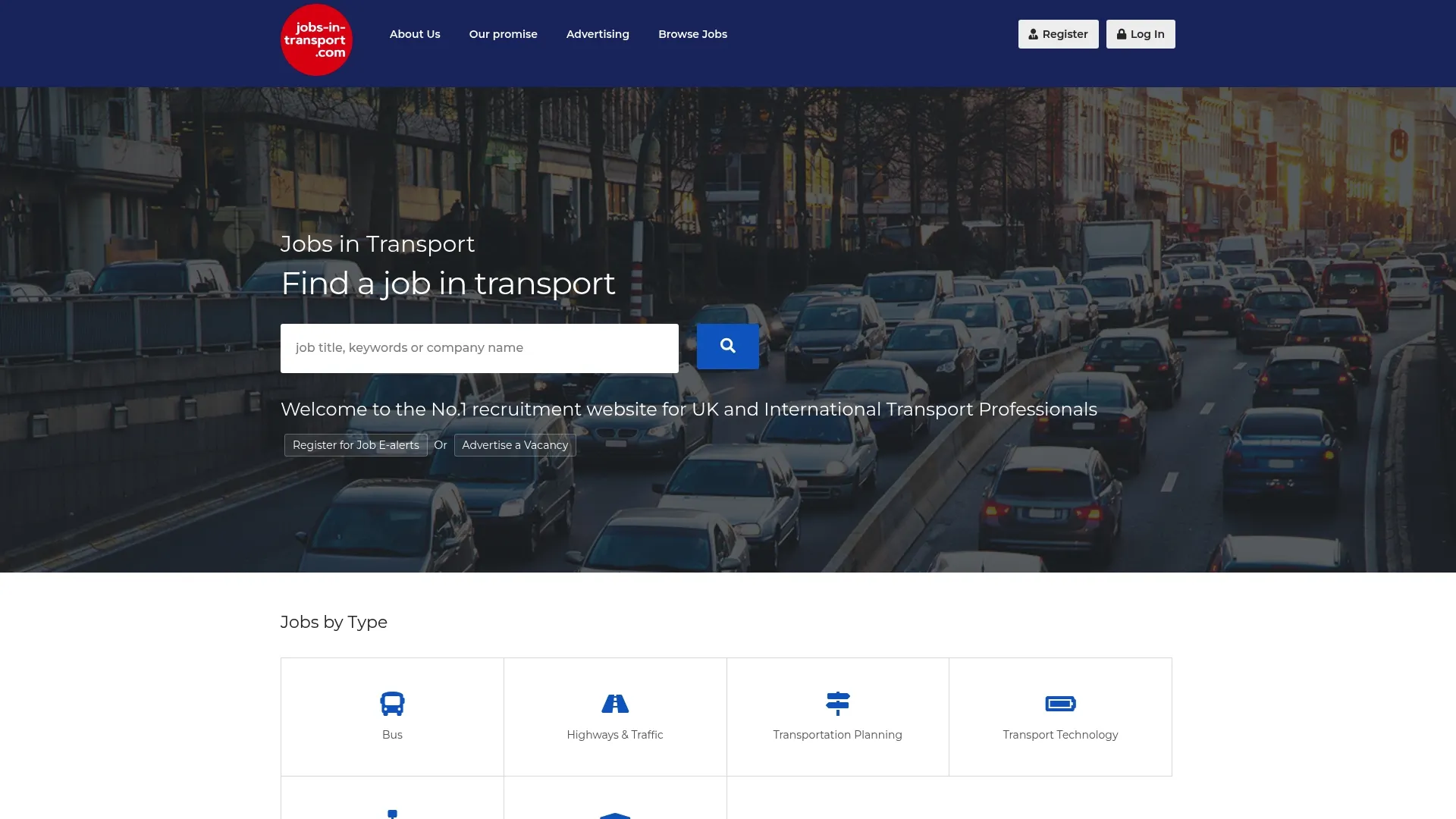
At Jobs-in-Transport.com, we have been connecting transport professionals with meaningful roles since 2005. Whether you are looking to move into logistics management, transportation planning, or project coordination, you will find transport job openings updated regularly across the UK and internationally. You can also host your CV directly on the platform, making it discoverable to employers who are actively searching for candidates like you. Learn more about Jobs-in-Transport.com and take the next step towards a role that matches your skills and ambitions.
Frequently asked questions
How long should my CV be for a transport job?
Aim for two pages, clearly highlighting your most relevant skills, experience, and compliance certifications. Brevity and precision will always serve you better than length.
What compliance certificates should I mention for UK transport roles?
Include all relevant certificates, such as the Driver Certificate of Professional Competence (CPC), Department of Transport (DOT) clearances, and any role-specific qualifications. Compliance certifications such as DOT and CPC are among the first things recruiters look for.
How do I make my CV stand out when there are many applicants?
Tailor your CV to each role, use keywords from job listings, and highlight measurable achievements and compliance credentials. With 280 applications per role common in the sector, differentiation is essential.
Do I need to include software skills on a transport CV?
Yes, list relevant transport software such as GIS and transport management systems (TMS) to show modern technical proficiency. Software skills like GIS and TMS are increasingly important to employers screening candidates in 2026.
Recommended
- Jobs in Transport, Bus jobs, Highways & Traffic jobs, Transportation Planning jobs, Transport Technology jobs, Project Management jobs, Transport Leaders jobs
- Jobs in Transport, Bus jobs, Highways & Traffic jobs, Transportation Planning jobs, Transport Technology jobs, Project Management jobs, Transport Leaders jobs


