
The role of health and safety in transport is to protect workers, passengers, and the public by preventing accidents, managing occupational risks, and maintaining safe operational standards across every mode of travel. Road crashes kill 1.2 million people annually worldwide, a figure that makes transport one of the most consequential sectors for public health. Regulatory bodies including the Health and Safety Executive (HSE) in the UK and the Federal Motor Carrier Safety Administration (FMCSA) in the US set the legal frameworks that govern this work. Beyond compliance, transport safety management now encompasses workforce integration, technology deployment, and risk-based governance that touches every stage of an asset’s operational life.
What is the role of health and safety in transport operations?
Health and safety in transport is the structured discipline of identifying, assessing, and controlling risks that arise from moving people and goods. The term “transport safety management” is the recognised industry standard for this practice, and it covers everything from vehicle roadworthiness and driver fitness to infrastructure design and emergency response protocols.
The scope is broad by necessity. A single freight operation involves drivers, loading technicians, fleet engineers, traffic controllers, and administrative staff. Each role carries distinct risks, and a failure in one area can migrate rapidly to another. Safety governance must treat the entire workforce as an interconnected ecosystem to prevent exactly this kind of risk migration.
Operational efficiency and safety are directly linked. Organisations that reduce accident rates also reduce vehicle downtime, insurance costs, and regulatory penalties. The importance of safety in transportation therefore extends well beyond moral obligation. It is a measurable driver of business performance and long-term organisational resilience.
What are the key health and safety challenges in the transport industry?
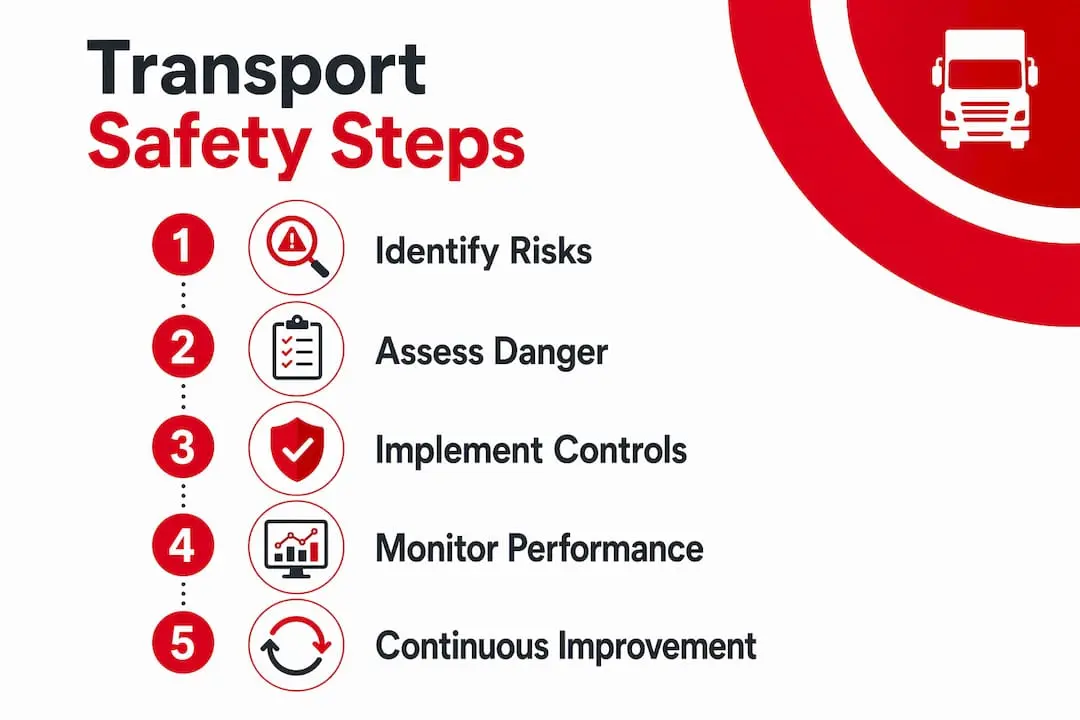
Transport organisations face a layered set of risks that interact in ways that are not always obvious. Understanding these challenges is the starting point for any credible safety strategy.
Driver fatigue and human error remain the leading causes of road collisions. Long shifts, irregular schedules, and pressure to meet delivery windows create conditions where cognitive performance deteriorates well before a driver feels tired. The FMCSA’s revised Hours of Service regulations from March 2026 mandate a 30-minute break after eight cumulative driving hours. This rule exists because fatigue-related impairment is measurable and preventable, not because it is rare.
Mechanical failure and vehicle condition account for a significant proportion of serious incidents. Fleet managers who defer maintenance under cost pressure transfer risk directly to drivers and the public. In 2022, the US recorded approximately 500,000 truck accidents, resulting in 5,000 deaths and 114,000 injuries. That scale of harm is not random. It reflects systemic gaps in inspection, maintenance scheduling, and driver reporting culture.
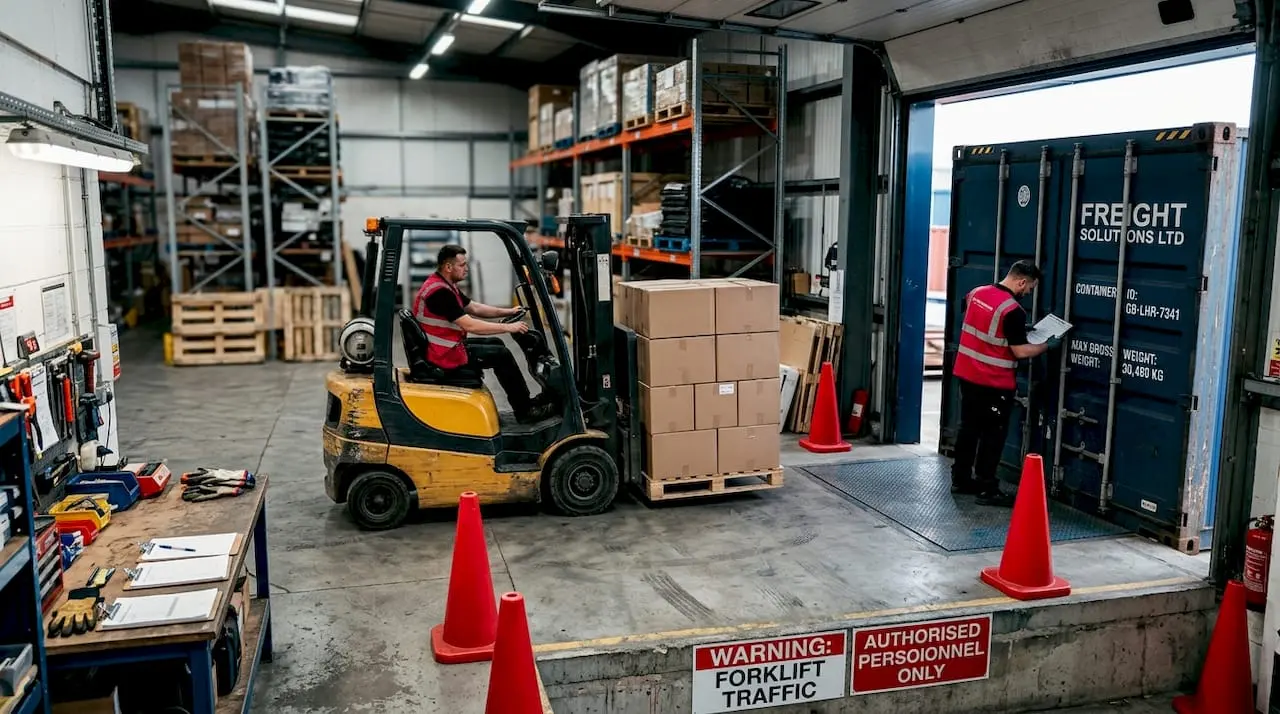
Workplace transport hazards extend beyond public roads. Warehouses, distribution centres, and rail yards present distinct risks including forklift collisions, loading bay incidents, and pedestrian-vehicle conflicts. These environments are governed by separate regulatory frameworks but share the same underlying principle: risk must be assessed, controlled, and reviewed continuously.
The sector also faces evolving structural pressures:
- Rapid urbanisation is increasing traffic density and pedestrian exposure on routes that were not designed for current volumes.
- Infrastructure ageing creates maintenance backlogs that elevate mechanical and structural risk.
- Supply chain complexity means more handoffs between operators, each of which introduces a potential safety gap.
- Driver shortages push existing staff towards longer hours and higher workloads, compounding fatigue risk.
Each of these challenges demands a response that goes beyond individual compliance checks. They require coordinated safety management across organisations and supply chains.
How have health and safety regulations in transport evolved?
Transport safety regulation has moved decisively away from a checklist model towards risk-based management frameworks. This shift is significant for safety regulators and organisational leaders because it changes what compliance actually means in practice.
Historically, transport operators demonstrated safety by meeting prescribed standards: vehicle inspection intervals, licence categories, load limits. These rules reduced harm, but they also created a culture where passing an audit was treated as equivalent to being safe. Regulators now emphasise moving from compliance to risk-based management for long-term, safer operational outcomes. Australia’s National Heavy Vehicle Regulator (NHVR) and the National Transport Commission (NTC) released new guides in 2026 reflecting exactly this strategic shift.
Current key requirements across major transport modes include:
- Road transport: Hours of Service limits, mandatory Electronic Logging Devices (ELDs), vehicle roadworthiness standards, and load securing regulations.
- Rail: Enhanced sensor requirements, including hotbox detectors every 15 miles on rail networks, to increase detection frequency for mechanical faults.
- Workplace transport: Risk assessment obligations under the Health and Safety at Work Act 1974 in the UK, covering vehicle and pedestrian separation, speed management, and driver competency.
- Public transport: Operator licensing, safety case requirements, and passenger emergency procedures governed by mode-specific regulators.
The direction of travel is clear. Organisations that build genuine safety management systems, rather than simply meeting minimum standards, are better positioned for regulatory scrutiny and operational performance. The shift also places greater responsibility on employers to demonstrate proactive risk identification, not just reactive incident reporting.
What integrated approaches improve transport safety outcomes?
The most effective transport safety strategies treat safety as a system property rather than a departmental function. System safety assurance must be continuous and embedded at every stage of an asset’s lifecycle, from design and procurement through operation to decommissioning. This is not a theoretical principle. It has direct implications for how organisations structure their safety governance, allocate resources, and train their people.
A practical integrated approach involves four connected elements:
- Safety Management Systems (SMS): A documented framework that defines safety policy, risk assessment processes, incident reporting, and performance monitoring. SMS adoption is now expected by regulators across road, rail, and aviation sectors.
- Technology deployment: Event Data Recorders enable real-time driver monitoring and vehicle history tracking, giving fleet managers objective data to identify risk patterns before incidents occur. Telematics platforms, dashcams, and fatigue detection systems extend this capability further.
- Driver training and fatigue management: Structured induction programmes, periodic refresher training, and fatigue risk management plans are the human side of the safety system. Organisations that invest in driver education protocols consistently report lower incident rates and stronger safety culture.
- Shared responsibility across the supply chain: Robust transport safety requires shared accountability across manufacturers, fleet managers, operators, and passengers. No single actor controls all the variables. Safety outcomes improve when responsibility is distributed and contractually reinforced.
Pro Tip: Embed safety culture by making near-miss reporting as valued as incident-free performance. Organisations that reward honest reporting of close calls gather the intelligence needed to prevent serious accidents. Those that penalise near-miss reports simply drive risk underground.
Sector collaboration also matters. Government-funded initiatives, such as the €1.8 million allocated in 2026 to farm safety projects including youth tractor safety training, demonstrate that targeted investment in specific high-risk groups produces measurable safety improvements. The same principle applies to transport: targeted interventions, backed by data, outperform generic awareness campaigns.
How do safety measures affect transport performance and public wellbeing?
The impact of health and safety measures in transport extends well beyond accident prevention. Organisations with mature safety cultures report lower staff turnover, higher workforce morale, and reduced operational disruption. These are not soft benefits. They translate directly into cost savings and service reliability.
Urban planners and transport authorities must prioritise human safety over vehicle speed and convenience to reduce fatalities. This principle, advocated by UN road safety experts, reflects a broader shift in how transport systems are designed and evaluated. Safe System thinking, which designs roads to protect users even when human errors occur, is now embedded in national road safety strategies across the UK, Australia, and Scandinavia.
“Safety is not a cost centre. It is the foundation on which reliable, efficient, and socially trusted transport systems are built.”
The public health dimension is substantial. Reducing road fatalities and serious injuries decreases pressure on emergency services, reduces long-term disability costs, and improves community confidence in transport networks. For organisations, a strong safety record supports tendering success, insurance terms, and investor confidence. Mature transport systems integrate injury data as strategic intelligence, using it to drive governance decisions rather than simply satisfy reporting requirements.
Sustainability and social inclusion are also connected to safety performance. Safer urban transport networks encourage modal shift away from private cars, reduce emissions, and make public transport accessible to more people. The impact of health policies on transport therefore reaches into urban planning, public health strategy, and economic development.
Key takeaways
Effective transport safety management requires continuous system assurance, integrated workforce governance, and risk-based frameworks that go beyond minimum compliance.
| Point | Details |
|---|---|
| Safety is a system property | Embed safety assurance across every lifecycle stage, not just at inspection points. |
| Risk-based governance outperforms compliance checklists | Regulators in the UK, US, and Australia now expect proactive risk management, not just audit readiness. |
| Workforce integration reduces risk migration | Treating drivers, engineers, technicians, and administrators as one safety ecosystem prevents gaps between roles. |
| Technology amplifies human safety decisions | Event Data Recorders and telematics provide objective data that supports better training and incident prevention. |
| Safety performance drives broader organisational value | Lower accident rates reduce costs, improve retention, and strengthen an organisation’s public and regulatory standing. |
Why the compliance mindset is the biggest risk in transport safety
I have spent years watching transport organisations invest heavily in safety audits, only to be blindsided by incidents that their own data should have predicted. The problem is almost never a lack of rules. It is a culture that treats compliance as the destination rather than the floor.
The shift towards risk-based safety management is the most significant structural change in transport governance in a generation. But I see many organisations responding to it by producing more documentation rather than changing how decisions are actually made. A 200-page safety management plan that nobody reads is not safety governance. It is liability management dressed up as safety culture.
The transport infrastructure roles that genuinely move the needle on safety outcomes are those where the post-holder has both technical authority and organisational influence. Safety managers who can only advise, but not stop an unsafe operation, are structurally compromised regardless of their competence.
What I find most encouraging about the current regulatory direction is the explicit acknowledgement that safety is an ecosystem. When the NHVR and NTC frame safety as a shared responsibility across the supply chain, they are recognising something that experienced practitioners have known for years: you cannot make a driver safe in isolation from the fleet manager, the scheduler, the maintenance team, and the client demanding an impossible delivery window.
The organisations that will lead on transport safety over the next decade are those building recruitment strategies that prioritise safety leadership as a core competency, not an afterthought.
— Rob
Find safety-focused transport professionals with Jobs-in-Transport
Effective transport safety management depends on having the right people in the right roles. Jobs-in-Transport has been connecting transport organisations with qualified professionals since 2005, covering highways, traffic management, transportation planning, transport technology, and project management. Whether you are recruiting a safety manager, a fleet compliance officer, or a transport planning lead, the platform gives you direct access to a specialist talent pool aligned with the sector’s evolving safety demands. Explore current transport safety roles and post your vacancies to reach professionals who understand the regulatory and operational demands of modern transport safety management.
FAQ
What is the role of health and safety in transport?
Health and safety in transport protects workers, passengers, and the public by preventing accidents, managing occupational risks, and maintaining safe operational standards. It also supports legal compliance, operational efficiency, and public confidence in transport systems.
What are the main health risks in the transport industry?
Driver fatigue, vehicle mechanical failure, workplace transport hazards, and occupational injuries from loading and maintenance operations are the primary health risks. Urbanisation and supply chain complexity are increasing the frequency and severity of these risks.
What do current health and safety regulations in transport require?
Key requirements include Hours of Service limits and Electronic Logging Devices for road transport, enhanced sensor mandates for rail, and risk assessment obligations under the Health and Safety at Work Act 1974 for workplace transport in the UK. Regulators are moving towards risk-based frameworks that require proactive safety management rather than minimum compliance.
How does a Safety Management System improve transport safety?
A Safety Management System provides a documented framework for risk assessment, incident reporting, and performance monitoring. Organisations using SMS alongside technologies such as Event Data Recorders report better risk identification and lower incident rates.
How does transport safety affect wider society?
Reducing road fatalities and serious injuries decreases pressure on emergency services and reduces long-term disability costs. Safer transport networks also support sustainable urban mobility, social inclusion, and public confidence in infrastructure.
Recommended
- Jobs in Transport, Bus jobs, Highways & Traffic jobs, Transportation Planning jobs, Transport Technology jobs, Project Management jobs, Transport Leaders jobs
- Jobs in Transport, Bus jobs, Highways & Traffic jobs, Transportation Planning jobs, Transport Technology jobs, Project Management jobs, Transport Leaders jobs


