
Risk management in transport is the structured process of identifying, assessing, and mitigating risks to maintain safe and efficient operations without compromising business objectives. For transport professionals and project managers, this discipline sits at the intersection of regulatory compliance, operational continuity, and financial performance. Frameworks such as system safety assurance and Enterprise Risk Management (ERM) have moved the conversation well beyond basic hazard checklists. With the UK Department for Transport mandating climate risk assessments for train operating companies in 2026, the role of risk management in transport has never carried greater strategic weight.
What are the core risk management frameworks used in transport?
System safety assurance is a dynamic lifecycle-wide process that reduces safety risks as far as reasonably practicable, with residual risk formally transferred between project stages from design through to decommissioning. This is not a one-time sign-off. Evidence accumulates continuously, and each lifecycle transition requires documented residual risk statements so that the teams inheriting a project understand exactly what controls are in place and what gaps remain.
Enterprise Risk Management takes a different but complementary angle. Where system safety assurance focuses on technical and physical hazards, ERM integrates risk visibility across departments to optimise responses and resource allocation. It prevents the siloed thinking that allows a financial risk in one division to blindside an operational team in another. For large transport organisations managing highways, rail, and logistics simultaneously, ERM provides the aggregated view that makes strategic prioritisation possible.

Independent Safety Assessors (ISAs) play a specific and often underappreciated role within these frameworks. An ISA validates that safety arguments are sound and that evidence genuinely supports the claims made. Their involvement is particularly critical at lifecycle stage transitions, where the formal transfer of residual risk statements must be verified rather than assumed.
| Framework | Primary focus | Key output |
|---|---|---|
| System safety assurance | Lifecycle hazard control | Residual risk statements per stage |
| Enterprise Risk Management | Cross-departmental risk visibility | Aggregated risk register and resource plan |
| Hazard identification and control | Specific threat characterisation | Control measure verification records |
| Independent Safety Assessment | Validation of safety arguments | Assurance reports and sign-off documentation |
Pro Tip: When transferring residual risk between lifecycle stages, require the receiving team to formally acknowledge the risk register in writing. Verbal handovers are where controls get lost.
How does risk management support safety and competitive advantage?
Safety management has evolved from a compliance obligation into a strategic driver that reduces accidents, insurance costs, and operational downtime. This shift matters because it changes how boards and finance directors view safety investment. When safety data feeds directly into financial modelling, the business case for proactive risk detection becomes self-evident rather than something that needs to be argued every budget cycle.
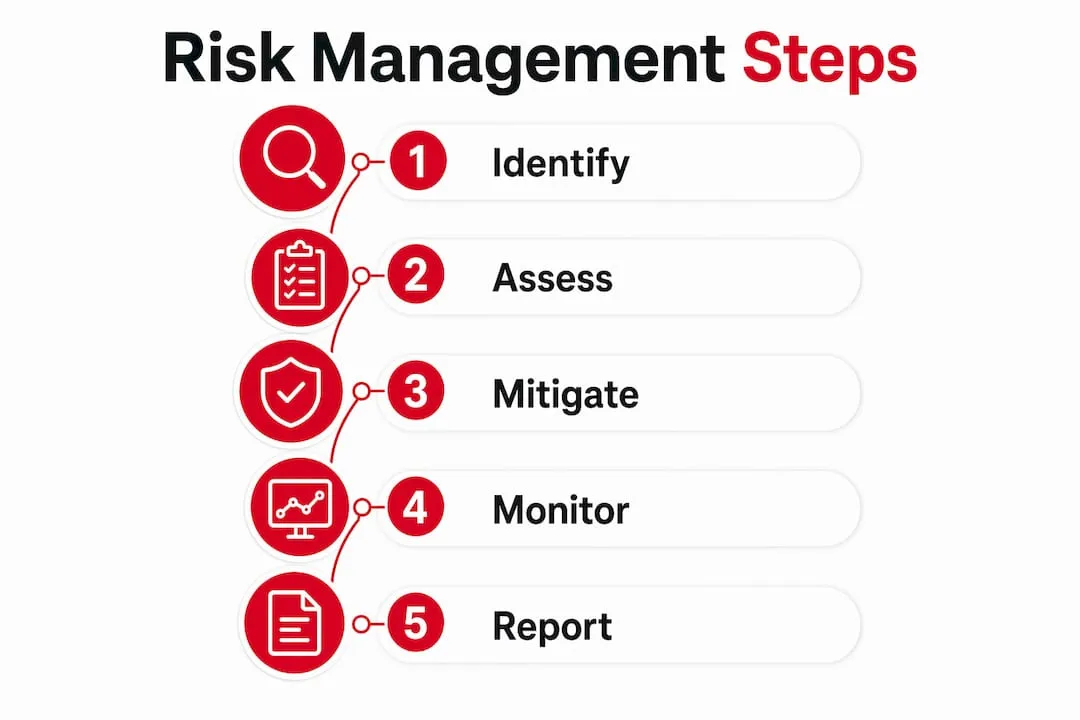
Transport professionals increasingly recognise that safety systems reduce accidents and costs while enabling sustainable operations. The practical implication is that organisations treating risk management as a tick-box exercise are leaving money on the table, not just exposing themselves to liability. Early detection of a mechanical fault, a route vulnerability, or a supplier dependency costs a fraction of the incident it prevents.
The tools driving this shift include:
- Predictive data analytics that identify behavioural patterns in drivers, vehicles, and routes before incidents occur
- Telematics platforms such as Samsara and Verizon Connect that feed real-time risk signals into operational dashboards
- Behavioural risk assessments that profile driver fatigue, distraction, and decision-making under pressure
- Integrated safety KPIs embedded into monthly management reporting rather than siloed in a separate safety function
The connection between risk management and stakeholder trust is also direct. Clients, insurers, and regulators all scrutinise safety records when awarding contracts or setting premiums. A transport operator with a demonstrably mature risk management process commands better terms across all three relationships. That is a competitive advantage measured in pounds, not just in avoided incidents.
What emerging risks must transport professionals address in 2026?
The UK Department for Transport mandates that train operating companies undertake climate change risk assessments and adaptation planning in 2026. This is not a future obligation. It is current, and organisations that have not begun their transport risk assessment process are already behind. The DfT’s framework also promotes nature-based solutions, meaning that climate resilience planning must account for natural habitat considerations alongside infrastructure hardening.
Climate hazards create cascading effects across transport networks. Flooding disrupts road and rail corridors. Extreme heat warps rail tracks and degrades road surfaces. Coastal erosion threatens port infrastructure. Each of these scenarios requires a specific response plan, not a generic contingency document. The organisations that will manage these risks well are those that have mapped their physical assets against climate projections at a granular level.
Geopolitical volatility presents a different category of challenge. 86% of logistics executives agree that volatility is the new normal, and 68% anticipate conditions worsening in 2026. That consensus reflects a genuine structural shift, not temporary disruption. Supply chains that were optimised for efficiency under stable conditions are now exposed to sanctions, border delays, and energy price shocks that no single organisation can control.
The response gap is the more alarming finding. Only 20% of logistics managers can respond to geopolitical disruptions within 24 hours, despite half identifying them in that timeframe. Identification without response capability is not risk management. It is risk awareness, which is a much weaker position. Closing that gap requires pre-approved response protocols, pre-qualified alternative suppliers, and decision authority delegated to operational managers rather than held at board level.
Pro Tip: Build a tiered disruption response matrix that assigns pre-approved actions to specific risk triggers. When a geopolitical event hits, your team should be executing a plan, not drafting one.
Strategic priorities for 2026 should include supply chain resilience, margin protection against fuel and materials volatility, and growth sustainability through routes and contracts that carry manageable risk profiles. These are not separate workstreams. They are the same risk management conversation held at different levels of the organisation.
How can transport organisations embed risk management effectively?
Embedding risk management across a transport organisation requires governance structures, cultural commitment, and practical processes working together. Governance without culture produces documentation that nobody reads. Culture without governance produces good intentions that never translate into consistent practice.
A structured approach to integration follows this sequence:
- Establish a safety governance board with representation from operations, finance, legal, and project delivery. Risk decisions made in isolation from financial reality rarely survive contact with budget pressures.
- Maintain a dynamic hazard register that is reviewed at defined intervals and updated whenever a change in operations, infrastructure, or external conditions occurs.
- Formalise residual risk transfer between project lifecycle stages with written acknowledgement from receiving teams, as safety assurance requires continuous evidence accumulation rather than a final checklist.
- Implement change management procedures that trigger a risk review whenever scope, technology, or personnel change significantly.
- Leverage cross-departmental data sharing to avoid the siloed risk registers that give a false sense of control. Aggregated data across departments provides the comprehensive exposure view needed for strategic prioritisation.
Technology accelerates all of these steps but does not replace the human judgement at their centre. Platforms such as Ideagen and Riskonnect support transport organisations in maintaining live risk registers, automating review cycles, and generating audit trails. The value of these tools lies in reducing the administrative burden on risk managers so they can focus on analysis rather than record-keeping.
Embedding risk awareness into organisational culture means connecting health and safety in transport to everyday decision-making at every level. Frontline drivers, depot managers, and project engineers all encounter risk signals before they reach a formal register. Creating channels for that intelligence to flow upward quickly is one of the highest-value investments a transport organisation can make.
Key takeaways
Effective risk management in transport requires lifecycle-wide governance, cross-departmental visibility, and proactive response capability rather than reactive compliance.
| Point | Details |
|---|---|
| Lifecycle risk transfer | Formally document residual risks at every project stage transition to prevent control gaps. |
| ERM over siloed registers | Aggregate risk data across departments to support strategic prioritisation and resource allocation. |
| Climate obligations in 2026 | UK train operating companies must complete climate risk assessments and adaptation plans now. |
| Response gap in logistics | Only 20% of logistics managers respond to disruptions within 24 hours; pre-approved protocols close this gap. |
| Safety as competitive advantage | Proactive risk detection reduces insurance costs, downtime, and liability while improving contract terms. |
Why risk management in transport needs a mindset shift, not just a methodology
I have watched transport organisations invest in sophisticated risk frameworks and still produce incidents that were entirely predictable. The frameworks were sound. The problem was that risk management was treated as a specialist function rather than an organisational capability. The safety manager filed the reports. Everyone else got on with the job.
The organisations that genuinely outperform on safety and operational resilience share one characteristic: their senior leaders talk about risk in operational terms, not compliance terms. They ask “what would stop us delivering this project on time and safely?” rather than “have we completed the risk register?” That question sounds simple, but it changes the entire conversation.
I am also sceptical of the idea that more technology automatically means better risk management. Telematics data, predictive analytics, and live hazard registers are genuinely useful. But I have seen organisations drown in data while missing obvious risks because nobody had the authority or the habit of acting on what the data showed. Modern risk management creates conditions for sustainable growth. That only happens when the people closest to the risk have both the information and the mandate to act.
The 2026 climate and geopolitical pressures are not going to ease. Transport professionals who treat this moment as an opportunity to build genuinely mature risk capabilities will be in a fundamentally stronger position than those waiting for the next regulatory update to tell them what to do.
— Rob
Advance your career in transport risk and safety
Transport risk management is one of the fastest-growing specialisms in the sector, and the demand for professionals who combine technical safety knowledge with project management capability is outpacing supply.

Jobs-in-transport has been connecting transport professionals with specialist roles since 2005. Whether you are a risk manager, safety assurance engineer, or project manager looking to move into a more senior position, the platform carries live vacancies across highways, rail, logistics, and transport technology. Explore current transport roles across the UK and internationally, and find out more about who we are and how we support careers at every stage of the industry.
FAQ
What is the role of risk management in transport?
Risk management in transport is the structured identification, assessment, and treatment of risks across operations, infrastructure, and supply chains to maintain safety and operational continuity. It covers everything from physical hazard control on infrastructure projects to geopolitical disruption response in logistics networks.
What frameworks are used for transport risk assessment?
System safety assurance, Enterprise Risk Management, and hazard identification and control are the three primary frameworks. Each addresses a different layer of risk, from technical lifecycle hazards to cross-departmental strategic exposure.
Why is climate risk now a regulatory priority for UK transport operators?
The UK Department for Transport requires train operating companies to complete climate change risk assessments and adaptation planning in 2026. Climate hazards including flooding, extreme heat, and coastal erosion directly threaten infrastructure and service continuity.
How can transport organisations close the geopolitical response gap?
Pre-approved disruption response protocols, pre-qualified alternative suppliers, and delegated decision authority at operational level are the three most effective measures. Identifying a disruption without the authority to act on it within 24 hours provides no operational protection.
How does risk management become a competitive advantage in transport?
Proactive safety management reduces accident rates, insurance premiums, and downtime, which directly improves financial performance. Clients and regulators also favour operators with demonstrably mature risk processes, creating better contract and compliance outcomes.
Recommended
- Jobs in Transport, Bus jobs, Highways & Traffic jobs, Transportation Planning jobs, Transport Technology jobs, Project Management jobs, Transport Leaders jobs
- Jobs in Transport, Bus jobs, Highways & Traffic jobs, Transportation Planning jobs, Transport Technology jobs, Project Management jobs, Transport Leaders jobs


