
The transport sector is one of those rare industries where a single career conversation can take you from discussing HGV licences to infrastructure planning to digital logistics within minutes. That breadth is genuinely exciting, but it can also feel paralysing when you’re trying to decide which direction to pursue. With 1.8 million annual openings projected across transportation occupations due to growth and retirements, the opportunity is real and substantial. The challenge is knowing where you fit. This article cuts through the noise, giving you a structured way to evaluate, compare, and ultimately choose the transport career path that suits your skills, lifestyle, and long-term ambitions.
Table of Contents
- Key criteria for choosing a transport sector career
- Top transport sector career paths explained
- Comparison of career paths in logistics, project management and infrastructure
- Making your decision: matching career paths to your experience and goals
- Why flexibility is your strongest asset in transport careers
- Next steps: unlock transport sector opportunities
- Frequently asked questions
Key Takeaways
| Point | Details |
|---|---|
| Diverse career options | The transport sector offers a breadth of roles from technical to managerial with strong growth prospects. |
| Skills and training matter | Qualifications, on-the-job experience, and certifications can open doors and shape career progression. |
| Flexibility fuels advancement | Adapting to sector changes and upskilling keeps you employable and marketable in the long run. |
| Opportunities remain strong | Transport roles are projected to remain in high demand, offering stability and varied opportunities. |
Key criteria for choosing a transport sector career
Before you start browsing job listings, it pays to understand what actually separates one transport career from another. The differences go well beyond job titles. Entry requirements, scheduling realities, and progression routes vary enormously across the sector, and matching those factors to your personal situation is what separates a good career move from a frustrating one.
Here are the core criteria worth examining before committing to a path:
- Education and certification requirements: Some roles demand a university degree; others prioritise vocational qualifications, apprenticeships, or licences. Mechanics and technicians, for instance, typically complete postsecondary training followed by three to four years of on-the-job training before reaching journey level.
- Long-term growth and stability: Employment growth across transport roles is generally steady. Demand is driven by infrastructure investment, e-commerce expansion, and the ongoing need to replace an ageing workforce.
- Core skill sets: Roles broadly require technical ability, organisational skills, or leadership capacity, though many senior positions demand a blend of all three.
- Advancement prospects: Consider whether a role offers a clear route upward or whether lateral movement across sub-sectors is more common.
- Work-life balance: Operational roles such as driving often involve shift work, nights, or irregular hours. Office-based planning and management roles typically follow more predictable schedules.
For a broader picture of how these roles sit within the wider industry, the transport sector overview at Jobs-in-Transport.com provides useful context on what employers are currently prioritising.
Pro Tip: Talk to people already working in roles you’re considering. A fifteen-minute conversation with a logistics coordinator or a site engineer will tell you more about day-to-day realities than any job description.
Understanding these criteria gives you a practical lens through which to view every option that follows. With that foundation in place, the specific career routes become much easier to assess.
Top transport sector career paths explained
With clear criteria in mind, let’s look at the most sought-after career routes in transport. Each path has a distinct entry route, skill requirement, and earning trajectory, so understanding the basics of each will help you shortlist quickly.
| Role | Typical entry route | Salary range (approx.) | Outlook |
|---|---|---|---|
| HGV/LGV driver | Licence and CPC card | £28,000 to £45,000 | Strong, driver shortages persist |
| Logistics coordinator | Degree or relevant experience | £25,000 to £40,000 | Growing with e-commerce demand |
| Transport planner | Degree, chartership pathway | £30,000 to £55,000 | Steady, infrastructure investment driven |
| Project manager | Degree or APM/PRINCE2 certification | £40,000 to £70,000 | Strong across all sub-sectors |
| Diesel mechanic/technician | Vocational training, 3-4 years OJT | £28,000 to £45,000 | Stable, 2% growth projected to 2034 |
| Infrastructure engineer | Engineering degree, chartership | £35,000 to £65,000 | Strong, tied to national infrastructure plans |
A few standout observations from this breakdown. Project management commands the highest ceiling and is arguably the most transferable skill set across transport sub-sectors. Technical roles like mechanics are increasingly requiring familiarity with electric vehicle (EV) systems, which is creating a skills premium for those who upskill early.
Emerging specialties worth watching include:
- Digital logistics: Using data platforms and route optimisation software to manage supply chains
- EV and electrification maintenance: Demand for technicians trained on high-voltage systems is rising sharply
- Compliance and regulation: As transport law becomes more complex, specialist compliance roles are growing
Pro Tip: If you’re weighing a vocational route against a degree pathway, consider the time-to-employment factor. A qualified mechanic can be earning within two years; a transport planner may spend four years in education before their first professional role.
You can browse current vacancies across all these categories when exploring transport jobs at Jobs-in-Transport.com, where roles are organised by specialism for easy navigation. For the latest sector developments shaping these roles, the sector news section keeps you informed on what employers are prioritising right now.
Comparison of career paths in logistics, project management and infrastructure
To help refine your decision, let’s directly compare the sector’s main career streams. Logistics, project management, and infrastructure planning each attract different personality types and reward different strengths. Knowing which environment suits you is just as important as knowing which pays best.
| Feature | Logistics | Project management | Infrastructure planning |
|---|---|---|---|
| Best entry route | Degree or experience-based | APM, PRINCE2, or degree | Engineering degree, chartership |
| Advancement speed | Fast in growing companies | Moderate, project-dependent | Steady, long project cycles |
| Daily environment | Fast-paced, operational | Mixed: desk and site-based | Primarily office and consultation |
| Ideal candidate | Organised, analytical, adaptable | Leadership-focused, decisive | Technical, detail-oriented, patient |
| Key progression | Supply chain manager, director | Programme director, COO | Senior engineer, director |
The 1.8 million annual openings projected across the broader transportation sector mean that all three of these streams are actively hiring, which is genuinely reassuring if you’re weighing your options.
Here’s how to prioritise your shortlist based on what matters most to you:
- If you thrive under daily pressure and love problem-solving in real time, logistics suits your temperament well. Supply chain disruptions happen constantly, and the best logistics coordinators treat that as energising rather than stressful.
- If you prefer leading teams and seeing large initiatives through from brief to delivery, project management is a natural fit. The ability to communicate across technical and non-technical stakeholders is critical.
- If you enjoy deep technical analysis and working on long-horizon problems, infrastructure planning offers the intellectual challenge and long-term satisfaction that suits a methodical thinker.
- If you are transitioning from an operational role, project management often provides the most accessible bridge, since your on-the-ground experience is a genuine asset in managing timelines and risks.
For a closer look at how these streams are evolving in 2026, career pathway trends at Jobs-in-Transport.com offers current insight from within the industry.
Making your decision: matching career paths to your experience and goals
Having compared core paths, it’s time to focus on your unique fit and next actionable steps. Knowing that logistics is fast-paced or that infrastructure planning suits detail-oriented thinkers is useful, but what matters most is how your specific background and ambitions align with what each path demands.
Start with an honest self-assessment. Ask yourself these questions:
- What work have I genuinely enjoyed most? Look for patterns in past roles, not just job titles.
- Where do colleagues most often ask for my help? Natural strengths often show up before you consciously develop them.
- What does my ideal working week look like? Be specific: indoors or outdoors, predictable or varied, solo or team-led.
- Am I willing to invest in additional training, and if so, for how long? This shapes which routes are realistic in your current situation.
- What does success look like in five years? Financial targets, seniority levels, and lifestyle factors all belong in this picture.
Once you’ve answered those questions, match your answers to the comparison table in the previous section. You’ll likely find that one or two paths pull ahead clearly.
“The biggest career mistakes I see are made by people who chase salary data before they understand what the job actually involves on a Tuesday afternoon.” This is a practical reminder that job satisfaction and daily reality matter as much as headline figures.
For technicians and mechanics considering a pivot, it’s worth noting that EV and diagnostic skills are now among the most sought-after capabilities in the sector, meaning that upskilling in high-voltage systems or advanced diagnostics can open doors to senior technical or training roles without needing a full career change.

To see how others have navigated these decisions, the graduate case studies section at Jobs-in-Transport.com includes real examples of career transitions and progressions across the sector.
Why flexibility is your strongest asset in transport careers
Here is a perspective that most career guides in this sector won’t tell you: the traditional idea of climbing a single career ladder is becoming less relevant in transport, not more. The professionals who thrive long-term are those who treat their career as a portfolio rather than a fixed track.
This isn’t a vague encouragement to “stay open to new things.” It’s a structural reality. Electrification is reshaping maintenance roles. Digital logistics platforms are changing what coordinators need to know. Infrastructure projects increasingly require professionals who can straddle engineering and stakeholder management simultaneously. The sector is rewarding people who cross boundaries, not just those who go deep in one area.
The good news is that transport skills transfer extraordinarily well. A driver who understands scheduling can move into logistics coordination. An engineer with communication skills can shift into project management. Compliance experience opens doors in planning and consultancy. Explore careers guidance at Jobs-in-Transport.com to see how professionals are combining skills from multiple disciplines to create genuinely resilient careers in a sector that keeps evolving.
Next steps: unlock transport sector opportunities
You now have a clear framework for evaluating transport career paths and a realistic picture of what each route involves. The next step is putting that knowledge to work.
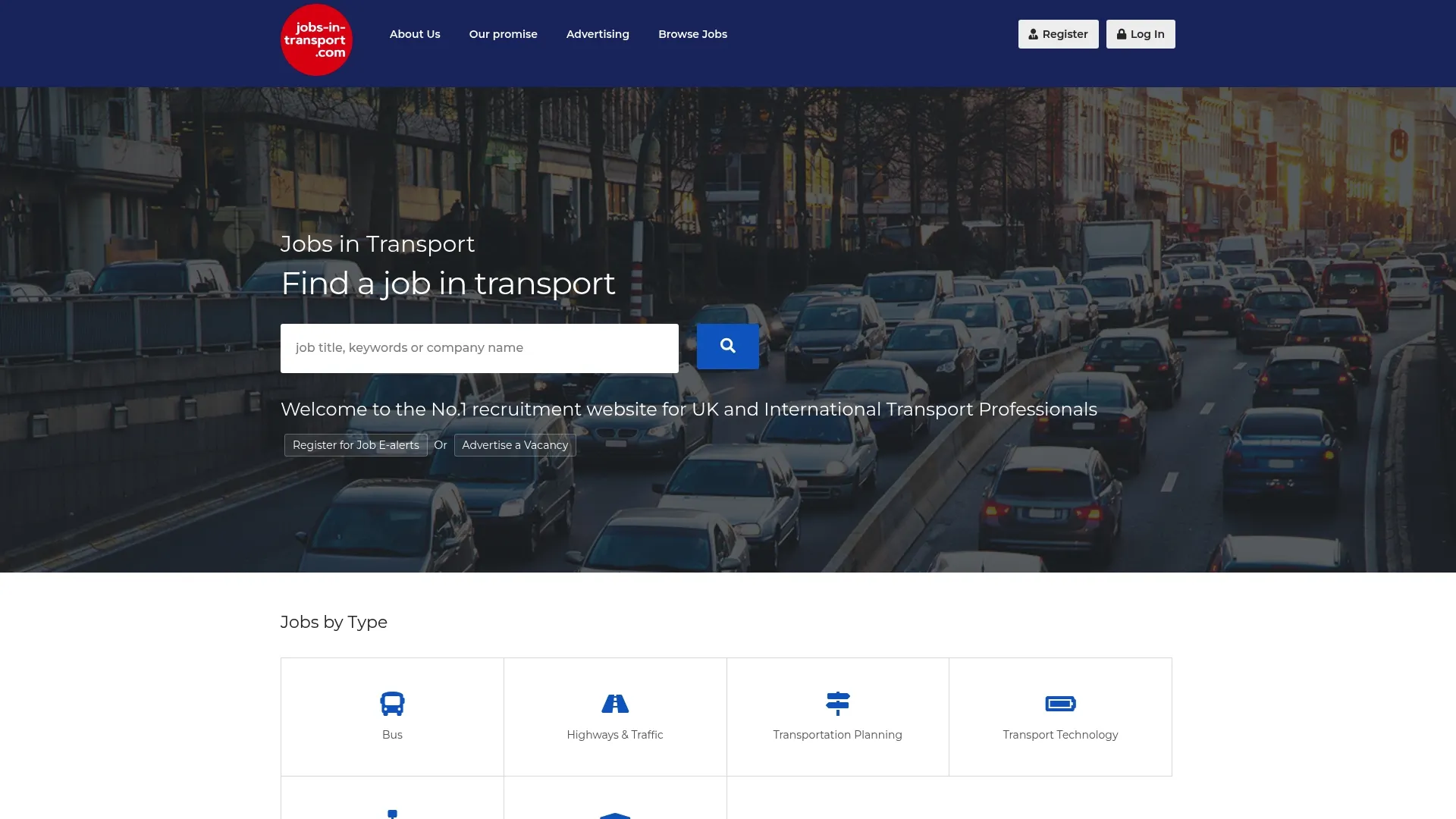
Jobs-in-Transport.com has been connecting transport professionals with relevant opportunities since 2005. Whether you’re exploring your first role in the sector, considering a move into project management, or looking to step into a senior infrastructure position, you’ll find targeted listings, employer profiles, and CV hosting tools all in one place. Discover open positions across logistics, planning, engineering, and more, or learn more about our platform and how it supports every stage of your career search. Your next opportunity is already listed.
Frequently asked questions
What qualifications do I need for a career in transport?
Requirements vary significantly by role. Many positions require postsecondary qualifications or professional certifications, while practical roles such as mechanics or HGV drivers require vocational training and licences alongside on-the-job experience.
Are transport sector roles in demand in 2026?
Yes, strongly so. The sector is projected to generate 1.8 million annual openings driven by both industry growth and workforce retirements, making it one of the more secure sectors to enter or progress within.
What skills are valued for advancement in this industry?
Technical knowledge, logistics expertise, project management capability, and adaptability to new technologies are all highly valued. Emerging skills in EV diagnostics and compliance are becoming increasingly important for progression.
Can I move between different transport sector careers?
Absolutely. Many transport roles share transferable skills, and professionals regularly move between sub-sectors such as logistics, planning, and project management as their experience and interests evolve.
Recommended
- Jobs in Transport, Bus jobs, Highways & Traffic jobs, Transportation Planning jobs, Transport Technology jobs, Project Management jobs, Transport Leaders jobs
- Jobs in Transport, Bus jobs, Highways & Traffic jobs, Transportation Planning jobs, Transport Technology jobs, Project Management jobs, Transport Leaders jobs
- 7 Typen internationale transportmethoden voor bedrijven – Send with Parcel International


