
Hiring in transport has never been more demanding. The sector faces tightening compliance requirements, rapidly evolving technology, and a persistent squeeze on specialised talent, yet many HR teams are still relying on recruitment methods that were designed for a very different market. Transport recruitment best practices in 2026 require more than posting vacancies and hoping for the best. With 34% of transport talent receiving job offers monthly, the margin for a slow, impersonal, or disorganised hiring process is essentially zero. This article covers the strategies that actually work.
Table of Contents
- Key takeaways
- 1. Build trust before you build a pipeline
- 2. Embed compliance checks into every workflow
- 3. Write job descriptions that actually attract specialists
- 4. Use technology without losing human judgement
- 5. Engage both active and passive talent simultaneously
- 6. Partner with training providers and apprenticeship schemes
- 7. Set transport-specific KPIs and act on them
- Rob’s perspective on where transport recruitment really goes wrong
- Find your next hire with Jobs-in-Transport
- FAQ
Key takeaways
| Point | Details |
|---|---|
| Trust underpins retention | Honest communication and clear timelines matter more than speed when hiring drivers and specialists. |
| Compliance must be built in | Integrating background checks and licence verification into automated workflows prevents costly legal exposure. |
| Job descriptions need rethinking | Narrative “Day in the Life” formats attract technically skilled candidates better than bulleted spec sheets. |
| Data improves every hire | Tracking time-to-fill, source effectiveness, and retention rates reveals where your process is losing talent. |
| Continuous improvement wins | Regular root-cause analysis of hiring bottlenecks keeps your recruitment competitive as the market shifts. |
1. Build trust before you build a pipeline
The transport sector has what industry observers are calling a trust shortage, not merely a driver shortage. Candidates, particularly experienced HGV drivers and fleet technicians, have been burned by recruiters who overpromise and underdeliver. They talk to each other. Word travels fast in tight-knit logistics communities, and a recruiter with a reputation for ghosting candidates will find their pipeline dries up faster than any external market force can explain.
Transport recruitment best practices start with treating every candidate interaction as a long-term relationship investment. That means responding within a defined window, being honest about role realities, and never letting an application disappear without acknowledgement. Clear, predictable communication within 48 to 72 hours builds the kind of candidate commitment that holds through a multi-stage process.
- Set and publish clear timelines from the first contact
- Assign ownership for each candidate communication touchpoint
- Document every recruitment step so nothing falls through the cracks
- Prioritise quality of hire over volume of applications
Pro Tip: Use a candidate status dashboard within your applicant tracking system so every applicant can see exactly where they stand without needing to chase a recruiter. This single change dramatically reduces dropout rates.
2. Embed compliance checks into every workflow
Non-compliance in transport hiring is not a technical inconvenience. It is a legal liability with real financial consequences. In May 2026, a trucking company agreed to a $5.5 million settlement for sex discrimination resulting from inconsistent and undocumented hiring procedures. That figure reflects what happens when recruitment is treated as an informal process rather than a structured, auditable workflow.
Compliance is not a separate phase of recruitment. It is woven into every stage, from the first application through to the conditional offer.
Effective transport hiring strategies require mandatory compliance gates that trigger automatically rather than relying on someone remembering to run a check. CDL verification and MVR checks must be completed before any conditional offer is issued, full stop.
- Background checks: criminal record screening appropriate to the role
- Licence verification: CDL status, endorsements, and expiry dates
- Drug and alcohol screening: pre-employment and randomised post-hire
- Right-to-work documentation: confirmed and stored digitally
Automated compliance workflows protect hiring momentum by removing manual delays. Rather than waiting for a compliance team to process paperwork between stages, the system flags issues and moves compliant candidates forward without friction.
Pro Tip: 54% of transportation employers already use a single consolidated screening provider rather than juggling multiple vendors. Consolidating to one trusted provider gives you consistent data, a single audit trail, and faster turnaround on every check.

3. Write job descriptions that actually attract specialists
Most transport job descriptions are still written for a 2010 candidate. They list duties in bullet points, mention a competitive salary, and hope someone qualified applies. For specialised roles involving telematics, fleet electrification, or AI-assisted routing, this approach produces poor results. The candidates you want have options and they are assessing you as much as you are assessing them.
Replacing bulleted job specs with “Day in the Life” narratives transforms engagement. Describe what Tuesday looks like for the person in this role. Name the systems they will use. Show the complexity and the autonomy. This approach is specifically effective for tech-literate transport professionals seeking modern transport roles that reflect where the industry is heading.
Consider the full picture your job posting communicates:
- Stability indicators: fleet size, contract type, home-time arrangements, route predictability
- Technology transparency: telematics platforms, vehicle types, digital tools used daily
- Career development: training pathways, apprenticeship links, progression timelines
- Sustainability credentials: electric vehicle adoption, emissions targets, green fleet commitments
- Community: team culture, management style, how decisions are made
Engaging niche forums and LinkedIn groups for passive candidates is particularly effective for technical roles. Cross-functional skills like telematics and high-voltage safety are not advertised in traditional job boards. Building relationships in specialist communities before you have a vacancy gives you a genuine pipeline rather than a reactive scramble.
4. Use technology without losing human judgement
Recruitment technology in transport has matured considerably. AI sourcing tools can scan candidate databases, match licence classes to role requirements, and surface passive candidates who have not actively applied. Chatbots handle initial screening questions at any hour. Analytics dashboards show you, in real time, which job boards deliver qualified applications and which are generating noise. For HR managers thinking about a transport recruitment software comparison, the gap between well-implemented and poorly-implemented tools is significant.
Advanced recruiting software improves candidate quality and experience while automating repetitive tasks. The danger is treating automation as a replacement for human judgement rather than a support for it.
| Recruiting activity | Automation benefit | Human judgement required |
|---|---|---|
| Initial CV screening | Speed and consistency | Cultural and contextual fit |
| Compliance gate triggers | No manual delay | Reviewing edge cases |
| Interview scheduling | Eliminates back-and-forth | Tone and candidate care |
| Source effectiveness tracking | Accurate, continuous data | Strategic channel decisions |
Bias in AI tools is a genuine concern in transport hiring. Algorithms trained on historical data will replicate historical biases unless you audit them regularly. Schedule quarterly reviews of your AI-generated shortlists against diversity benchmarks and adjust weighting where patterns emerge.
Pro Tip: Hold a monthly 30-minute review with hiring managers to go through your recruitment metrics together. Time-to-hire, offer acceptance rate, and 90-day retention by source tell you far more than any single application count.
5. Engage both active and passive talent simultaneously
Most transport hiring strategies are built for active candidates: people searching job boards today. But 74% of transport and logistics professionals receive job opportunity approaches multiple times a year. The talent pool is not just the people applying. It includes experienced professionals who are not actively looking but would move for the right offer if approached with genuine respect and a well-articulated opportunity.
Effective driver recruitment requires maintaining two parallel tracks. The first track handles active candidates through structured, fast-moving processes. The second track nurtures passive candidates through consistent touchpoints, relevant content, and genuine relationship-building over time.
Practically, this means building a talent community. Former applicants who were near misses, candidates who declined offers previously, and referrals from existing staff all belong in a segmented database that receives relevant updates. Not sales messages. Relevant updates: regulatory changes that affect their licence class, new routes or vehicle technologies, genuine career development news from your organisation.
6. Partner with training providers and apprenticeship schemes
The gap between the skills transport organisations need and the skills available in the labour market is widening. Waiting for experienced candidates to appear on a job board is a passive strategy that puts you in competition with every other operator. Building relationships with training providers, technical colleges, and apprenticeship schemes gives you influence over the pipeline before candidates are even qualified.
Driver CPC training providers, electric vehicle technician courses, and transport planning degree programmes all represent sources of emerging talent. A placement or work experience arrangement costs relatively little but creates genuine familiarity and loyalty before a candidate has signed their first contract. Several UK operators running this approach report meaningfully shorter time-to-productivity for candidates who arrive already familiar with the organisation’s systems and culture.
7. Set transport-specific KPIs and act on them
Generic recruitment metrics do not reflect how transport hiring actually works. Time-to-fill means something very different when the role requires a specific licence class versus a general administration position. Strategic use of KPIs and root-cause analysis identifies inefficiencies specific to logistics recruiting and optimises operational fit.
Start with metrics that connect to business outcomes:
- Time-to-fill by role category, not just across the board
- Offer acceptance rate broken down by source channel
- 30, 60, and 90-day retention rates for new hires
- Hiring manager satisfaction scores collected consistently after each hire
- Compliance gate completion time to identify screening bottlenecks
- Cost-per-hire compared against quality-of-hire ratings at 90 days
When these numbers reveal a pattern, conduct a root-cause analysis rather than treating each instance as an isolated problem. If drivers hired through a specific job board have lower 90-day retention than those referred internally, that is a sourcing quality issue, not a management issue. Cross-referencing HR data with operational performance data gives you the full picture rather than a partial view from a single department’s perspective.
Rob’s perspective on where transport recruitment really goes wrong
I’ve spent a long time watching transport organisations make the same expensive mistake: treating urgency as a substitute for process. When a depot has three drivers short on a Monday morning, the pressure to fill those seats is real. But rushing hires, skipping compliance steps, or glossing over red flags in the name of speed creates turnover that compounds the original problem.
What I’ve found is that most transport recruitment problems are upstream of the vacancy itself. The job description was vague. The first contact with the candidate was impersonal. The compliance check was sprung on them as a surprise rather than explained upfront. By the time a candidate withdraws or fails onboarding, the damage was done at step one or two, not the final stage.
The shift towards green tech and AI-assisted logistics is adding a new dimension to this. Hiring for technical adaptability is genuinely difficult. You are not just assessing what someone can do today. You are assessing how quickly they will grow into systems that may not fully exist yet. I think the organisations getting this right are the ones running structured conversations about learning agility alongside traditional skills assessments, rather than treating one as primary and the other as a nice-to-have.
The best advice I can offer is this: do not sacrifice the human element to the automation. The technology is there to handle the repetitive and the routine. The judgement, the empathy, and the relationship-building are yours to own.
— Rob
Find your next hire with Jobs-in-Transport
Putting transport recruitment best practices into action is significantly easier when you are working with a platform built specifically for the sector. Jobs-in-Transport has been connecting transport employers with qualified candidates since 2005, covering everything from HGV drivers and fleet technicians to transport planners, traffic management specialists, and technology roles across the UK and beyond.
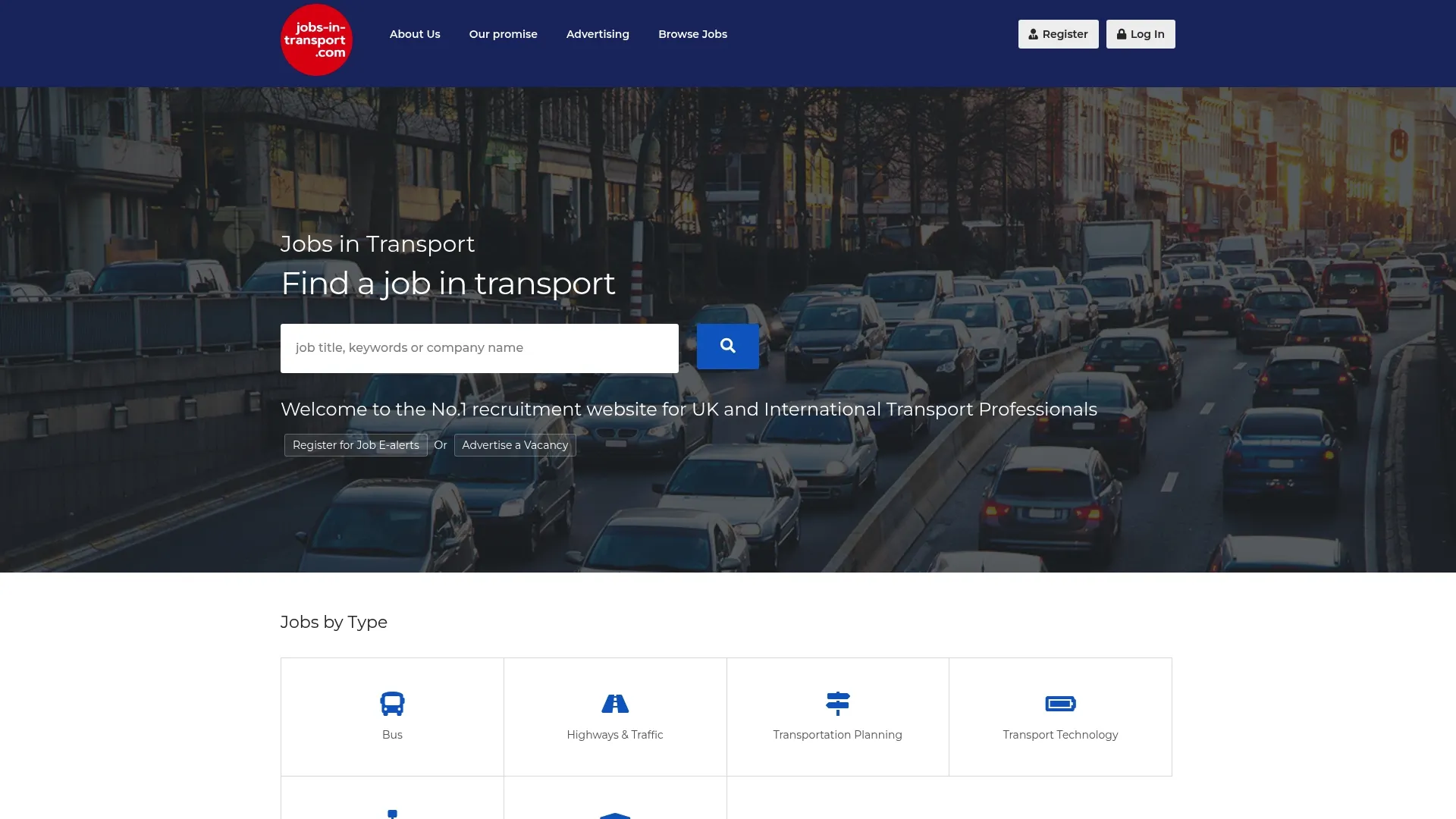
Whether you are looking to advertise a technically complex role or build a visible employer brand in a competitive market, the platform gives you the tools to reach the right audience. Employers can post roles directly on the Jobs-in-Transport job board or create a detailed employer profile that showcases your organisation’s culture, fleet, and career opportunities. You can also access the candidate CV database to search for qualified professionals already registered on the platform, including passive candidates who may not be actively applying but are open to the right opportunity.
FAQ
What is the most critical step in transport recruitment?
Building trust through clear communication is the single most important factor. Research consistently shows that predictable timelines and honest candidate treatment reduce dropout rates and improve long-term retention more than any other single intervention.
How do compliance checks fit into a fast hiring process?
Compliance checks should be automated within your applicant tracking system so they run in parallel with other stages rather than after them. Mandatory compliance gates like CDL verification and MVR checks prevent liability without slowing your overall time-to-fill significantly.
What KPIs should transport HR managers track?
Prioritise time-to-fill by role category, offer acceptance rate by source, and 30, 60, and 90-day retention. These three metrics, reviewed together, reveal whether your sourcing, process, or onboarding is where candidates are being lost.
How can I attract passive transport candidates?
Maintain a segmented talent community of previous applicants and referrals, and engage niche professional forums with relevant content. Many of the best transport candidates are not actively searching but will respond to a well-targeted, respectful approach from an organisation with a credible reputation.
Are AI tools reliable for transport recruitment?
AI tools are effective for sourcing and initial screening but require regular auditing. Algorithms trained on historical data can replicate past biases, so schedule quarterly reviews of shortlists against diversity benchmarks and adjust your weighting criteria accordingly.


