
Transportation planning is far broader than most people assume when they first start exploring it. The types of transportation planning careers on offer range from policy-focused public sector roles to fast-paced private consultancy work, from transit development to traffic modelling. Choosing wisely means understanding what each path actually demands, not just what it sounds like on paper. This guide breaks down the main career types, the criteria that separate them, and how to match your skills and ambitions to the right route.
Table of Contents
- Key takeaways
- How to evaluate types of transportation planning careers
- 1. City and regional transportation planner
- 2. Transport policy adviser
- 3. Traffic management planner
- 4. Transportation planning consultant
- 5. Infrastructure and capital delivery planner
- 6. Transport planning researcher and analyst
- 7. Transit-oriented development planner
- Comparing transportation planning career types
- My honest take on choosing a transport planning career
- Find your next role in transportation planning
- FAQ
Key takeaways
| Point | Details |
|---|---|
| Career variety is significant | Transportation planning spans public sector, consultancy, corporate, and specialist roles with distinct demands. |
| Education matters but varies | A Bachelor’s degree is the baseline; senior roles often require five or more years of experience. |
| Skills must be cross-functional | The strongest candidates combine technical modelling, project management, and stakeholder engagement. |
| Sector shapes your day-to-day | Public bodies offer policy impact and stability; consultancies offer faster variety and portfolio growth. |
| Specialisation creates opportunity | Niche areas like transit-oriented development are attracting significant public funding and new roles. |
How to evaluate types of transportation planning careers
Before committing to a direction, it pays to assess each career type against a consistent set of criteria. The field is wide enough that two people with identical degrees can end up in roles that look nothing alike.
Here are the core factors worth examining for any transportation planning role:
- Qualifications required. Most roles expect at least a Bachelor’s degree in urban planning, civil engineering, or a related field. Urban planning graduates find employment across public organisations and consultancies, often within 15 months of graduating.
- Work environment. Public bodies, private consultancies, and corporate infrastructure firms each have distinct cultures. Public sector roles are process-driven; consultancies move quickly.
- Core responsibilities. Transportation planner roles typically combine technical modelling, project management, and community engagement, so a narrow skill set will limit your options early.
- Advancement potential. Some paths reward specialists; others reward generalists. Know which you are before choosing.
- Salary and job outlook. Median salary sits at £83,720 in comparable markets, with 3% job growth projected through 2034 and roughly 3,400 new openings expected annually. The market is steady rather than explosive, which suits long-term career planners.
Pro Tip: When comparing transportation planning job options, look past the job title and read the responsibilities section carefully. Two roles with the same title can require completely different daily work depending on the employer’s sector.
1. City and regional transportation planner
This is the role most people picture when they think about careers in urban planning. City and regional planners work within local authorities and government bodies, shaping how people move through urban areas.
Responsibilities include multimodal planning studies and integrating transport policy with wider infrastructure decisions. You will typically manage capital improvement projects aligned with programmes like Vision Zero and Complete Streets, covering pedestrian safety schemes, cycle routes, and school travel plans.

The qualification bar is clear: a Bachelor’s degree plus around five years of relevant experience is standard for mid-level positions. The appeal here is genuine public impact. The drawback is that public sector processes move slowly, and salary progression can be tied more to grade structures than individual performance.
Pro Tip: If you are aiming for a city planner role, build familiarity with local transport policy documents early. Demonstrating knowledge of a council’s existing strategy in an interview is far more persuasive than general enthusiasm for urban design.
2. Transport policy adviser
Policy advisers sit above the operational layer and focus on shaping the rules, frameworks, and funding priorities that govern how transport decisions get made. These roles exist in central government departments, regional transport authorities, and bodies like Transport for London or Transport Scotland.
The work is less hands-on technically and more focused on research, consultation, stakeholder engagement, and drafting policy documents. Writing clarity and political awareness matter as much as planning knowledge here.
Entry into this path often comes via a planning or public policy degree combined with experience in a frontline planning role. The diversity of employment routes for urban planning graduates, including airports and environmental planning bodies, means the stepping-stone experience is available from multiple starting points.
3. Traffic management planner
Traffic management is a distinct sub-discipline within transport career paths, and it attracts professionals who enjoy data-driven problem solving. The focus is on signal timing, junction design, road capacity analysis, and congestion modelling.
These roles exist in both the public and private sectors. Local highway authorities employ traffic planners directly; consultancies run traffic modelling on behalf of developers, councils, and infrastructure clients. Software tools like VISSIM, LinSig, and SATURN are industry standards, and fluency in at least one is expected for most mid-level positions.
This is one of the more technically specific types of urban transport roles, which means the career ceiling in pure traffic management is lower than in broader planning roles. The upside is that demand is consistent and the skills transfer well to other specialisms.
4. Transportation planning consultant
Consultancy is where transportation career paths tend to accelerate. Private firms take on planning work across multiple sectors and geographies, which means consultants build a portfolio far faster than their public sector equivalents.
Responsibilities typically cover transport modelling, permitting coordination, environmental impact assessment, and stakeholder liaison. Senior urban planner roles at major infrastructure consultancies require around nine years of experience and expect cross-functional capability across capital delivery, permitting, and documentation. That is a high bar, but the progression from junior to senior is well defined.
Entry-level consultancy roles, including internships at firms like Arcadis, require candidates to be enrolled or recently graduated in civil engineering, transportation engineering, or urban planning. The private sector moves faster and pays more at senior levels. It also demands more adaptability.
Pro Tip: In consultancy applications, lead with project examples rather than general skills. Showing you contributed to a specific scheme, even in a junior capacity, signals readiness for client-facing work far more effectively than listing software competencies.
5. Infrastructure and capital delivery planner
This role type sits at the intersection of planning and project management. Infrastructure planners work on large-scale schemes such as roads, rail links, bridges, and urban regeneration projects, coordinating between designers, engineers, local authorities, and funding bodies.
The cross-functional skills valued here go beyond technical planning. Documentation, stakeholder coordination, and an understanding of procurement and contract management all feature regularly. These planners are often employed directly by major contractors or infrastructure developers rather than planning consultancies.
Career progression in this area tends to move towards project management, and many infrastructure planners eventually transition into formal project management qualifications and roles. It is a natural step for those who enjoy delivery more than analysis.
6. Transport planning researcher and analyst
Not every transportation planning career ends up on a project team. Research and analytical roles within universities, think tanks, transport bodies, and central government departments are a distinct and often overlooked path.
These professionals produce the evidence base that drives planning decisions. Work includes travel behaviour analysis, transport demand forecasting, economic impact modelling, and evaluation of policy outcomes. A strong quantitative background is valued, and postgraduate study is common for senior research roles.
The role differs from operational planning in that outputs are reports and recommendations rather than delivered schemes. For those who find the academic rigour of transport research more satisfying than the politics of project delivery, this route deserves serious consideration.
7. Transit-oriented development planner
Transit-oriented development (TOD) planning is one of the most compelling specialisms to emerge in recent years. It sits at the crossroads of land use planning, transport infrastructure, and community development, focusing on creating walkable, mixed-use areas around transit hubs.
The financial backing behind TOD is real. The Federal Transit Administration announced $28.5 million in FY2026 for TOD planning, with an explicit focus on safety, innovation, and improved outcomes for families. This level of public investment signals sustained demand for planners with TOD expertise.
Entry into TOD planning typically comes through urban planning or urban design degrees, often supplemented by experience in either housing policy or transport corridor planning. The roles combine detailed land use analysis with transport network modelling and developer liaison, making them genuinely multidisciplinary.
Comparing transportation planning career types
The table below sets the main career types side by side to help you see where each one fits.
| Career type | Work environment | Core skills needed | Salary range | Advancement path |
|---|---|---|---|---|
| City/regional planner | Public sector | Policy, multimodal planning | Moderate | Senior planner, team lead |
| Transport policy adviser | Public/government | Research, stakeholder engagement | Moderate to high | Head of policy, director |
| Traffic management planner | Public and private | Modelling software, data analysis | Moderate | Senior engineer, consultant |
| Transportation consultant | Private consultancy | Modelling, permitting, delivery | High at senior level | Principal, director |
| Infrastructure/capital planner | Contractor/developer | Project coordination, documentation | Moderate to high | Project manager, director |
| Research and analyst | Academic/public body | Quantitative analysis, report writing | Moderate | Lead researcher, head of analysis |
| TOD planner | Public/mixed | Land use, corridor planning, liaison | Growing | Senior TOD specialist, director |
The standout pattern is that consultancy and infrastructure roles offer the highest earning potential but demand the broadest experience. Public sector roles offer stability and genuine policy impact. Specialist roles in areas like TOD offer growing opportunity if you are willing to build niche expertise early.
My honest take on choosing a transport planning career
I’ve spoken with and read about enough transport planners to have a clear view on what separates those who thrive from those who feel stuck five years in. The mistake I see repeatedly is choosing a sector based on job availability rather than working style.
Public sector planning is genuinely rewarding if you care about community outcomes and are comfortable with slower processes. But if you get frustrated when decisions take months and require committee approval, consultancy will suit you far better. Neither is superior. They just suit different personalities.
What I’ve found matters more than most people expect is the ability to communicate clearly to non-technical audiences. The planners who advance quickly are rarely the best modellers. They are the ones who can explain what the model means to a councillor, a developer, or a community group without losing the substance.
Build your portfolio deliberately. Volunteer for projects that take you outside your comfort zone. If you are in a public body, get involved in developer liaison. If you are in consultancy, look for opportunities to engage with community stakeholders. That cross-sector experience, even informally gained, is what professional development in transport actually looks like in practice.
The field is wide enough to build a genuinely satisfying career no matter where you start. Commit to learning the full picture, not just your immediate specialism.
— Rob
Find your next role in transportation planning
Whether you are a recent graduate weighing up your first role or a mid-career professional considering a move into a new sector, having access to the right opportunities makes the difference. Jobs-in-Transport connects transport planning professionals with employers across the UK and internationally, covering roles in highways, traffic management, urban planning, and capital delivery.
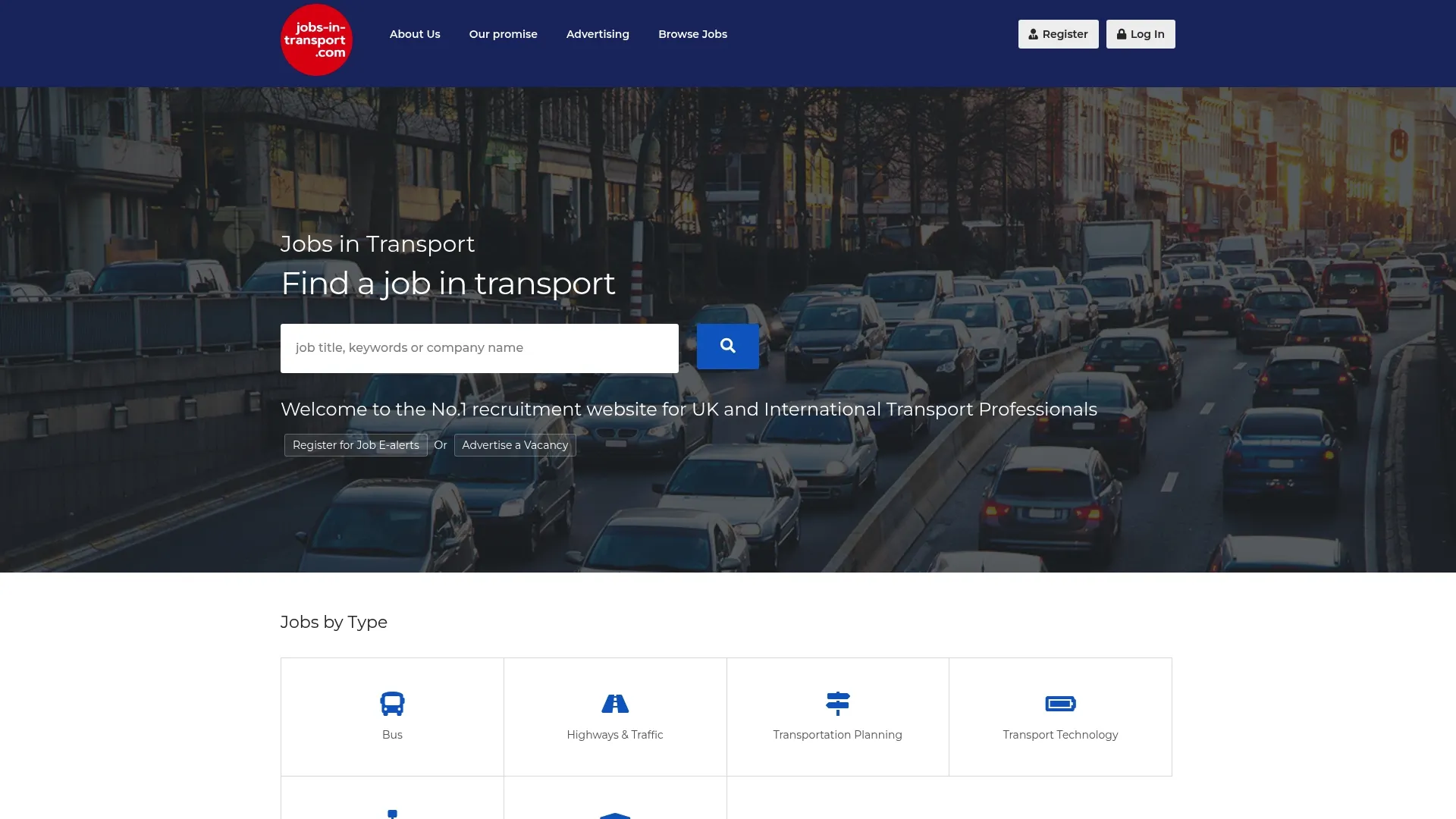
The platform has been matching transport professionals with relevant roles since 2005, with listings updated regularly and alerts available for new postings in your specialism. You can host your CV, explore employer profiles, and set up job alerts tailored to your career type. Browse current transport planning jobs across all sectors, or visit the job seeker resources section to understand how the platform can support your next career move.
FAQ
What qualifications do I need for a transportation planning career?
Most roles require at least a Bachelor’s degree in urban planning, civil engineering, or a related subject. Senior positions typically expect five or more years of experience alongside formal qualifications.
Which sector pays more: public sector or consultancy?
Consultancy roles generally offer higher salaries at senior levels, while public sector positions tend to provide greater job stability and structured progression. The gap widens significantly at principal and director level.
What is transit-oriented development planning?
TOD planning focuses on designing walkable, mixed-use communities around public transport hubs. It combines land use planning with transport infrastructure work and is backed by significant public funding, including $28.5 million from the FTA in 2026.
How do I move from public sector planning into consultancy?
Build a portfolio of tangible project contributions, develop fluency in industry modelling software, and gain experience in stakeholder liaison. Consultancies value candidates who can demonstrate cross-functional delivery experience rather than purely policy-focused work.
What is the job outlook for transportation planners?
The job market is steady, with approximately 3,400 new openings expected annually and 3% growth projected through 2034. Specialisms in TOD and technology-integrated planning are among the faster-growing areas.
Recommended
- Jobs in Transport, Bus jobs, Highways & Traffic jobs, Transportation Planning jobs, Transport Technology jobs, Project Management jobs, Transport Leaders jobs
- Jobs in Transport, Bus jobs, Highways & Traffic jobs, Transportation Planning jobs, Transport Technology jobs, Project Management jobs, Transport Leaders jobs


