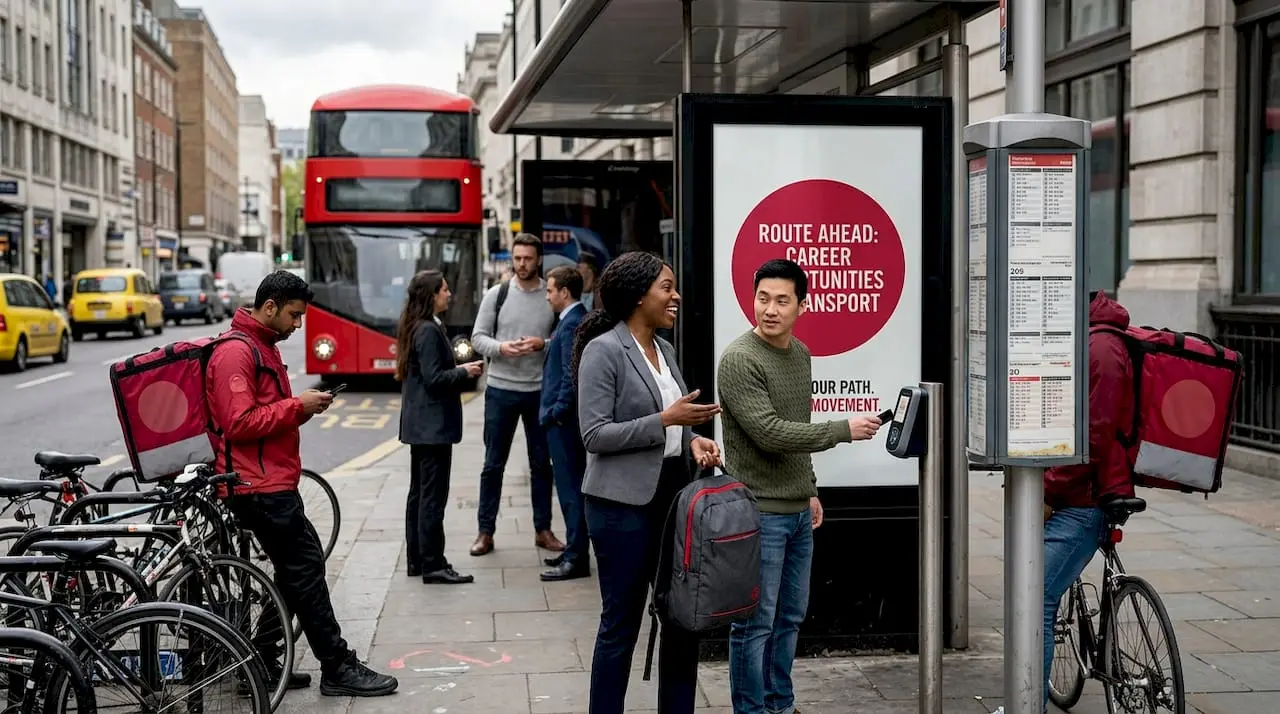
Transport is far more than the act of getting from one place to another. Understanding why is transport important means recognising it as the structural backbone of modern economies, communities, and daily life. Roads, railways, ports, and public transit networks do not simply move vehicles. They move workers to jobs, goods to markets, and people to the services they need to live well. Strip away efficient transport infrastructure and you strip away economic output, social cohesion, and equitable access to opportunity. This article unpacks that reality with evidence, examples, and the kind of nuance that policymakers and planners actually need.
Key takeaways
| Point | Details |
|---|---|
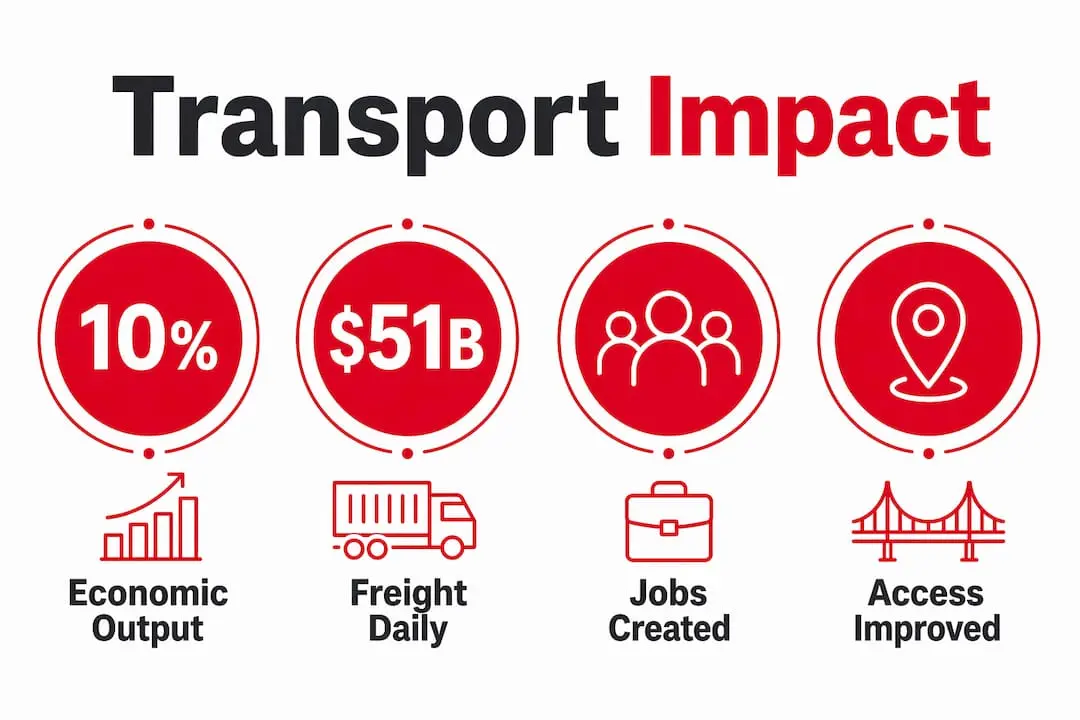
| Transport underpins economic output | Transportation accounts for roughly 10% of economic output demand, making it a core driver of national competitiveness. |
| Public transit supports equity | Well-designed public transport reduces car dependence and improves access for underserved populations across urban and rural areas. |
| Operational changes deliver results | Small improvements such as dedicated bus lanes and real-time information displays can significantly raise ridership without major capital spending. |
| Bottlenecks cost the whole economy | A single multimodal terminal delay ripples across supply chains, affecting households, businesses, and trade far beyond the immediate disruption. |
| Policy must go beyond infrastructure | Effective transport planning requires addressing service frequency, demographic sensitivity, and first and last mile connectivity, not just building more roads. |
The economic significance of transport infrastructure
The most direct answer to why is transport important starts with money and productivity. Transport investment attracts business, creates employment, and connects underserved populations to well-paying jobs. These are not abstract claims. They are measurable outcomes that governments, developers, and economists track constantly.
Consider the scale of freight movement alone. Transport moves $51 billion of freight daily in the United States, with comparable proportions in major European economies. Every delay in that system, whether at a port, a rail yard, or a motorway junction, translates directly into higher costs for businesses and ultimately higher prices for consumers. The importance of transportation to supply chain resilience cannot be overstated.
A practical illustration comes from South Asia. India’s Ganga Expressway is projected to cut freight transit time significantly across key industrial corridors, unlocking an estimated Rs 30,000 crore in annual logistics savings. Employment generation across districts along the route is an additional benefit. That single infrastructure project demonstrates what good transport planning achieves at scale.
The relationship between transport and economic output is not one-directional, though. Transport also imposes costs. Congestion costs businesses time. Poor freight efficiency raises the price of goods. Households in areas with weak transport connectivity spend disproportionate shares of their income on travel. Managing this balance between enabling economic activity and containing its costs is central to why smart transport policy matters so much.
Pro Tip: When making the economic case for transport investment to decision-makers, pair infrastructure costs with projected freight efficiency gains and employment multiplier effects. Numbers like reduced transit time and logistics savings land far more convincingly than broad productivity arguments.
The table below summarises key economic benefits and their mechanisms:
| Economic benefit | Mechanism |
|---|---|
| Job creation | Infrastructure projects and ongoing operational roles across multiple sectors |
| Freight cost reduction | Shorter transit times, fewer delays, lower fuel and handling costs |
| Business attraction | Reliable access to markets, workers, and supply chains |
| Household welfare improvement | Reduced travel time and lower personal transport expenditure |
| Supply chain resilience | Redundant routes and multimodal options reduce disruption risk |
Urban mobility and social equity
The role of transport in cities goes well beyond keeping traffic moving. Public transport is vital in modern cities precisely because it reduces car dependence, supports healthier urban environments, and gives people without private vehicles a genuine shot at participating in economic and social life.
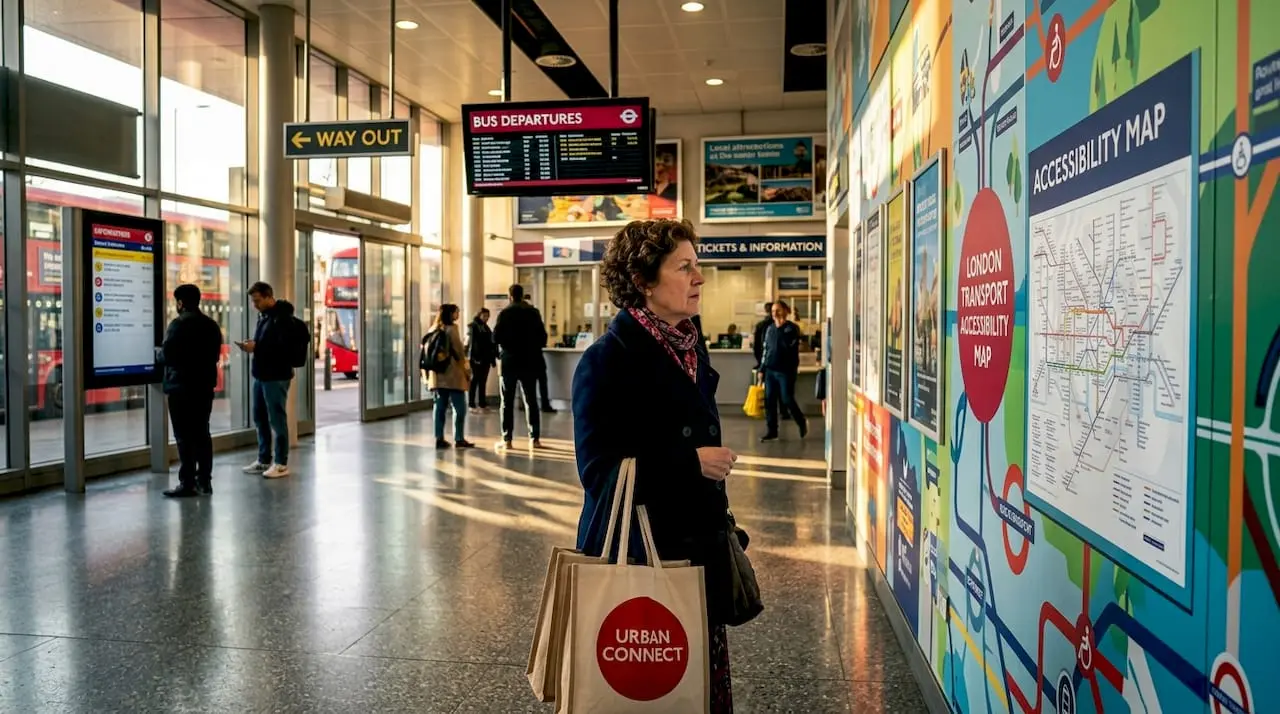
Accessibility is the right frame here, and it is more nuanced than most planning documents acknowledge. Physical distance to a bus stop or train station matters, but so does service frequency, journey reliability, and whether the service actually connects people to the destinations they need. Accessibility planning must account for socio-demographic factors, including age, income, disability, and shift patterns, to produce genuinely equitable outcomes.
Think about a low-income worker on an early morning shift. A bus route that runs every thirty minutes at peak times is functionally useless for a 5am start. The infrastructure exists, but the service design has excluded that person. This is where transport equity planning becomes a social justice question, not merely a technical one.
The benefits of well-planned urban transport systems include:
- Reduced isolation for elderly and disabled residents who cannot drive
- Lower household transport costs in areas well-served by frequent public transit
- Improved air quality as modal shift reduces private vehicle use
- Greater economic participation for people in peripheral urban areas
- Better access to healthcare, education, and employment for disadvantaged groups
Operational improvements like transit signal priority, exclusive bus lanes, and real-time passenger information can boost ridership and accessibility substantially without requiring major capital investment. These changes are often underused precisely because they require political will and coordination rather than new funding.
Pro Tip: If you work in transport planning, run an accessibility audit that segments users by demographic group before proposing service changes. The findings regularly reveal that frequency and reliability improvements serve equity goals more effectively than route expansions.
How transport shapes quality of life
The benefits of transport extend into territory that economic modelling often struggles to capture. Transport is what allows a person to attend a relative’s birthday, reach a GP appointment on time, take a child to school, or simply feel connected to their community. When systems fail or access is inadequate, the human cost is real and measurable.
Reducing travel time costs directly improves household welfare, job access, and supply chain resilience. That finding from economic research reflects something most people already know intuitively. Time lost to unreliable or absent transport is not just inconvenient. It compounds disadvantage across health, employment, and social participation.
The UK government’s transport strategy captures this well. The goal of safe, reliable, affordable transport is explicitly framed around enabling people to get on in life and helping communities thrive. Three principles underpin this: people-centred design, better-connected places, and genuine partnerships between government, operators, and communities. That framing matters because it positions transport as a means to social ends, not an end in itself.
Key quality-of-life dimensions that transport directly affects:
- Access to employment and career progression
- Proximity to healthcare, education, and public services
- Ability to maintain social and family connections
- Participation in leisure, culture, and civic life
- Mental and physical health outcomes tied to active travel and reduced stress
“Transport is not just about vehicles and infrastructure. It is about whether people can participate fully in the life of their community.” — Better Connected Strategy, UK Government
Modern transport strategies are increasingly recognising this. Policies targeting active travel, reduced emissions, and integrated ticketing across modes reflect a growing understanding that the transportation impact on society is holistic, touching wellbeing and belonging as much as journey times.
The challenges planners and policymakers must face
Understanding the true value of transport also means confronting its complexities. Policy often defaults to expanding physical capacity, but bottleneck mitigation in multimodal terminals frequently delivers better economic returns than new road or rail construction. A port where lorries queue for three hours creates friction that propagates across entire supply chains. Fixing that junction costs a fraction of building a new bypass.
The table below contrasts two common approaches to improving transport systems:
| Approach | Typical focus | Strengths | Limitations |
|---|---|---|---|
| Capacity expansion | New roads, rail lines, terminals | Addresses long-term demand growth | High cost, long delivery timelines, risk of induced demand |
| Operational improvement | Signal priority, lane management, real-time data | Fast to implement, lower cost | Requires coordination, often underfunded |
Modern spatial economics has refined our understanding of transport benefits considerably. Infrastructure improvements generate wider economic ripple effects through agglomeration, increased competition, and labour market pooling. But those effects only materialise when network connectivity is genuinely improved. A road that ends at a poorly maintained junction or a rail link without onwards connections delivers a fraction of its potential value.
Transport equity outcomes depend on nuanced interactions between service levels and demographic factors. A blanket frequency increase may benefit commuters in central areas while doing nothing for carers making mid-morning trips or young people travelling at weekends. Targeted planning, informed by granular data on who travels where and when, is the only way to produce systems that work for everyone.
For those interested in how freight mode optimisation affects logistics efficiency, the same principle applies: matching the right mode to the right journey type reduces cost and environmental impact simultaneously.
My perspective: what the debate about transport keeps missing
I have spent years watching transport policy discussions get derailed by false choices. Build more capacity versus manage existing assets better. Economic growth versus social equity. National infrastructure versus local services. In my experience, these are not genuine trade-offs. They are symptoms of planning processes that treat transport as a technical problem rather than a societal one.
What I have found consistently is that the most effective transport interventions start with the question of who is not being served. Not which corridor has the highest traffic volumes. Not which mode has the best benefit-to-cost ratio in aggregate. Who is currently excluded, and what would it take to include them? That question leads to better decisions, not softer ones.
I also think we systematically underestimate operational improvements. The evidence from transit signal priority and dedicated lanes is compelling. Small operational changes produce outsized service quality improvements, yet they attract a fraction of the political attention that major capital projects command. That imbalance costs us.
For policymakers reading this: the transport systems significance conversation in 2026 is increasingly about integration. Integrated ticketing, integrated land use and transport planning, integrated data across modes. The value is in the connections, not the individual components. Professionals who understand this systems-level thinking are the ones shaping the most effective transport networks right now.
— Rob
Build a career in the sector that moves everything
The transport sector touches every part of the economy and every dimension of social life. That breadth is exactly why transport jobs are vital and why careers in this field offer both stability and genuine impact. Whether your interest lies in transportation planning, traffic management, transport technology, or project leadership, the demand for skilled professionals who understand these systems is substantial and growing.

Jobs-in-Transport has been connecting transport professionals with meaningful roles across the UK and internationally since 2005. From highways and freight logistics to public transit and infrastructure strategy, the platform covers the full breadth of the sector. If you are ready to contribute to networks that genuinely matter, explore transport sector roles across every specialism on Jobs-in-Transport. You can also learn more about the platform’s approach to matching candidates with the right opportunities on the Jobs-in-Transport about page.
FAQ
Why is transport important for economic growth?
Transport reduces the cost of moving goods and people, connects businesses to markets and workers, and attracts investment to regions with reliable infrastructure. Transportation accounts for roughly 10% of economic output demand, making it a direct driver of national productivity.
How does public transport improve social equity?
Public transport gives people without private vehicles access to employment, healthcare, and education. Effective equity planning requires tailoring service frequency and connectivity to the needs of specific demographic groups, not just expanding coverage.
What is the role of transport in urban mobility?
Transport systems determine whether cities function efficiently and inclusively. Well-planned transit networks reduce car dependence, lower emissions, and improve access for residents across income levels.
Can small operational changes really improve transport systems?
Yes. Dedicated bus lanes, transit signal priority, and real-time passenger information boost ridership and accessibility significantly without requiring large capital projects, making them highly cost-effective interventions.
Why do transport bottlenecks matter beyond the local area?
Transport network disruptions ripple through supply chains, raising costs for businesses and consumers well beyond the point of delay. Addressing bottlenecks is one of the highest-return investments in transport policy.


